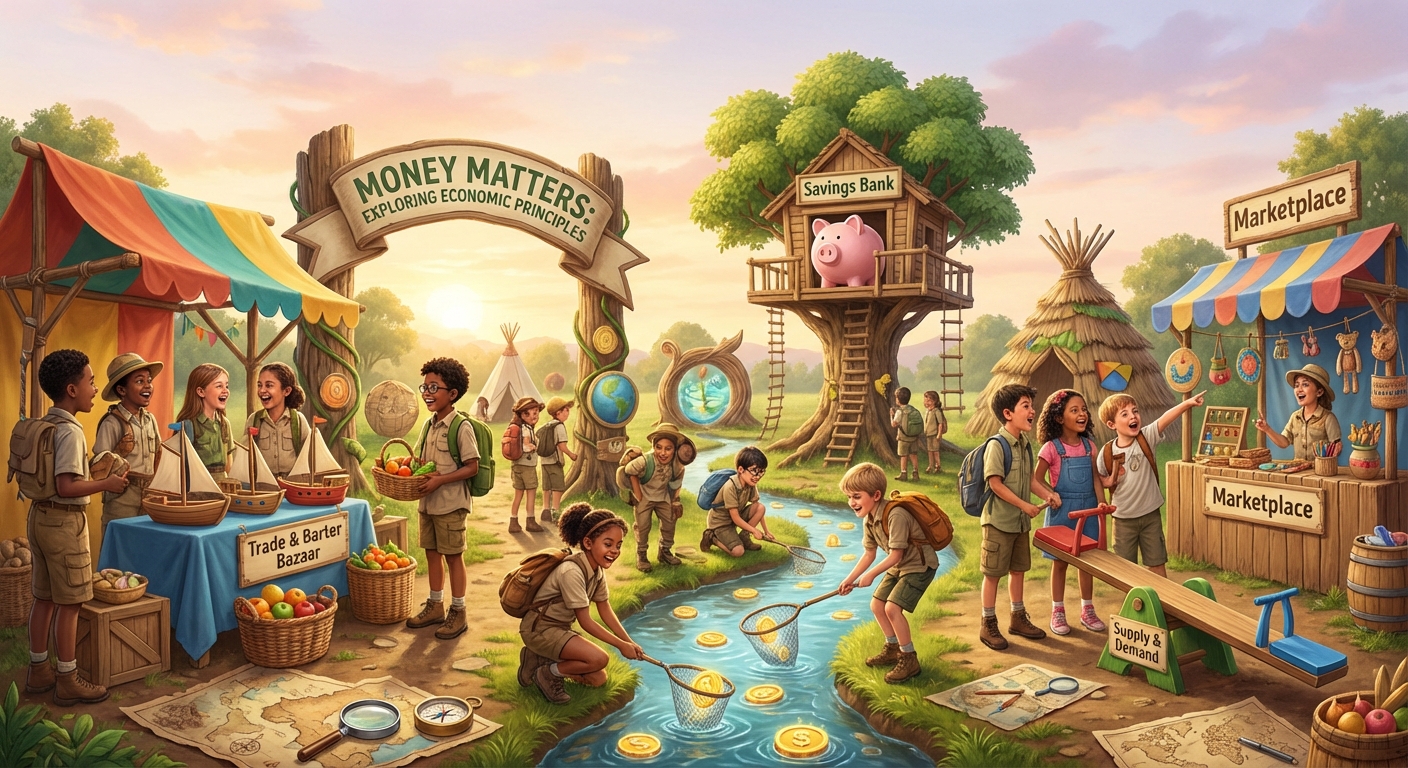
Money Matters: Exploring Economic Principles
Ever wonder why a video game might cost more after a holiday sale, or why your allowance sometimes feels like it stretches farther on some weeks than others? Those are everyday examples of Economics—the study of how people make choices about using limited resources. In this guide we’ll unpack a few key economic ideas, see them in action, and even try a quick experiment you can do at home!
1. Scarcity & Choice
Scarcity means there isn’t enough of something for everyone who wants it. Because resources (like money, time, or even pizza slices) are limited, we have to decide How to use them.
- Example: You have $10 and two toys you like. You can’t buy both, so you must choose the one you value more.
- Cause & Effect: When demand is high and supply is limited, sellers may raise a price. Competition, rules, costs, and seller choices can change what actually happens.
Key Vocabulary
- Resource: Anything useful—money, time, food, or even a favorite book.
- Opportunity Cost: The “price” of the next best thing you give up when you make a choice. If you spend your allowance on a comic book, the opportunity cost might be the ice‑cream you can’t buy that day.
2. Supply and Demand
Supply is how much of something is available. Demand is how much people want it.
- When Supply > Demand: Prices tend to drop (think of a clearance sale).
- When Demand > Supply: Prices tend to rise (like concert tickets that sell out fast).
Real‑world Example:
During a hot summer, the demand for lemonade goes up. If you set up a lemonade stand and make enough lemonade (increase supply), you can keep the price reasonable and sell more cups.
3. Saving, Spending, and Investing
- Saving means keeping money aside for later.
- Spending is using money now to buy something.
- Investing means putting money into an asset with the hope it will grow, while accepting a risk of loss. Buying stock is one example. Keeping money in an eligible bank savings account is generally called saving, even when it earns interest.
Cause & Effect:
If you save $5 each week, after 10 weeks you’ll have $50. If you spend it all right away, you won’t have any left for a bigger purchase later, like a bike.
Did You Know?
- Interest is money a bank may pay on eligible savings, usually described as a percentage. Interest can also be money a borrower pays for using someone else’s money.
4. Inflation – Prices on the Rise
Inflation is when the overall price level of goods and services goes up over time, so each dollar buys a little less.
- Example: A candy bar that cost $1 last year might cost $1.10 this year.
- Cause & Effect: Inflation can be influenced by changes in demand, production costs, supply disruptions, expectations, and policy. One cause does not explain every period of inflation.
Mini Vocabulary:
- Economy: The big system of all buying, selling, and producing in a country or community.
Mini Quiz & Experiment
Quiz (circle the correct answer)
-
You can choose one item. A book is your next-best choice, but you choose a video game. The book is your Opportunity Cost.
- A) True B) False
-
If cookie supply increases while demand and other conditions stay the same, the price will tend to:
- A) Go up B) Go down
-
Does money in a physical piggy bank earn Interest by itself?
- A) Yes B) No
Answers: 1. A) True. 2. B) Go down. 3. B) No.
Simple Experiment: Paper Market
- Ask an adult or teacher to supervise. Cut or tear scrap paper into six “item” cards; do not use real food or money.
- Give three players ten paper points each. Privately let each buyer write the most they would trade for one card.
- A seller chooses a starting price. Record how many buyers would accept it, then try a different price.
- Repeat with only two item cards, keeping the buyers’ point limits the same. Discuss how the results changed and why this tiny game is simpler than a real market.