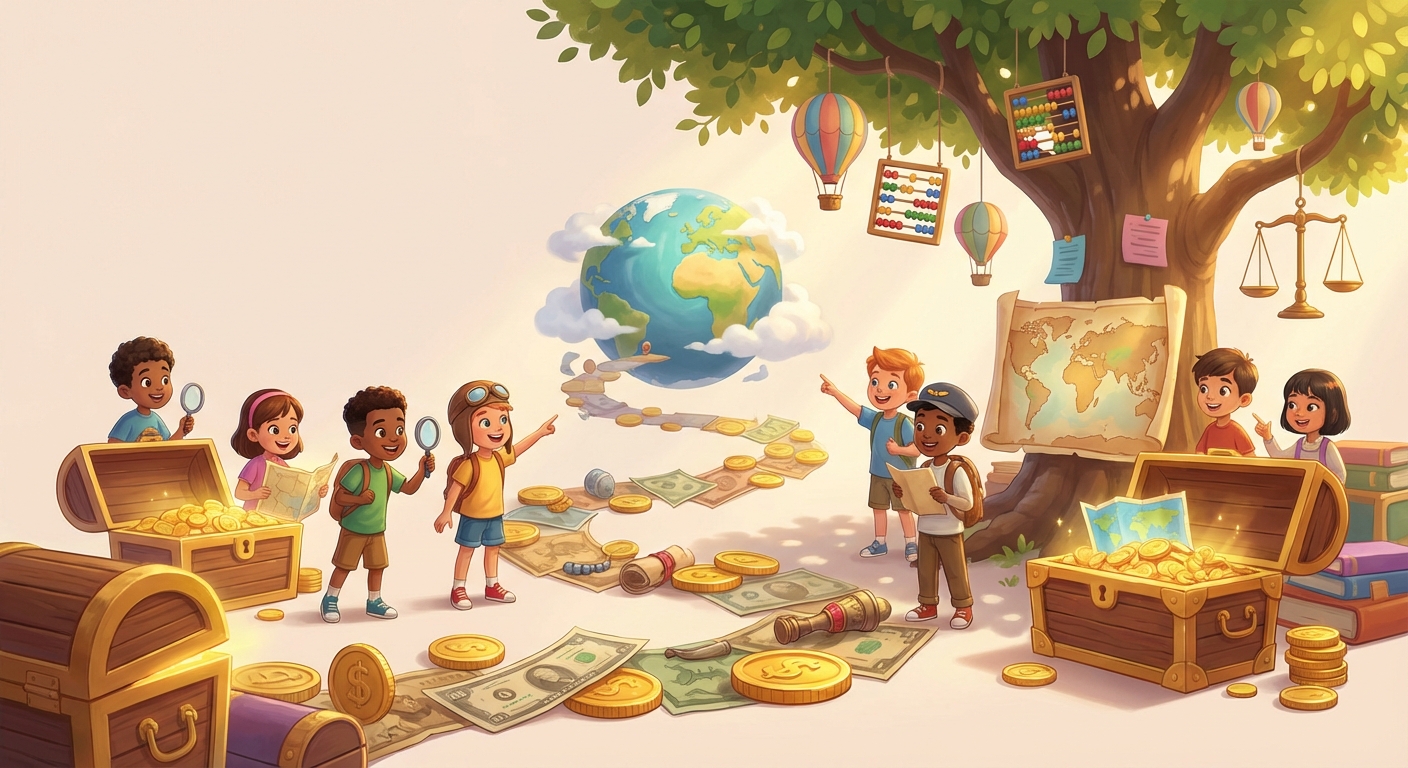
The Amazing Journey of Money
Long before credit cards and video‑game coins, people used shells, beads, and even livestock to buy things. Understanding how money grew from simple swaps to the dollars in your pocket helps you become a smarter saver and spender. Let’s travel back in time and see Cause And Effect – how one idea led to the next!
1. Barter: The First Trade System
Before money existed, families Bartered (traded goods directly) with each other. A farmer might give a sack of wheat to a potter in exchange for a clay bowl.
Why Barter Was Tricky
- Double Coincidence Of Wants – both people had to want exactly what the other offered.
- It was hard to measure the value of items like “a cow” versus “a dozen eggs.”
Did You Know?
The word barter comes from the Old French bartare, meaning “to trade.”
Effect: The difficulty of finding perfect swaps inspired people to look for a Common Medium that everyone could accept.
2. Coins – The First Official Money
Around 600 BC, the Kingdom of Lydia (now Turkey) minted the first Coins made of electrum, a natural mix of gold and silver. A Mint (a place where coins are produced) stamped a symbol on each piece so everyone knew its value.
How Coins Solved Barter Problems
- They were portable and durable.
- The stamped symbol guaranteed Authenticity (realness).
Example: A soldier could pay a merchant with a silver coin instead of carrying a sack of grain.
Did You Know?
The word money comes from the Latin moneta, the name of the temple where Roman coins were minted.
3. Paper Money – Light and Easy to Carry
Carrying lots of heavy coins was inconvenient. In China, merchants used early paper receipts and promises during the Tang dynasty. During the Song dynasty, centuries later, governments issued some of the earliest widely circulating Paper Money.
Cause And Effect:
- Cause: Long trade routes (like the Silk Road) needed lighter currency.
- Effect: Governments began printing their own notes, adding Security Features (watermarks, special ink) to stop counterfeiting.
Vocabulary Boost: Counterfeit – a fake copy made to look real.
Did You Know?
The first U.S. paper money, called Continental Currency, printed in 1775, became worthless quickly because too many were made, leading to Inflation (prices rising because money loses value).
4. Modern Money – Cards, Apps, and Digital Coins
Today you might use a Debit Card, a phone app, or even Cryptocurrency (digital money secured by computer codes).
How Technology Changed Money
- Speed: Payments happen instantly across the world.
- Traceability: Every transaction leaves a digital record, making it easier to track spending.
Cause And Effect:
- Cause: The internet and smartphones became common.
- Effect: Cash is used less often, but understanding its history helps you see why saving and budgeting still matter.
Did You Know? The first credit card was introduced in 1950 and was called the Diners Club Card. It was originally used to pay for restaurant meals!
5. Mini Experiment: Create Your Own Currency
What You Need:
- Paper and colored pencils
- Scissors
Steps:
- Design your own “money” with a unique name (e.g., “Star Bucks” or “Dino Dollars”).
- Draw symbols that represent value (like stars or animals).
- Decide what each bill is worth.
- Trade your currency with a friend for small items or favors.
What You Learned:
- Money is just a symbol that everyone agrees has value.
- Without that agreement, paper is just paper!
Quick Quiz
| Question | Answer |
|---|---|
| What is barter? | Trading goods directly without money |
| Where were the first coins made? | Kingdom of Lydia (now Turkey) |
| Why was paper money invented? | Coins were too heavy to carry on long trips |
| What does “counterfeit” mean? | A fake copy made to look real |
Wrap‑up
From shells and beads to credit cards and crypto, money has traveled an amazing journey. Understanding its history helps you appreciate why saving, budgeting, and spending wisely still matter today. You’re now a money historian!