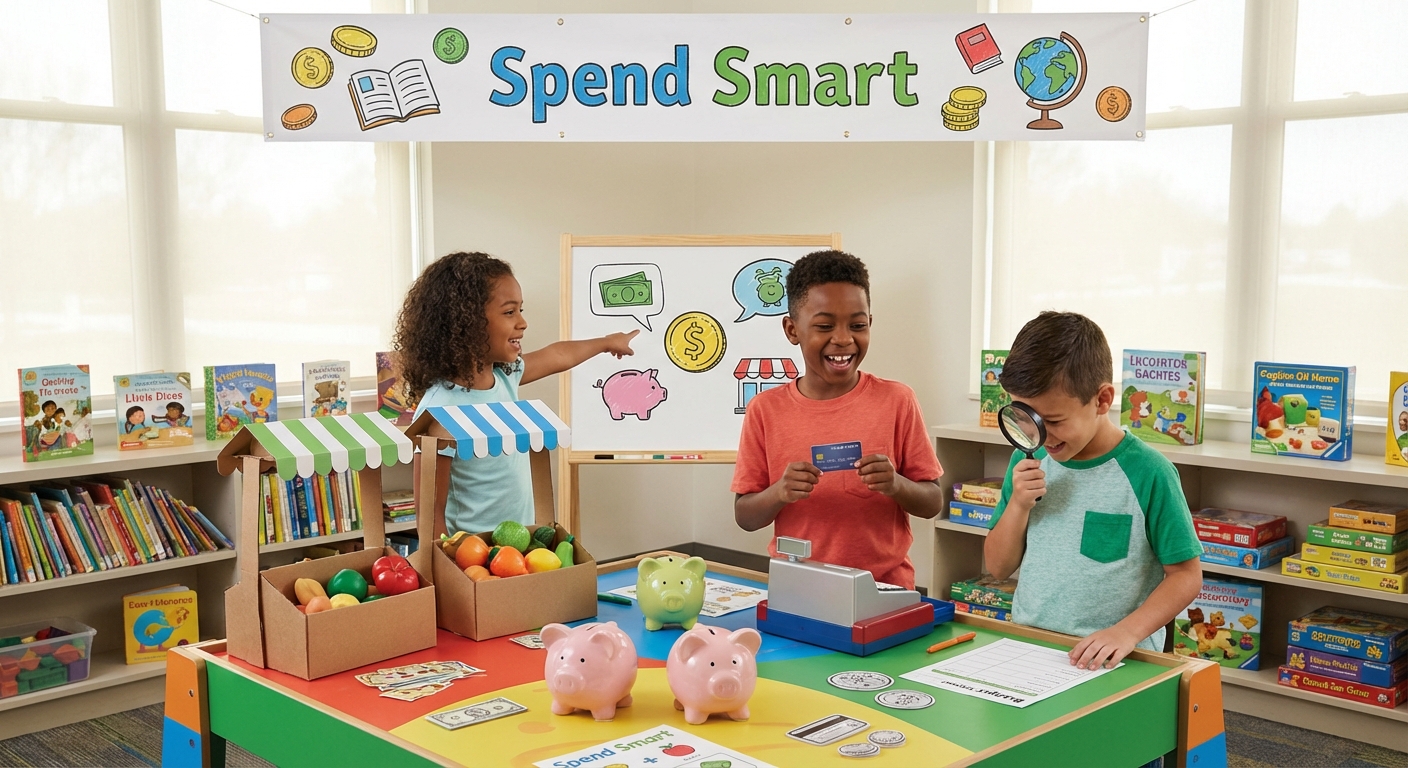
Spend Smart: A Kid’s Guide to Wise Spending
Introduction
Every time you buy a snack, a toy, or a game, you are making a decision about how to use your money. Learning to spend wisely doesn’t mean you can’t have fun—it means you get the most value (what you get for what you pay) and keep some money for later adventures. Let’s explore how smart spending works!
1. Needs Vs. Wants 🌟
Needs are things you must have to stay healthy and safe, like food, school supplies, or a coat when it’s cold.
Wants are things that are nice to have but not essential, like the newest video game or a fancy backpack.
Cause And Effect:
- If you spend all your money on wants, you might not have enough for a needed school project (effect).
- Prioritizing needs first helps you avoid that problem.
Example:
You have $10. A candy bar costs $2 (want) and a notebook for class costs $5 (need). Buying the notebook first guarantees you can finish your homework, and you still have $5 left for a treat later.
2. The Power of a budget
A Budget is a simple plan that shows how much money you have and where you want to spend it.
| Category | Money Planned |
|---|---|
| Needs | $6 |
| Savings | $2 |
| Wants | $2 |
Did You Know?
The word budget comes from the French word bougette, meaning “small bag” – the little bag where you keep your money!
Cause And Effect:
- Writing a budget helps you see if you’re spending too much on toys (cause).
- When you notice the overspend, you can adjust and save more (effect).
3. Waiting Before You Buy
Sometimes the best way to decide if you really need something is to Wait 24 Hours. This pause can turn an impulse (a sudden urge) into a thoughtful choice.
Mini Experiment:
- Pick a small item you want (e.g., a sticker).
- Write down the price.
- Wait one day.
- After 24 hours, ask yourself: “Do I still want it?”
Record the result. You’ll often find the urge fades, and you can keep the money for something bigger!
4. Saving for the Future
Saving means setting aside money now to use later. A Savings Goal could be a bike, a school trip, or even a rainy‑day fund.
Example Of Cause And Effect:
- Cause: You put $1 in a jar every week.
- Effect: After 10 weeks, you have $10, enough to buy a new book you’ve wanted.
Vocabulary Boost:
- Goal: Something you aim to achieve.
- Interest (Basic): A tiny extra amount a bank adds to your savings as a “thank‑you” for keeping your money with them. (We’ll learn more about interest later!)
Mini Quiz & Experiment
Quiz:
- What’s the difference between a need and a want?
- Why is it helpful to write a budget?
- What can happen if you spend all your money on wants first?
Experiment – Create Your Own Budget:
- Grab a piece of paper and draw three columns: Needs, Savings, Wants.
- List the things you’d like to buy this month and put a price next to each.
- Add up each column and see if the total fits your allowance or pocket money. Adjust until it balances.
Share your budget with a parent or teacher and discuss how you felt making choices.
Spending wisely is like being a detective: you look for clues (prices, needs, goals) and decide the best path. The more you practice budgeting, waiting, and saving, the better you’ll get at making smart choices. Remember: every dollar you save today is a dollar that can grow into something amazing tomorrow. You’ve got the power to be a wise spender!