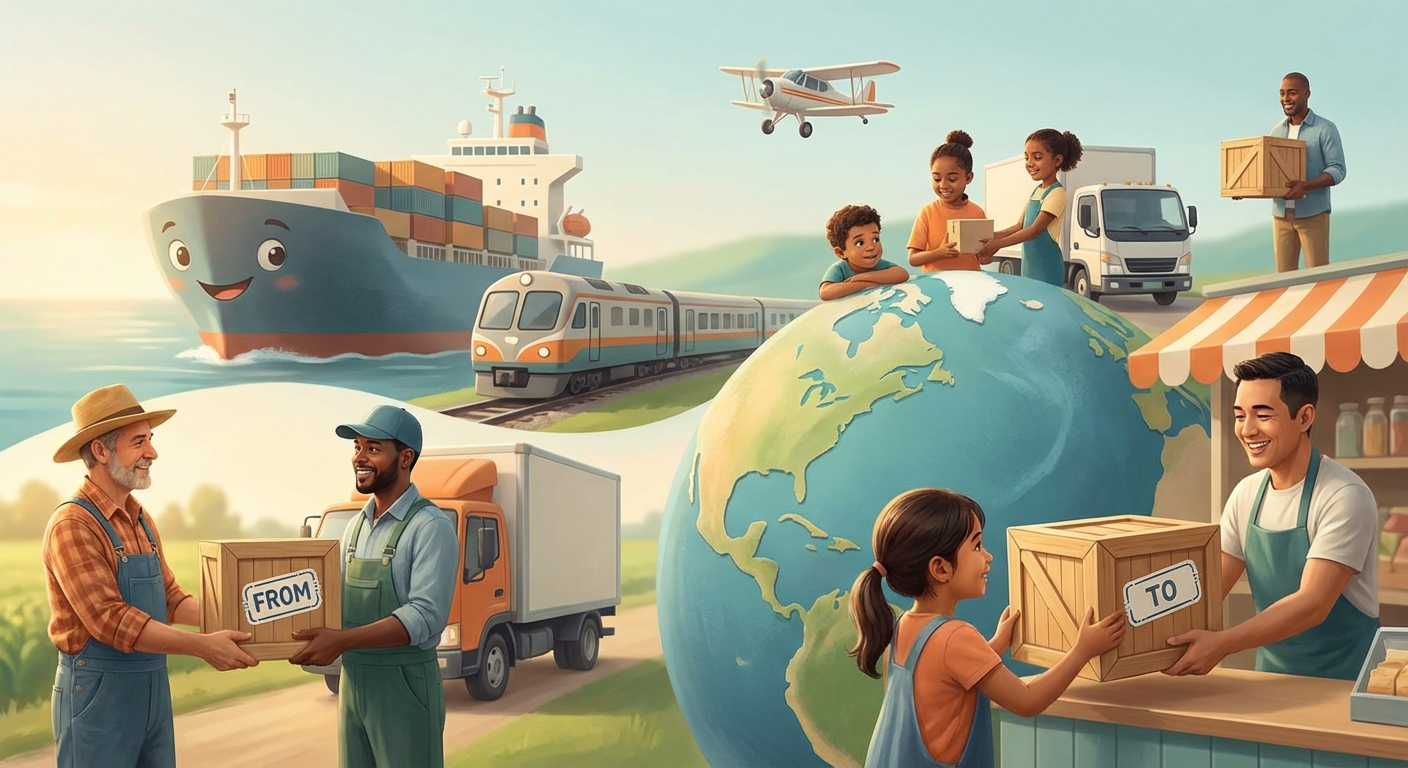
Trade & Commerce: How Goods Travel from One Hand to Another
Imagine you have a favorite comic book, but it was printed in another country. How does it end up on your bookshelf? The answer lies in Trade and Commerce—the big words that describe how people exchange goods and services. In this adventure, you’ll learn new vocabulary, see real‑world examples, discover cause‑and‑effect chains, and even try a tiny experiment yourself!
1. What Is Trade?
- Trade = swapping one thing for another.
- Commodity – a product that is bought and sold, like wheat, toys, or video games.
How It Works
- Producer (farmer, factory) makes a commodity.
- Seller offers it in a Market (a place where buying and selling happen).
- Buyer pays money and receives the commodity.
Cause & Effect:
- If a farmer grows more strawberries, the Supply of strawberries goes up → Prices usually Drop because there are many strawberries to choose from.
Did You Know? The longest trade route in history was the Silk Road, a network of paths that stretched over 4,000 miles, connecting China to Europe! 🌏
2. Commerce: The Bigger Picture
While trade is the act of swapping, Commerce is the whole system that makes trade possible. It includes:
| Part of Commerce | What It Does |
|---|---|
| Transportation | Moves goods by ship, truck, plane, or train. |
| Banks | Keep money safe and help people Borrow (get a loan) to start a business. |
| Entrepreneur (noun) | A person who creates a new business, taking a risk to sell something useful. |
| Profit (noun) | The money left after paying all costs; the reward for successful commerce. |
Example
A kid in Brazil designs a cool skateboard. He becomes an Entrepreneur, opens a small workshop, and sells his boards online. The internet, a form of modern commerce, lets his boards travel to buyers in Japan and Canada.
Cause & Effect:
- More people hear about the skateboard → More orders → The entrepreneur can Hire helpers, increasing Employment (jobs).
3. Why Trade & Commerce Matter
- Access To Variety: You can eat bananas (grown in tropical countries) even if you live in a cold climate.
- Economic Growth: When businesses sell more, they earn Revenue, which can be used to improve schools, parks, and roads.
- Cultural Exchange: Goods often carry stories, designs, and ideas from other places, making the world richer and more interesting.
Mini Vocabulary Box
| Word | Simple Definition |
|---|---|
| Exchange | Giving something and receiving something else in return. |
| Import | Buying goods from another country. |
| Export | Selling your own goods to another country. |
| Supply & Demand | How much of something is available (supply) and how much people want it (demand). |
4. Mini Experiment: Run a Classroom Market
What You Need
- Small items to sell (pencils, stickers, homemade bracelets).
- Play money (or paper notes).
- Price tags.
Steps
- Split the class into Sellers and Buyers.
- Sellers set a price for each item.
- Buyers decide what to purchase with a limited amount of play money.
- After the first round, discuss:
- Which items sold quickly?
- Did any seller change the price? Why?
- How did the amount of money each buyer had affect their choices?
What You Learned:
- When an item is popular (high demand), it sells fast.
- If sellers have too much stock (high supply), they might lower prices.
- Buyers with more money can choose freely; those with less must prioritize.
Quick Quiz
| Question | Answer |
|---|---|
| What is trade? | Swapping one thing for another |
| What is an entrepreneur? | A person who creates a new business |
| What is profit? | Money left after paying all costs |
| What was the longest trade route in history? | The Silk Road |
Wrap‑up
Trade and commerce are the engines that move goods around the world. From ancient caravans on the Silk Road to today’s online stores, the basic ideas remain the same: supply, demand, and exchange. Now you understand how that comic book traveled from another country to your bookshelf!