Deserts and Plains
What Are Deserts and Plains?
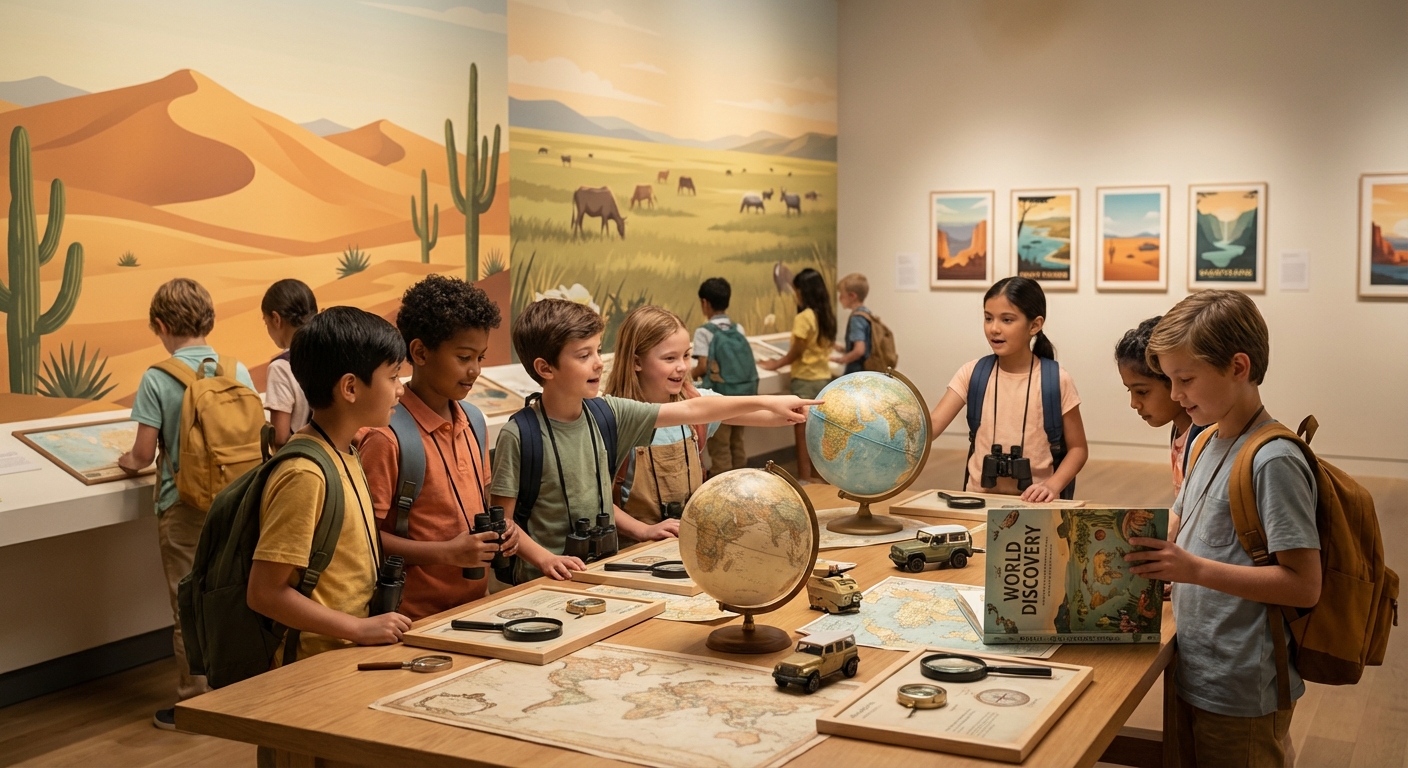
Deserts and plains are two very different types of lands on our Earth. Let’s explore what makes them special. A desert is a place where very little rain falls. Because the ground stays dry, sand and rocks are common. Temperatures can be extremely hot during the day and very cold at night. Some deserts have big dunes, while others are flat and covered with stones. On the other hand, a plain is a wide, flat area of land with few hills or mountains.
Animals and Plants in Deserts and Plains
Deserts and plains are home to many amazing animals and plants.
- Desert Life: Camels store fat—not water—in their humps and have other adaptations that reduce water loss. Many desert foxes avoid daytime heat, and cacti can store water in thick stems.
- Plain Life: Bison roam the grassy plains, and prairie dogs dig burrows. Tall grasses sway in the wind, providing food and shelter.
How They Survive
Desert species have different ways to survive: some conserve water, shelter underground during the day, or become active at night. Plains species also adapt to their particular climate, predators, fires, and food supply. Some desert plants store water, while others avoid drought in different ways. Grassland plants may have deep roots or growth points near the ground that help them recover after grazing or fire.
Why Deserts and Plains Matter
Deserts and plains are important because they are home to many special plants and animals. People learn how to live with them by respecting the water in deserts and the fertile soil of plains. Understanding these lands helps us protect the Earth’s diverse habitats. We can learn from the people who live in deserts and plains, and find ways to take care of these amazing lands. By doing so, we can help keep our planet healthy and happy.