Scientific Revolution
Introduction to the Scientific Revolution
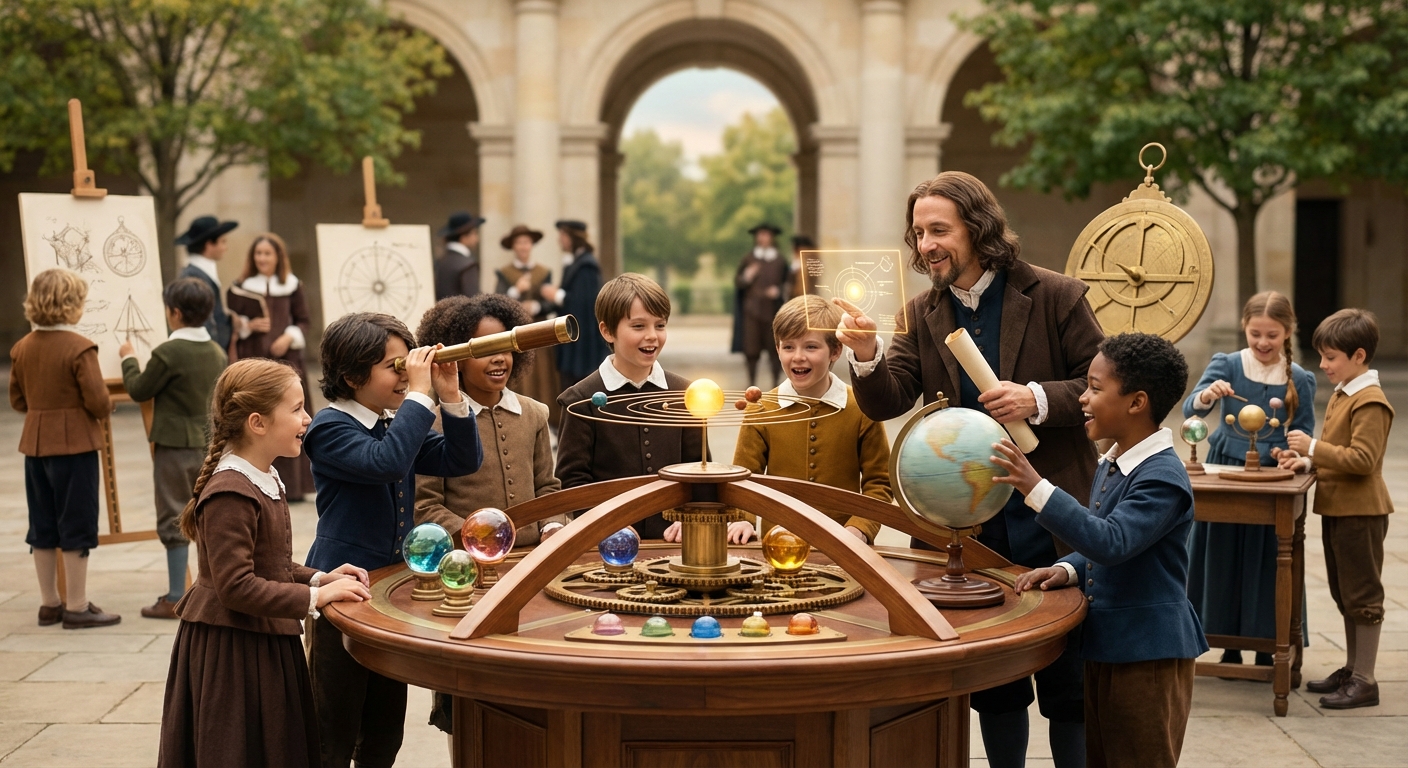
The Scientific Revolution was a time of big change. It happened from the 1500s to the 1700s. During this time, people started to study the world in new and exciting ways. They asked questions, did experiments, and wrote down what they found. This helped us understand the world better.
Important Scientists and Their Discoveries
Some very important scientists lived during the Scientific Revolution. They made discoveries that changed the way we think about the world.
- Nicolaus Copernicus said the Earth moves around the Sun, not the other way around.
- Galileo Galilei used a special tool called a telescope to see planets and moons that are very far away.
- Johannes Kepler figured out the shapes of the paths that planets follow as they move around the Sun.
- Isaac Newton explained why things fall down when you drop them and how planets stay in space.
How the Scientific Revolution Changed the World
The new ideas from the Scientific Revolution showed us that we can learn by testing and observing, not just by believing old stories. This changed everything. Schools started teaching science, and people invented many new things like clocks, engines, and medicines. Today, we still use the methods from the Scientific Revolution to explore space, cure diseases, and invent new technology. We can even send robots to other planets and make new medicines to help people feel better. The Scientific Revolution was a very important time in history that helped shape the world we live in today.