Silk Road
What Was the Silk Road?
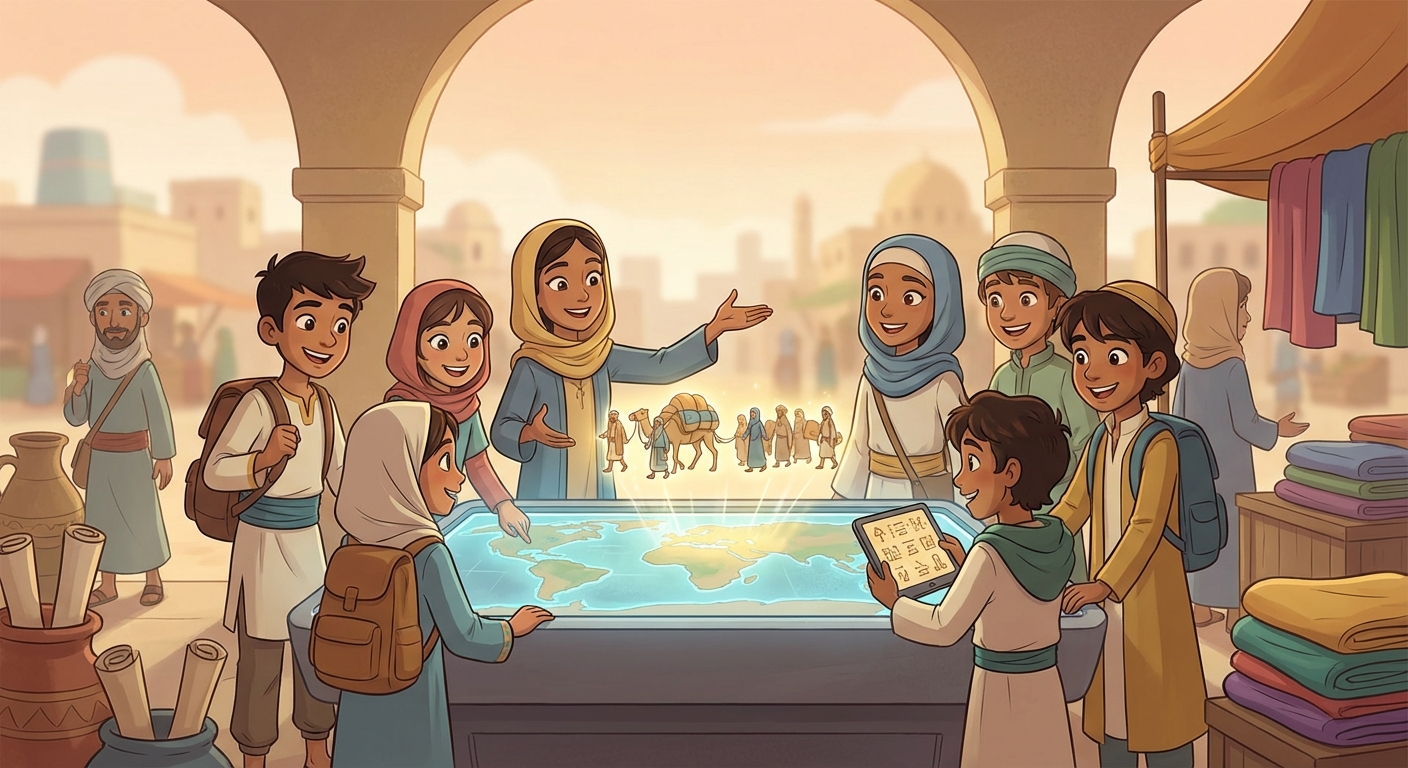
The Silk Road was not a single road. It was a network of paths that connected China, the Middle East, Europe, and Africa. Travelers used the routes for many centuries, starting around 2,000 years ago. They walked, rode on camels, or rode horses to move from one place to another. The name comes from the valuable silk cloth that Chinese traders carried westward.
What People Traded
Silk was the most famous item, but many other things traveled the road too.
- Spices: pepper, cinnamon, and cloves made food taste better.
- Precious Metals And Gems: gold, silver, and jade were exchanged for other goods.
- Ideas And Inventions: paper, printing, and even stories moved along the routes.
- Everyday Items: glass beads, pottery, and medicines were also traded.
Why It Was Important
The Silk Road helped different cultures meet and learn from each other. It spread new foods, languages, and religions across continents. Because merchants needed safe places to rest, towns and cities grew along the routes, becoming busy markets and cultural centers. The exchange of ideas helped people solve problems, like building better tools or creating beautiful art.
A Little Fun Fact
Even though the road was called “Silk,” it carried many other exciting treasures besides silk. However, silk was a very important and valuable item that traveled long distances along these routes.
The Silk Road shows how sharing and traveling can connect the whole world, even long before airplanes existed.