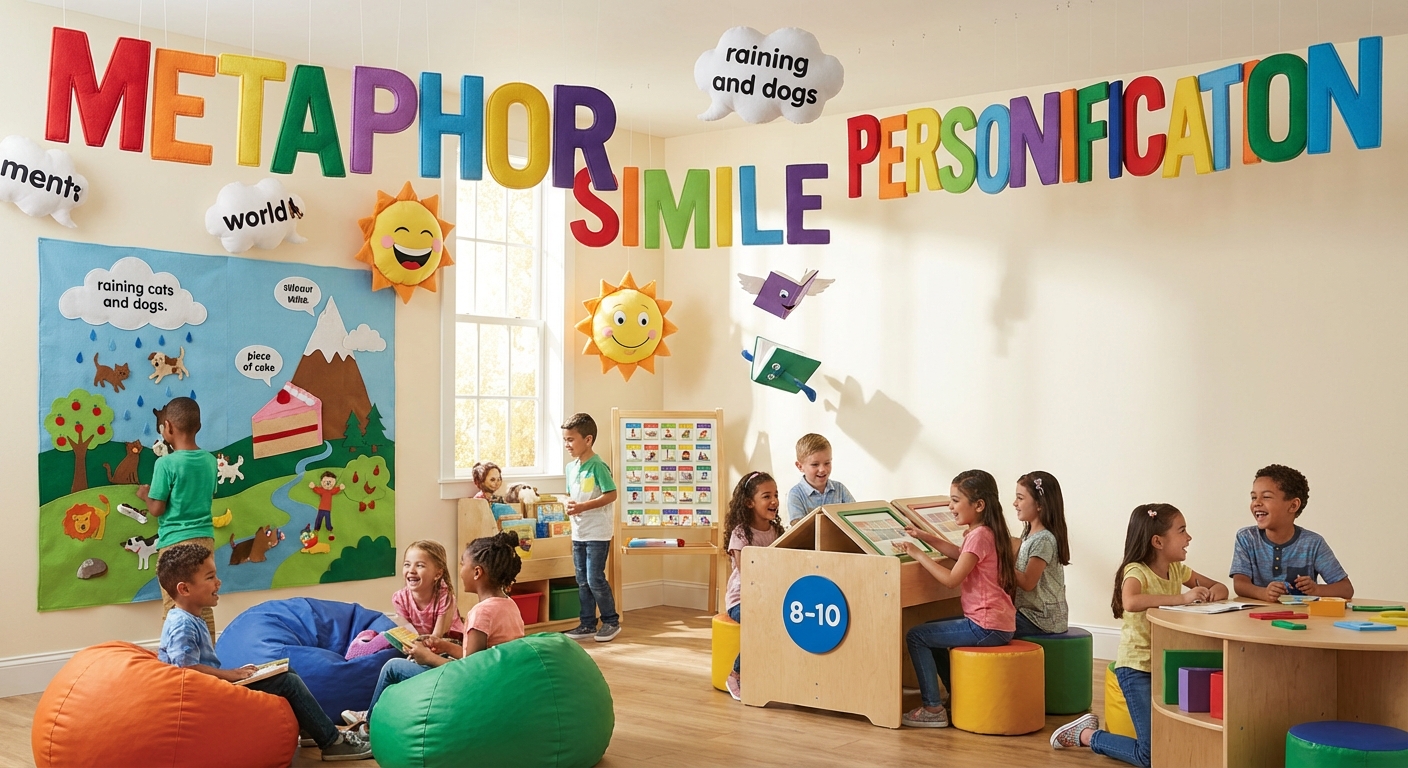
Figurative Language
What Is Figurative Language?
Figurative language is when words paint pictures in your mind.
Instead of saying exactly what something is, we compare, exaggerate, or give it human traits.
It makes writing lively and fun to read.
Common Types
Simile
A simile compares two things using Like or As.
Example: “She is as fast as a cheetah.”
Metaphor
A metaphor says something Is something else.
Example: “The classroom was a zoo.”
Personification
Personification gives human actions or feelings to non‑people.
Example: “The wind whispered through the trees.”
Hyperbole
Hyperbole is a big exaggeration that isn’t meant to be taken literally.
Example: “I have a mountain of homework.”
Why It’s Fun
- Creates Pictures – Your mind sees the scene clearly.
- Adds Excitement – Stories feel more dramatic.
- Helps You Remember – Weird or funny phrases stick in memory.
Try using one of these tricks in your next story.
You might write, “The sun smiled down on us,” and see how it changes the feeling.
Remember, figurative language is a toolbox.
Pick the right tool, and your words will sparkle!