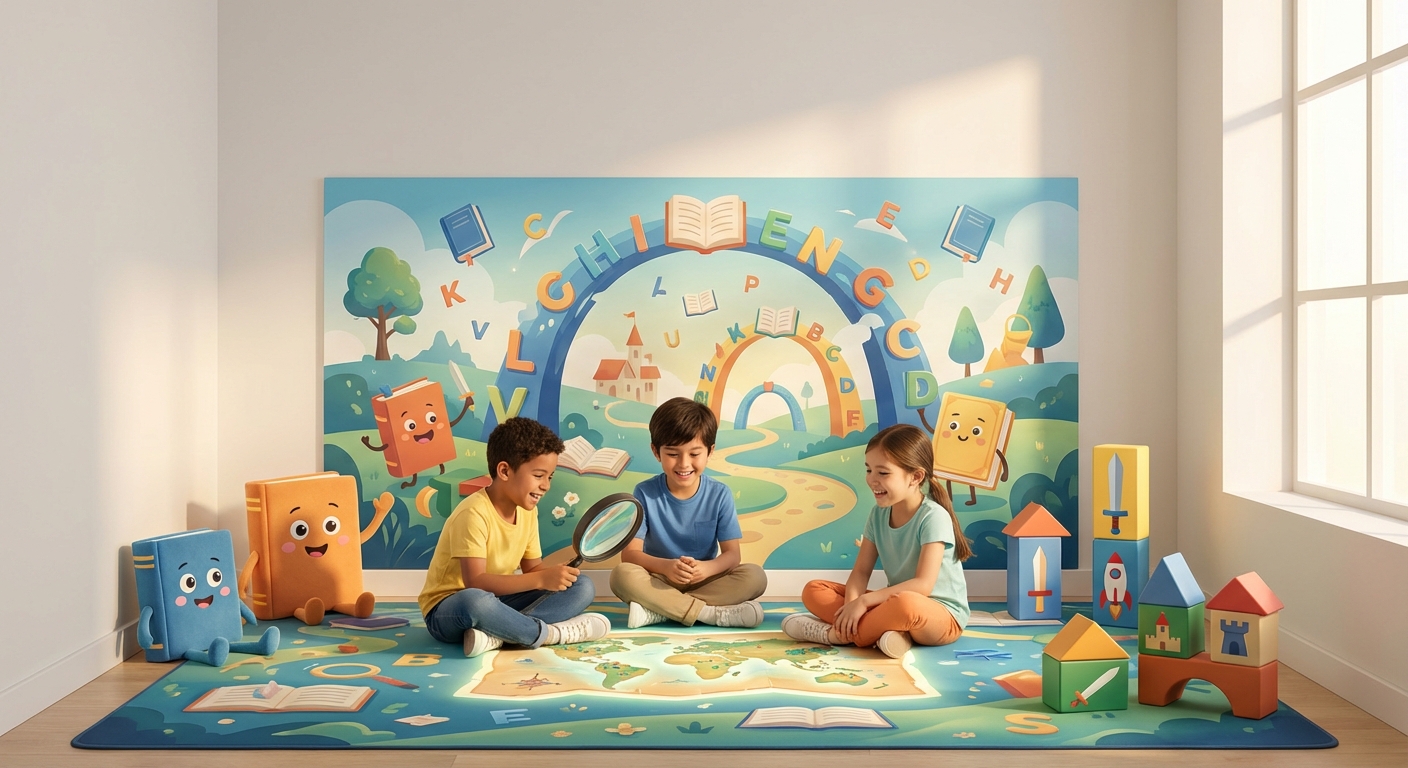
Exploring Literary Genres
Ever wondered why some stories make you laugh while others whisk you away to distant worlds? The secret is Genre—the “family name” of a story. Knowing the different literary genres helps you pick books you’ll love and even write your own adventures!
1. Fiction Vs. Non‑fiction
| Fiction | Non‑fiction |
|---|---|
| Made‑up characters and events | Real facts and true events |
| Example: Harry Potter (a wizard school) | Example: National Geographic Kids (real animals) |
| Cause & Effect: Because the author imagines a magical world, readers feel wonder and excitement. | Cause & Effect: Because the author researches real data, readers learn new information. |
Key Vocabulary
- Imaginary – existing only in the mind.
- Fact – something that can be proven true.
2. The Big Fiction Families
A. Fantasy
Stories with magical creatures, spells, and quests.
Example: Percy Jackson – a boy discovers he’s a demigod.
B. Mystery
A puzzle that the hero must solve.
Example: The Boxcar Children – kids crack a secret code.
C. Science‑fiction (Sci‑fi)
Tales set in the future or in outer space, often using science ideas.
Example: A Wrinkle in Time – kids travel through dimensions.
Did You Know? The word “genre” comes from the French word for “type” or “kind.”
Cause & Effect: When a story adds a mysterious clue, readers feel curiosity, which pushes them to keep reading to find the answer.
3. Poetry and Drama
- Poetry uses rhythm, rhyme, and vivid images.
Example: “The Road Not Taken” by Robert Frost. - Drama is written to be performed on stage.
Example: A Midsummer Night’s Dream by Shakespeare (a funny play about mischievous fairies).
Key Vocabulary
- Rhythm – the beat or pattern in words.
- Stage – the area where actors perform.
Did You Know? Shakespeare’s works contain thousands of different words. Some words first recorded in his plays may already have existed in speech, so scholars do not claim he invented all of them.
4. Mini Experiment: “genre Switch!”
What You’ll Need
- A short story (1–2 pages) or a long paragraph from any genre.
- Colored markers or crayons.
Steps
- Read the story once and note its genre.
- Rewrite the ending in a Different genre.
- If it’s a mystery, turn it into a Fantasy adventure.
- If it’s a fantasy, rewrite it as a Science‑fiction tale.
- Highlight the words that changed the “feel” of the story (e.g., “wizard” → “astronaut”).
What To Observe
- How does the mood shift?
- Which new words did you have to add?
- Does the story still make sense?
Cause & Effect: Changing the genre (cause) changes the language, setting, and characters (effect), showing how powerful genre is in shaping a story.
Literary Genres Quiz
Now you’re a Genre Detective! 🌟 Keep exploring different families of stories—read a mystery, then a fantasy, then a poem. Notice how each genre changes the way you feel and think. The more genres you discover, the richer your reading adventure becomes.