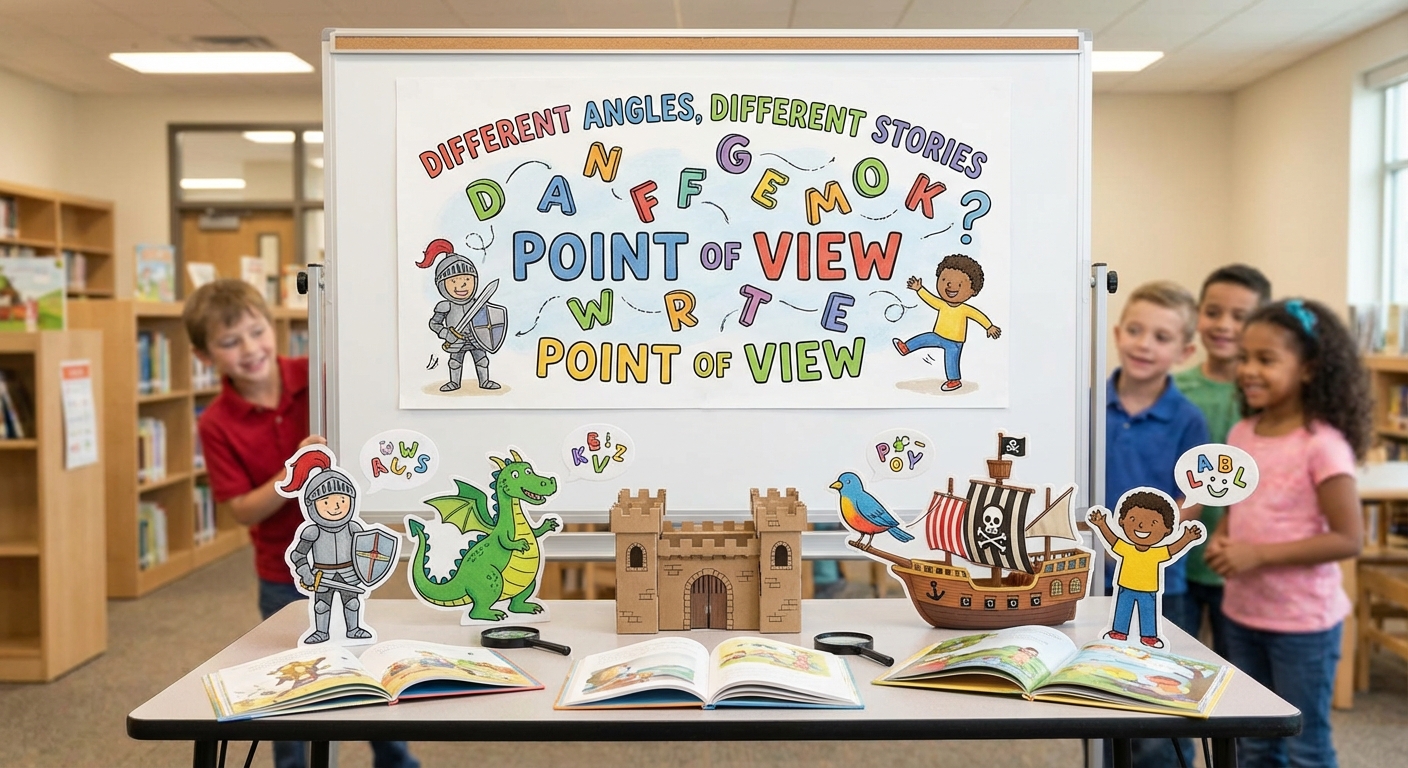
Seeing Stories From Different Angles: Point Of View
Ever wondered why the same adventure can feel totally different when you read it from another character’s shoes? That’s the magic of Point Of View (Pov)—the position from which a story is told. Knowing the POV helps you understand characters better, makes your own writing clearer, and lets you become a super‑detective of hidden clues in any book!
1. What Is Point of View?
| POV Type | Who’s telling the story? | Example Sentence |
|---|---|---|
| First‑person | The narrator is a character in the story and uses I or We. | “I raced down the hill, my heart pounding like a drum.” |
| Third‑person Limited | The narrator is outside the story but follows one character’s thoughts. Uses He, She, They. | “Mia could hear the wind whisper, but she didn’t know why.” |
| Third‑person Omniscient | The narrator knows everything about every character (thoughts, feelings, past). | “While Tom hid behind the tree, the fox plotted its next move, and the moon watched silently.” |
Did You Know? The word omniscient comes from Latin omni (“all”) + sciens (“knowing”). It means “all‑knowing.”
Cause & Effect:
- Cause: The author chooses a POV.
- Effect: The reader gets certain information and feels a particular closeness to the characters.
2. Why Does POV Matter?
- Creates Mood: A first‑person narrator can make you feel Intimate (close) with their emotions, while an omniscient narrator can make the story feel Grand and sweeping.
- Shapes Suspense: If you only know what the main character knows, you stay in the dark about the villain’s plans—perfect for mysteries!
- Guides Empathy: Seeing the world through another’s eyes helps you understand feelings that are different from your own.
Vocabulary Boost
- Intimate – very close, personal.
- Suspense – a feeling of excitement and nervousness about what will happen next.
3. Spotting POV in Your Favorite Books
- Pick A Short Story Or A Chapter you love.
- Ask: Who is using “I,” “we,” “he,” “she,” or “they”?
- Look For Clues like thoughts (“She wondered…”) or feelings that only a character could know.
Did You Know? Many classic fairy tales were originally told in Third‑person Omniscient because storytellers wanted to share the whole world of the tale with listeners.
Cause & Effect Example:
- Cause: The narrator reveals the princess’s secret wish.
- Effect: You feel hopeful for her, and the story’s tension builds as the dragon approaches.
4. Mini Experiment: “switch the Lens” 🎥
Goal: See how changing POV changes a simple scene.
Materials
- A piece of paper or a notebook
- A pencil or crayons
Steps
- Write A Short Scene (3‑5 sentences) about a rainy day in the park from the First‑person view. Example: “I splash through puddles, laughing as the raindrops tickle my nose.”
- Rewrite The Same Scene from a Third‑person Limited perspective focusing on a different character (maybe a squirrel).
- Rewrite Again using Third‑person Omniscient—include what the clouds, the squirrel, and a hidden cat are thinking.
Observe
- Which version felt Closest to you?
- Which version gave you More Information?
- How did the Mood change in each version?