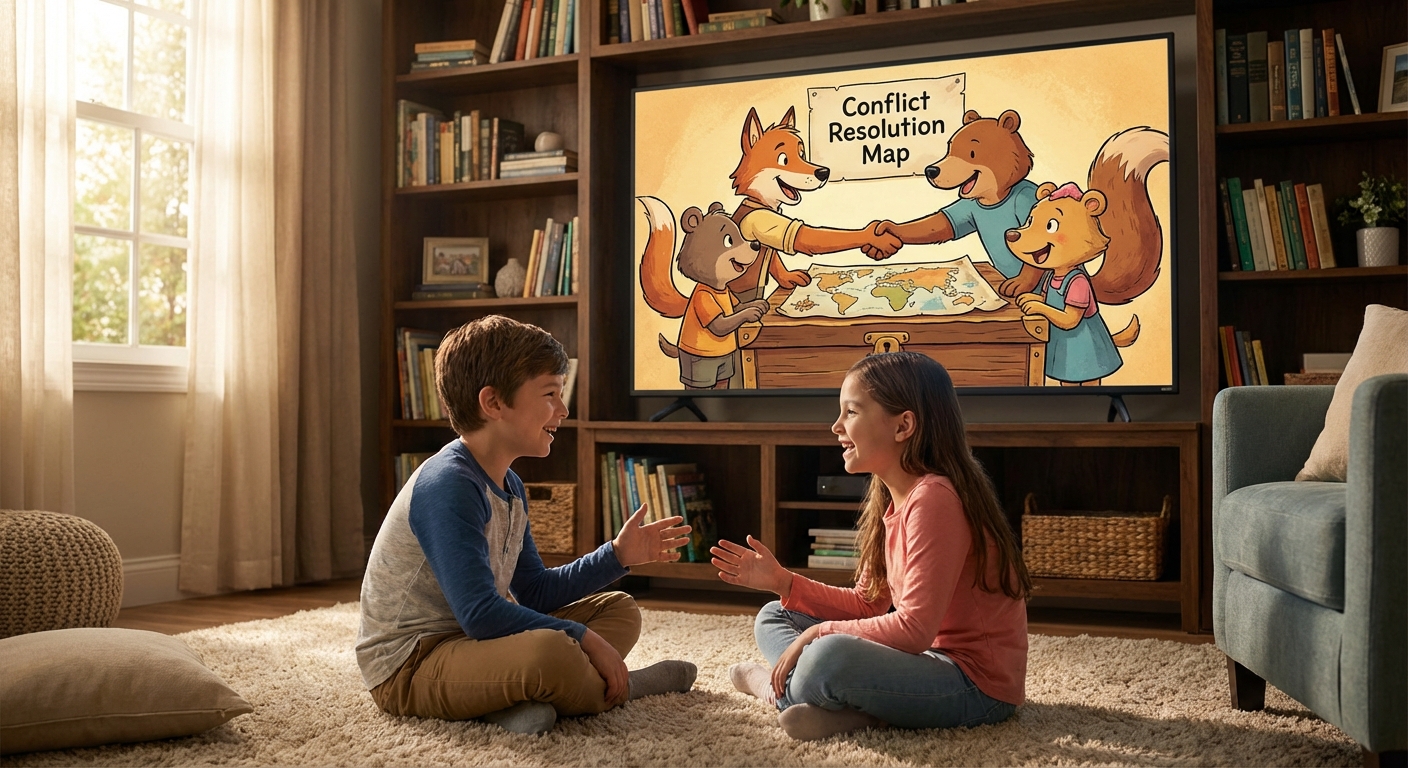
How to Solve a Disagreement: Conflict‑resolution Skills
Why We Sometimes Argue
Everyone has different ideas, feelings, and needs. When those don’t match, a disagreement can start. It’s normal—friends, siblings, and classmates all argue sometimes. The good news is that we can turn a clash into a chance to understand each other better.
Four Simple Steps to Fix a Disagreement
- Pause & Breathe – Stop for a moment and take a deep breath. This helps your brain calm down.
- Listen Carefully – Look at the other person, and hear what they are saying. Try to understand their point of view.
- Share Your Feelings – Say how you feel using “I” statements, such as “I feel sad when…”. This lets the other person know your side without blaming.
- Find A Win‑win Solution – Work together to think of an idea that makes both of you happy. It could be a compromise or a brand‑new plan.
Quick Tips
- Keep your voice calm.
- Use kind words like “please” and “thank you.”
- If you’re still stuck, ask a trusted adult for help.
Quick Quiz
- What is a useful first step when you feel too upset to talk? Pause and calm your body.
- Which statement avoids blame? “I felt left out when the game started without me.”
- What should you do if the conflict feels unsafe, involves bullying, or cannot be solved together? Move to safety and tell a trusted adult.
Great Job! You now have tools to turn disagreements into teamwork. Keep practicing, and you’ll become a conflict‑resolution champion!