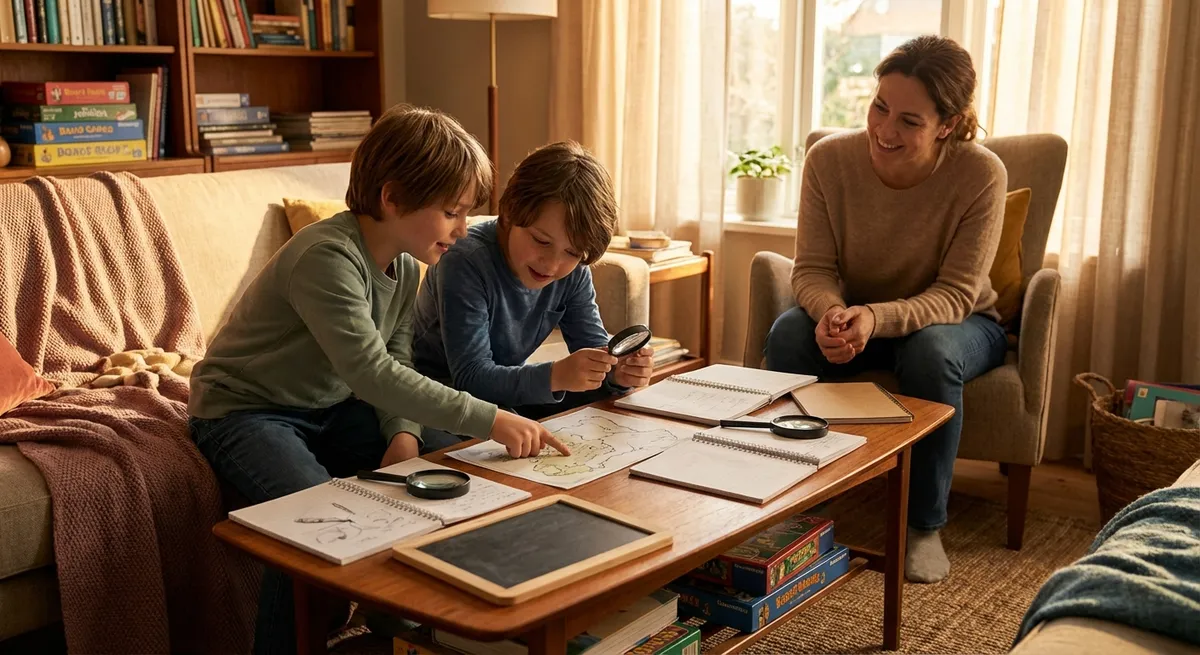
Think Like a Detective: Critical Thinking for Everyday Adventures
Introduction
Ever wondered how detectives solve mysteries, scientists discover new things, or even how you decide which game to play first? They all use Critical Thinking – a super‑skill that helps you understand the world, ask good questions, and make smart choices. Let’s explore this life‑skill together!
1. What Is Critical Thinking?
Critical thinking means examining information carefully before you accept it. Think of your brain as a magnifying glass that looks at clues, spots patterns, and decides what makes sense.
| Word | Meaning (kid‑friendly) |
|---|---|
| Analyze | Break something into smaller parts to see how it works. |
| Hypothesis | A smart guess you can test with experiments. |
| Evidence | Facts or clues that support an idea. |
| Bias | A hidden preference that can cloud judgment. |
Did You Know? The word “critical” comes from the Greek word kritikos, meaning “able to judge.”
Example:
You read that chocolate makes you run faster. Instead of believing it right away, you ask: Where did that info come from? Is there proof? You might discover it’s just a fun rumor.
2. Cause & Effect – The Chain Reaction Game
Every action has a result. Understanding Cause And Effect helps you predict what might happen next.
Mini Activity – The Domino Effect:
- Set up a line of 10 dominoes.
- Tap the first one and watch the chain reaction.
- Change something – place a small block under the 5th domino.
- Tap again.
What You’ll See: The block stops the chain. This shows how a single change (cause) can change the whole outcome (effect).
Think About It: If you skip breakfast (cause), you might feel sluggish at school (effect).
3. Asking the Right Questions
Good questions are the secret sauce of critical thinking. Use the 5 Ws And 1 H:
- Who?
- What?
- When?
- Where?
- Why?
- How?
Scenario: Your friend says the new video game is “the best ever.”
| Question | Why It Helps |
|---|---|
| Who made the game? | Checks the creator’s reputation. |
| What do reviewers say? | Looks for evidence from many sources. |
| When was it released? | New games may have bugs that get fixed later. |
| Where can you play it? | Determines if it’s accessible for you. |
| Why does your friend love it? | Finds personal preferences that might differ from yours. |
| How does it work? | Understands the rules before jumping in. |
4. Mini Experiment – The Mystery Box 🕵️♀️
Goal: Practice forming a hypothesis and testing it with evidence.
What You Need:
- A small box with a