Understanding Empathy: the Super‑power of Feeling with Others
Introduction
Empathy is the ability to recognize and share another person’s emotions. It’s like a mental “mirror” that lets you see the world through someone else’s eyes. When you practice empathy, you become a better friend, teammate, and classmate. Let’s explore what empathy really means, why it matters, and how you can grow this important life‑skill every day.
1. What Is Empathy?
- Empathy = understanding another person’s feelings and responding with care.
- Perspective (noun): the way someone else looks at a situation. Imagine standing in your friend’s shoes and seeing what they see.
- Compassion (noun): a warm feeling that makes you want to help someone who is sad or hurt.
Example:
Your classmate Maya drops her pencil case and looks upset. If you feel concern and ask, “Do you need help picking it up?” you are showing empathy.
Cause And Effect:
When you show empathy → the other person feels understood → they are more likely to trust you and work together happily.
2. Why Empathy Is Important
- Builds Strong Friendships: Kids who are empathetic are invited to play more often because others feel safe around them.
- Reduces Bullying: Understanding how hurtful words feel can stop mean behavior before it starts.
- Boosts Team Success: In sports or group projects, teammates who notice each other’s feelings coordinate better and achieve higher scores.
Did You Know? 🤔
Studies show that children who practice empathy have better academic performance because they can cooperate and solve problems together.
3. How Empathy Works in Your Brain
When you see someone crying, a tiny part of your brain called the mirror neuron system lights up—just like when you yourself are sad. This “brain echo” helps you feel what the other person feels.
Cause And Effect:
Seeing a friend’s smile → mirror neurons fire → you start to feel happy too → you’re more likely to smile back.
4. Mini Experiments to Grow Empathy
Experiment 1: The “feelings Journal” 📓
- What You Need: a small notebook and a pen.
- What To Do:
- Each day, write down one moment when you noticed someone’s emotion (e.g., “Sam looked frustrated during math”).
- Next to it, write how you could have responded (e.g., “I could ask if he wants help”).
- What You’ll Learn: By reflecting, you train your brain to spot feelings faster and think of kind actions.
Experiment 2: The “perspective Switch” Game
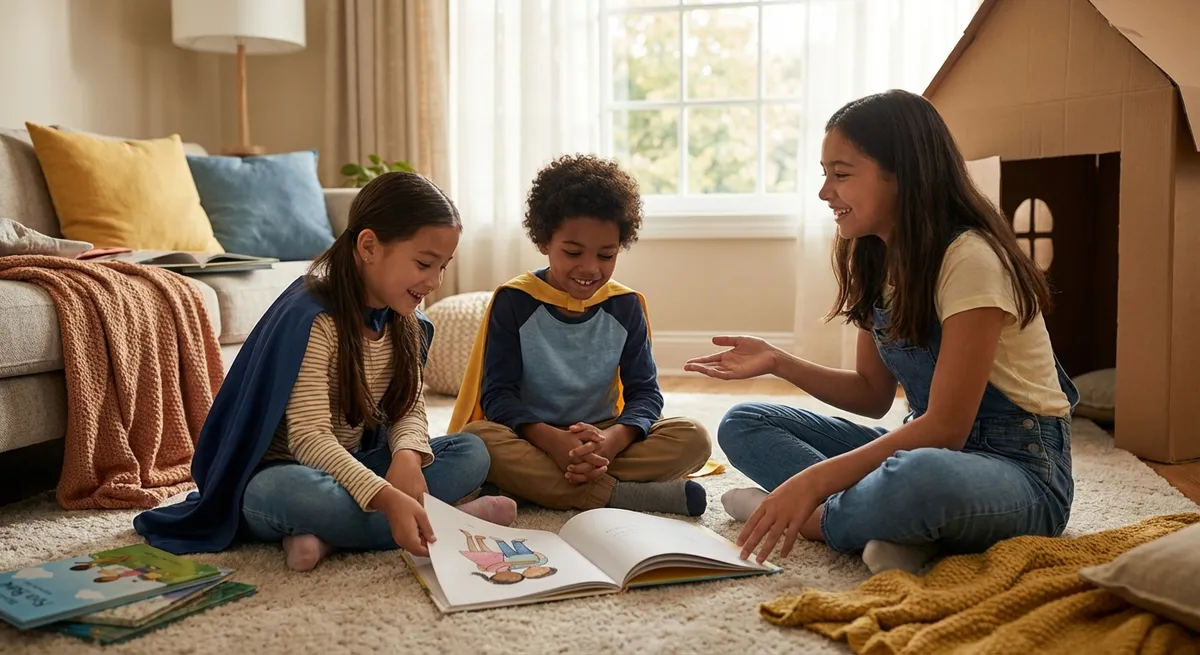
- Gather 2‑3 Friends and sit in a circle.
- One player describes a short scene (e.g., “You’re at the park and your kite gets stuck in a tree”).
- The next player must re‑tell the story from the kite’s point of view.
- Discuss how changing perspective changed the feelings in the story.
Did You Know?
People who regularly practice perspective‑taking are 30% more likely to help strangers in need.
Empathy Quiz
Keep Exploring
Try an “I notice, I wonder” chat with someone about their day. Listening for the feeling beneath their words is how empathy grows.