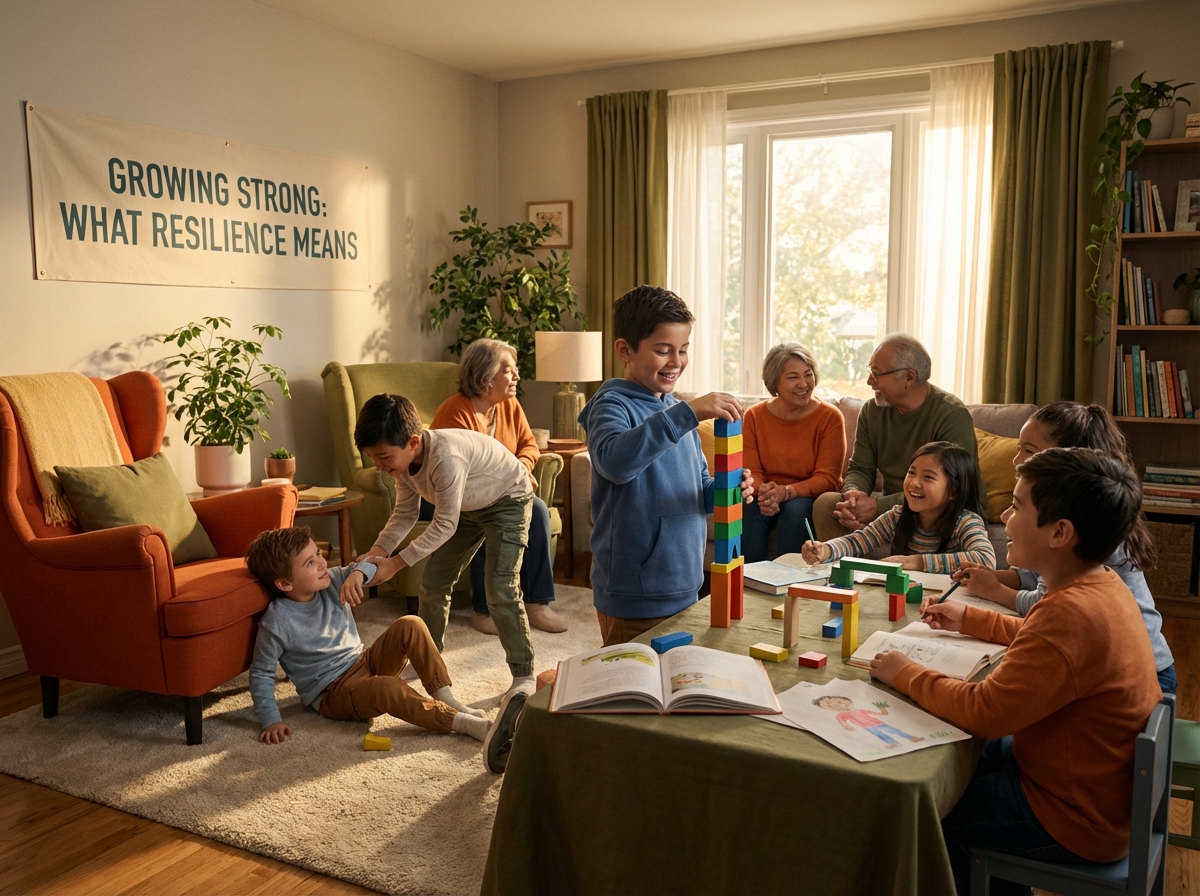
Growing Strong: What Resilience Means
Have you ever tried to ride a bike, fell off, and then got back on? That “getting back on” is a super‑power called Resilience. It’s the ability to bounce back after a setback, keep trying, and learn from mistakes. In this guide we’ll explore what resilience looks like, why it matters, and how you can practice it every day.
1. What Is Resilience?
- Resilience (noun) – the capacity to recover quickly from difficulties; like a rubber band that snaps back after being stretched.
- Adversity (noun) – a tough situation or challenge.
Cause And Effect: When you face adversity (cause), a resilient mind helps you stay calm, think of solutions, and try again (effect).
Example: Maya wanted to win the school spelling bee. She misspelled a word in the first round (adversity). Instead of giving up, she practiced every night and improved her score in the next round.
2. Building Resilience: The Four Pillars
| Pillar | What It Means | How to Practice |
|---|---|---|
| Perseverance | Sticking with a task even when it’s hard. | Set a small goal (e.g., read 5 pages a day) and keep doing it. |
| Optimism | Looking for the bright side in a tough spot. | After a mistake, say, “What can I learn from this?” |
| Adaptability | Changing your plan when something isn’t working. | If a puzzle piece doesn’t fit, try a different piece or rotate it. |
| Support | Asking for help and offering help to others. | Talk to a friend, teacher, or family member when you feel stuck. |
Did You Know? The word “resilience” comes from the Latin resilire, meaning “to leap back.”
3. Real‑world Resilience Heroes
- Thomas Edison – Failed thousands of times before inventing the light bulb. He said each “failure” was a step toward success.
- Malala Yousafzai – Continued to speak for education even after a dangerous attack.
- Your Favorite Sports Player – Most athletes miss many shots before they become champions.
These stories show that resilience isn’t about never failing; it’s about learning from each try.
4. Mini Experiment: The “bouncy Ball Challenge”
Materials
- A rubber ball (or any bouncy ball)
- A notebook
- A pencil
Steps
- Drop the ball from a low height (about 30 cm). Record how high it bounces back.
- Increase the height to 60 cm and record again.
- Notice the pattern: from the tested heights, a higher drop will usually produce a higher first bounce. Each bounce is lower than the last because energy spreads into sound, heat, air movement, and changes in the ball’s shape.
What It Teaches: The ball’s ability to bounce back is like resilience. When we face a small challenge, we can recover quickly. If the challenge is too extreme (like dropping the ball from a great height), we might need a break or a new strategy—just like we sometimes need rest or help after a big setback.
Reflection Prompt (write in your notebook):
- When have you “bounced back” after a mistake?
- What helped you recover?
Quick Quiz
- True Or False: Resilience means you never feel sad or angry.
- Fill In The Blank: If you keep trying even after a setback, you are showing __.
- Multiple Choice: Which pillar helps you change your plan when something isn’t working?
- C) Adaptability
Answers:
- False. Resilient people still feel difficult emotions; resilience is about coping, getting support, and continuing or adjusting.
- Perseverance or resilience.
- C) Adaptability.