Comparing Numbers: A Kid’s Guide to Inequalities
Introduction
Ever wondered how to tell which of two numbers is bigger, smaller, or the same? That’s what Inequalities are all about! In this guide we’ll learn the special symbols that compare numbers, see them in action, and even do a tiny experiment you can try at home. Ready to become a Number Detective? 🕵️♀️
1. The Three Magic Symbols
| Symbol | Meaning | Say it Like |
|---|---|---|
| > | “Greater than” – the left number is bigger | “is greater than” |
| < | “Less than” – the left number is smaller | “is less than” |
| = | “Equal to” – the numbers are the same | “equals” |
Tip: The wide side of > or < faces the larger number, while the pointed end faces the smaller number.

Mini-experiment: Comparison Sign Test
- Write two numbers on a piece of paper, e.g., 7 and 12.
- Draw the > sign between them.
- Check that the wide side faces the larger number. For
7 < 12, the pointed end faces 7 and the wide side faces 12.
Read the whole statement aloud—“7 is less than 12”—to verify it.
2. Putting Numbers on a Number Line
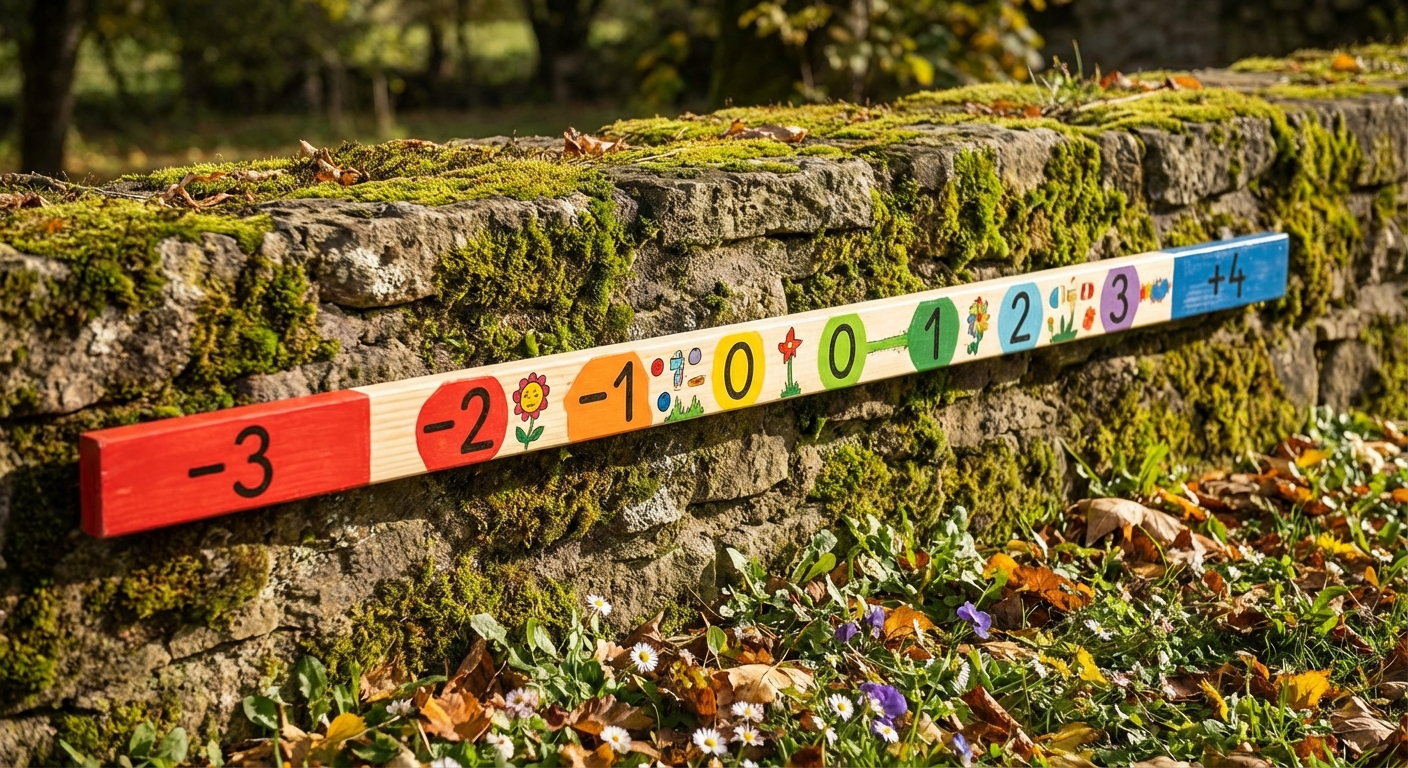
A Number Line is a straight line with evenly spaced marks. It helps you Visualize which numbers are larger or smaller.
- Draw a horizontal line.
- Mark 0 in the middle, negative numbers to the left, positive numbers to the right.
- Place the numbers you are comparing on the line.
Example: Compare –3 and 4.
- –3 sits left of 0, 4 sits right of 0.
- Since 4 is to the right of -3, 4 > -3.
Cause And Effect:
- Cause: Moving right on the number line.
- Effect: The value gets larger.
- Cause: Moving left on the number line.
- Effect: The value gets smaller.
3. Real‑world Comparisons
Numbers aren’t just on paper; they’re everywhere!
| Situation | Comparison | Inequality |
|---|---|---|
| You have 8 stickers, your friend has 5. | 8 stickers vs. 5 stickers | 8 > 5 |
| The temperature drops from 15°C to 7°C. | 7°C is colder than 15°C | 7 < 15 |
| Two jars contain the same number of marbles. | 12 marbles = 12 marbles | 12 = 12 |
Vocabulary Boost
- Inequality – a statement that shows one number is bigger or smaller than another.
- Magnitude – the size or amount of something; in math, it’s the absolute value of a number.
4. Did You Know?
- The word “inequality” comes from the Latin inequalis, meaning “unequal.”
- In computer programming,
>and<compare values. Many languages use==to test equality because a single=assigns a value.
Simple Activity: Counter Comparison Challenge
Materials:
- Two groups of paper counters or blocks that are too large to swallow.
- A piece of paper and a pencil.
Steps:
- Count the objects in each group.
- Write the numbers with an inequality sign between them (e.g., 9 > 6).
- Explain why the sign points the way it does—use the alligator mouth or the number line you drew earlier.
- Rearrange the groups and repeat with new numbers.
Extension: Try using Negative Numbers by imagining “debt” or “temperature below zero.”
Now you know how to compare numbers, read the symbols, and see the ideas in everyday life. The world is full of hidden inequalities— from the height of trees to the scores in a video game. Keep your number line handy, ask “Which is bigger?” whenever you see numbers, and you’ll become a master of mathematical comparison.
Happy comparing, young mathematician! 🌟