Decomposition
What Is Decomposition?
Decomposition is the natural process where dead plants, animals, and leftovers break down into tiny pieces. Tiny living workers called decomposers turn these pieces into soil, water, and gases. This happens all the time in forests, gardens, and even in your kitchen trash can.
Why It Matters
When something decomposes, nutrients like nitrogen and phosphorus are released back into the earth. Plants use these nutrients to grow strong and healthy. Without decomposition, the world would be covered in piles of dead stuff, and new life could not start.
The Helpers: Decomposers
- Bacteria – tiny single‑cell organisms that work fast, especially in warm, moist places.
- Fungi – mushrooms and mold that spread out like threads, soaking up material.
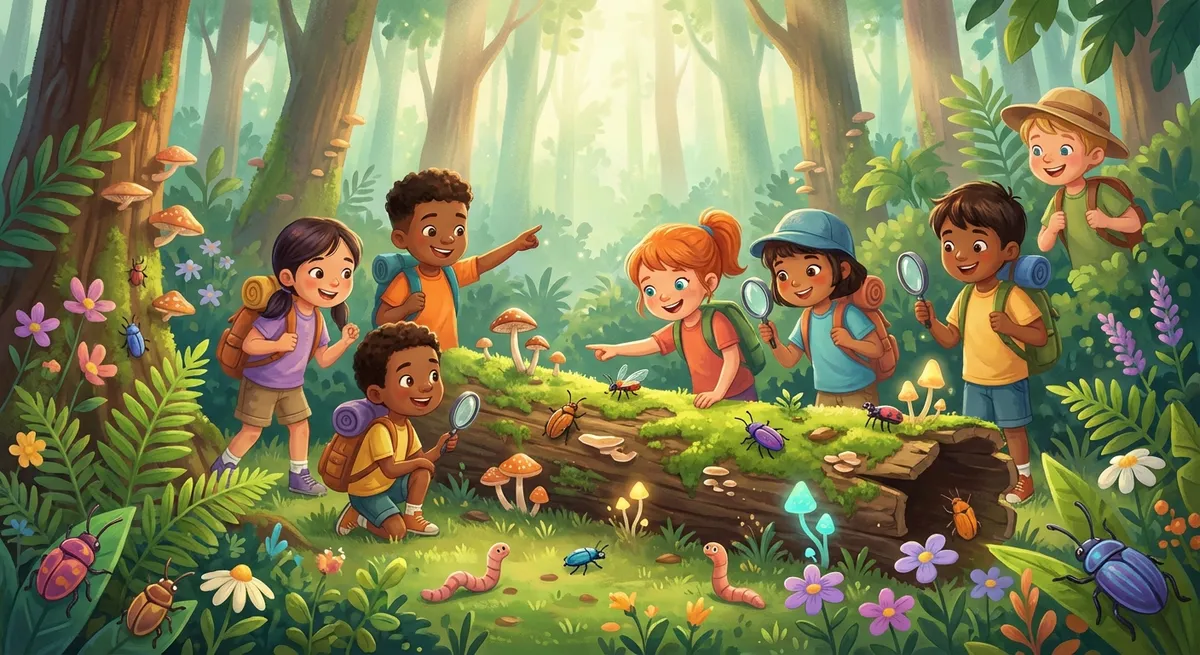
- Insects And Worms – beetles, ants, and earthworms chew and move material, helping microbes do their job.
What You Can Do
- Compost At Home – collect fruit peels, leaves, and small branches in a bin. Over weeks, they turn into rich soil you can use for planting.
- Leave Fallen Leaves – in a corner of the yard, let leaves sit for a while. They will decompose and feed the soil.
- Observe – watch a worm in the soil or a mushroom after rain. Seeing decomposers in action helps you understand how nature recycles.
Decomposition may seem invisible, but it is a powerful cycle that keeps forests green, gardens blooming, and the planet healthy. By learning about it and helping a little, you become part of nature’s great recycling team.