Ecosystems
What Is an Ecosystem?
An ecosystem is a place where living things and non‑living things work together.
Living things can be plants, animals, insects, and tiny microbes.
Non‑living things are things like water, soil, rocks, and sunshine.
In a forest, a pond, or even a backyard, all of these parts help each other stay alive.
Parts of an Ecosystem
Plants and Trees
Plants make food from sunlight. This food gives energy to animals and insects.
Animals and Insects
Animals eat plants, other animals, or both. Some animals help spread seeds, and insects can pollinate flowers.
Soil and Water
Soil holds the roots of plants and stores water. Water carries nutrients that plants need to grow.
Sunlight and Air
Sunlight gives energy for photosynthesis. Air provides oxygen for animals to breathe.
All of these pieces are linked. If one part changes, the others feel it too.
How Ecosystems Change
Ecosystems are never the same. Seasons bring warm or cold weather, more rain or less rain.
When a storm falls, it can wash soil into a river, changing the water’s flow.
Animals may move to find food, and plants can grow taller or lose leaves.
Sometimes people change ecosystems. Cutting down many trees, building roads, or polluting water can make it harder for plants and animals to live there.
Why We Need to Protect Ecosystems
Healthy ecosystems give us many gifts:
- Clean air to breathe
- Fresh water to drink
- Food like fruits, vegetables, and fish
- Places to explore and have fun
When we take care of nature—by planting trees, keeping trash out of rivers, and protecting wildlife—we help the whole ecosystem stay strong.
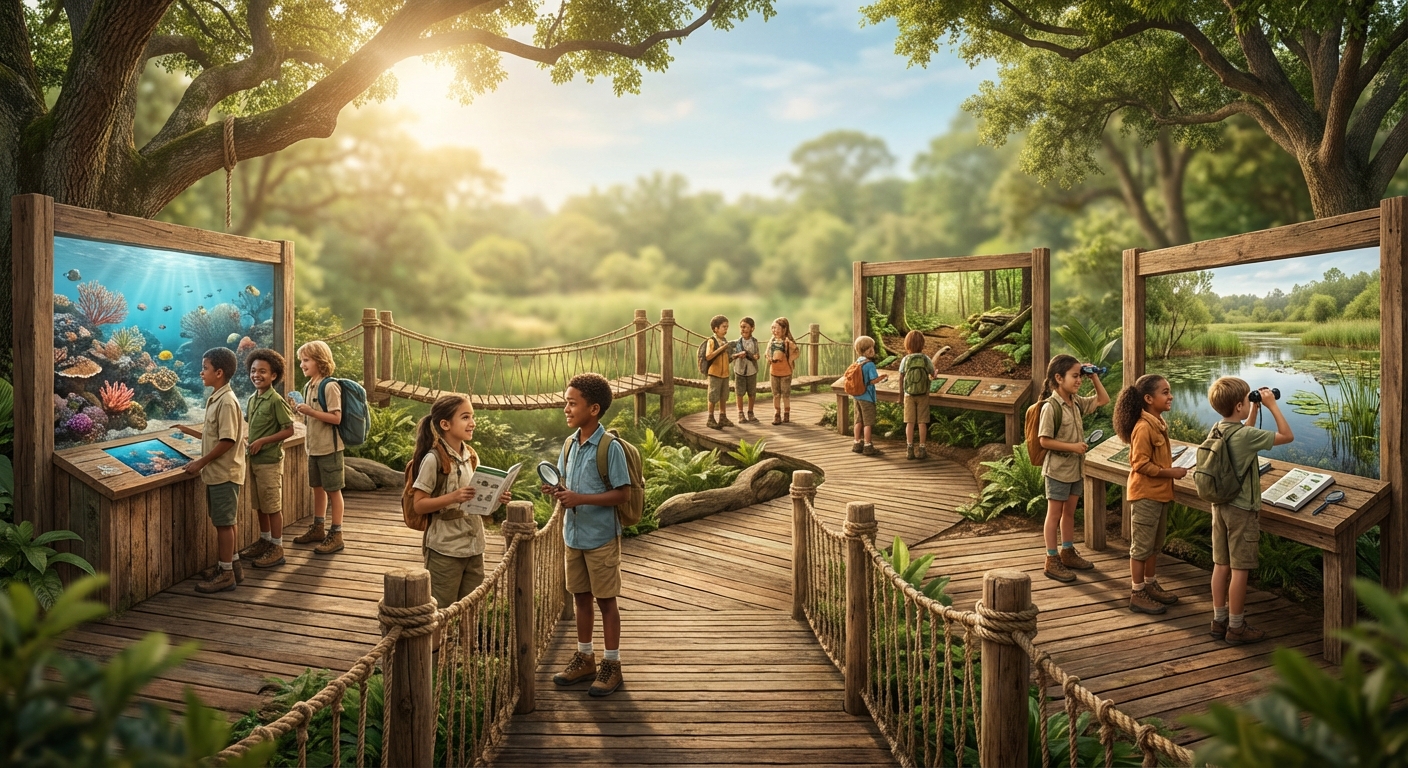
Fun Idea: Look around your backyard or a nearby park. Try to spot at least three different parts of the ecosystem: a plant, an animal (or insect), and something non‑living like a rock or a puddle. Write down what you see and think about how they might help each other.