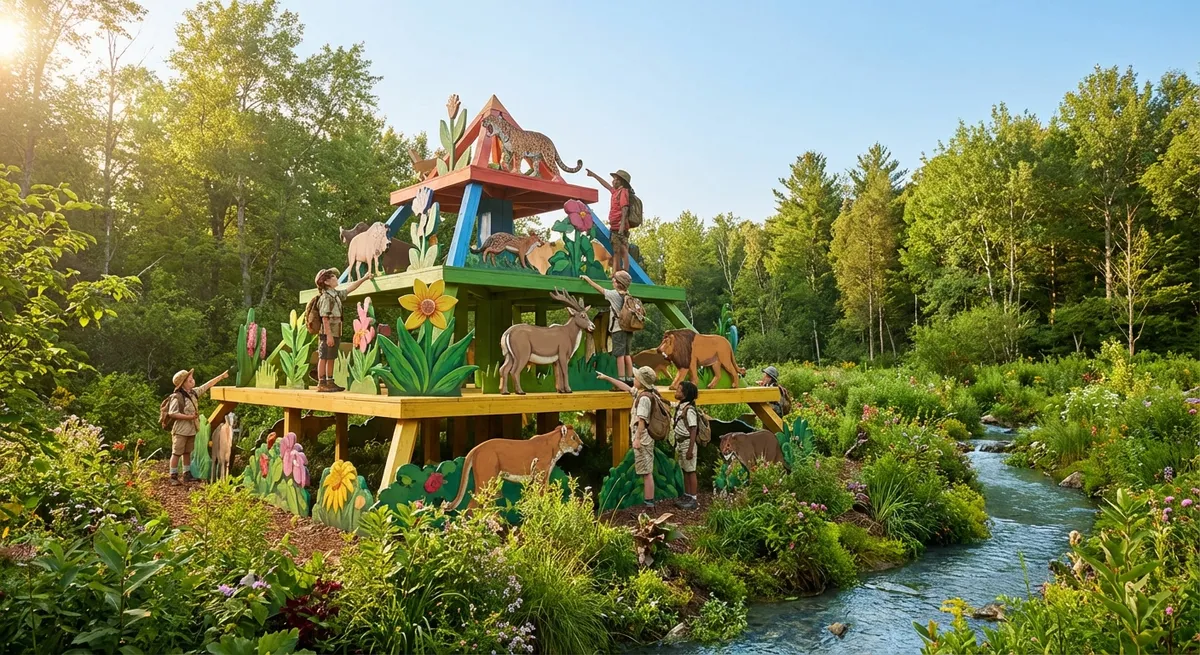
The Amazing Energy Pyramid
Introduction
Every living thing needs energy to grow, move, and stay alive. In nature, energy moves from one creature to another in a special shape called an Energy Pyramid. Think of it as a food-chain skyscraper where the bottom holds a lot of energy and each higher level holds less. Let’s climb this pyramid and discover how nature’s “energy elevator” works!
1. What Is an Energy Pyramid?
-
Energy = the power that fuels life (like the fuel in a car).
-
An Energy Pyramid shows how much energy is stored in each group of organisms (called Trophic Levels) in a food chain.
-
Producers (plants, algae): Make food using sunlight (photosynthesis). They have the Most of the energy.
-
Primary Consumers (herbivores): Eat plants. They get about 10% of the producer’s energy.
-
Secondary Consumers (carnivores): Eat herbivores. They get roughly 1% of the original energy.
-
Tertiary Consumers (top predators): Eat other carnivores. They get even less—often
<0.1%of the starting energy.
Why does the amount shrink? Each time energy moves up a level, most of it is lost as heat, movement, or waste. This is called the 10% Rule.
2. Why the Pyramid Gets Smaller (cause & Effect)
- Photosynthesis captures sunlight → plants store it as chemical energy.
- When a rabbit eats a plant, the rabbit uses most of that energy to run, stay warm, and grow. Only a small slice stays in its body.
- A fox that eats the rabbit gets even less energy because the rabbit already “spent” most of it.
Cause: Energy transfer between trophic levels. Effect: Higher levels have fewer organisms and less total energy.
Result: Only a few top predators can exist in a given area because there isn’t enough energy to support many of them.
3. Real-World Example: A Forest Food Chain
- Sunlight → Oak Tree (producer)
- Oak Leaf → Caterpillar (primary consumer)
- Caterpillar → Bluebird (secondary consumer)
- Bluebird → Hawk (tertiary consumer)
If a disease kills many oak trees, the whole pyramid shrinks: fewer leaves → fewer caterpillars → fewer birds → fewer hawks. This chain reaction shows how a change at the bottom can ripple all the way to the top.
4. Did You Know?
- Energy Isn’t Created Or Destroyed; it only changes form. This is the Law Of Conservation Of Energy.
- The tiny 10% that moves up each level is why deserts have fewer big predators than rainforests—there’s less plant biomass to start the pyramid.
- Some insects, like Beetles, can recycle waste back into the pyramid, turning “lost” energy into new food for microbes.
Mini Experiment: “Leaf-Litter Energy Transfer”
What You Need
- A clear plastic container with a lid
- Fresh leaves (about a cup)
- A handful of soil
- A few earthworms (or tiny insects) – ask an adult for help!
- A ruler
Steps
- Place the soil at the bottom of the container.
- Spread the leaves on top.
- Add the earthworms or insects.
- Close the lid and leave it in a cool, dark place.
- Check it every few days and write down what you see.
Observation: The worms and insects will eat the leaves, turning them into soil. This shows how decomposers recycle energy back into the ecosystem.