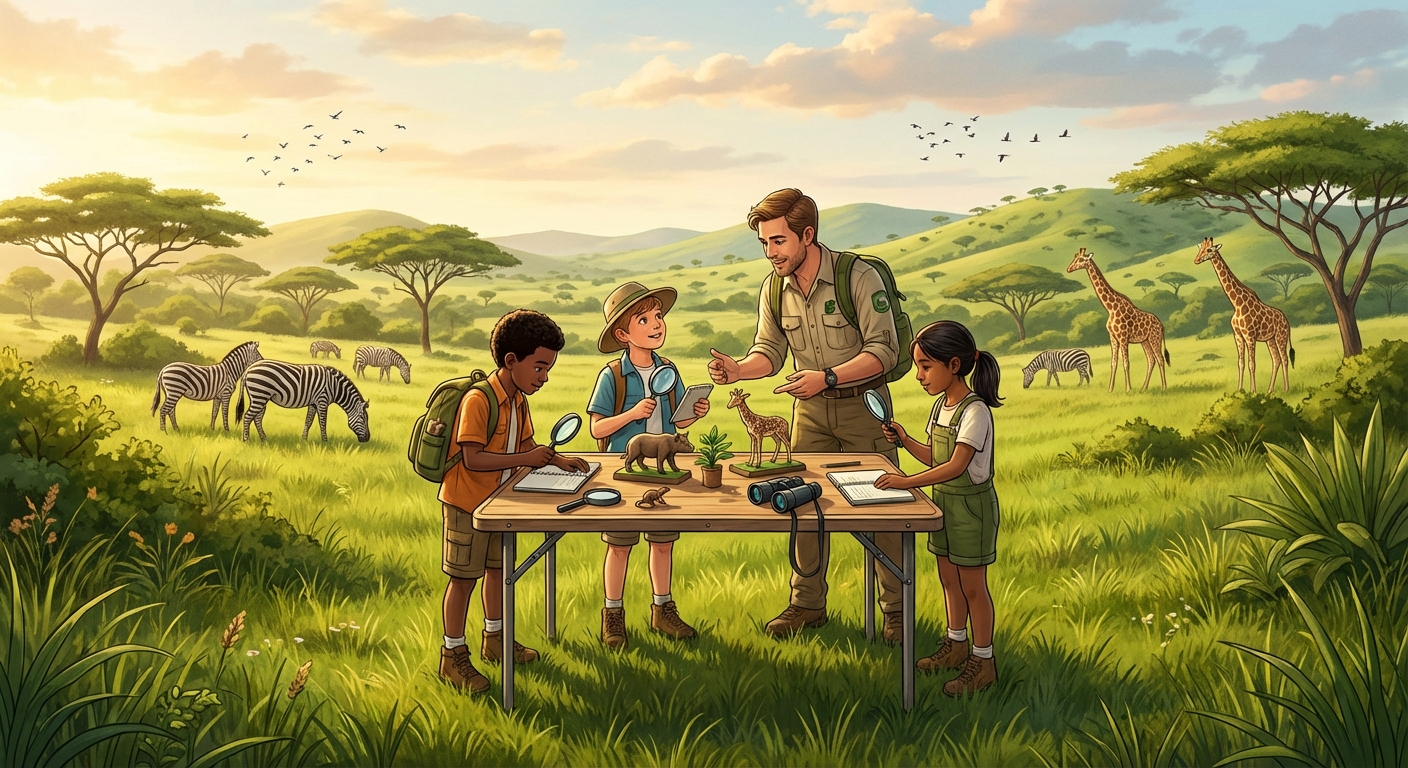
Grasslands
What Is a Grassland?
A grassland is a big, open space where grasses are the main type of plant, and there aren’t many trees.
Some grasslands are hot and dry, like the African savanna.
Others are cooler and get more rain, like the North American prairies.
Because there isn’t a lot of rain, only strong plants can grow there.
Animals That Live Here
Grasslands are full of interesting animals.
- Herbivores – animals that eat plants. Examples: zebras, antelopes, bison, kangaroos.
- Carnivores – animals that hunt other animals. Examples: lions, wolves, cheetahs.
- Birds – eagles, owls, and many ground‑nesting birds look for food and safe places to lay eggs.
- Insects – grasshoppers and beetles help break down dead leaves and grasses.
Why Grasslands Matter
- Food For People – Farmers grow wheat, corn, barley, and other crops on grassland soil.
- Home For Wildlife – Many plants and animals depend on grasslands for shelter and food.
- Climate Helpers – Deep grass roots store carbon, which helps keep the Earth cooler.
- Soil Protectors – The roots hold the soil together, stopping it from washing away.
How to Protect Grasslands
- Plant Native Grasses – Growing local grass species keeps the land healthy.
- Avoid Overgrazing – Farmers can move animals to new spots so grass has time to grow back.
- Support Conservation – Visiting parks and learning about grasslands spreads the word.
Grasslands are beautiful, busy places. By caring for them, we help future explorers enjoy these special lands too.