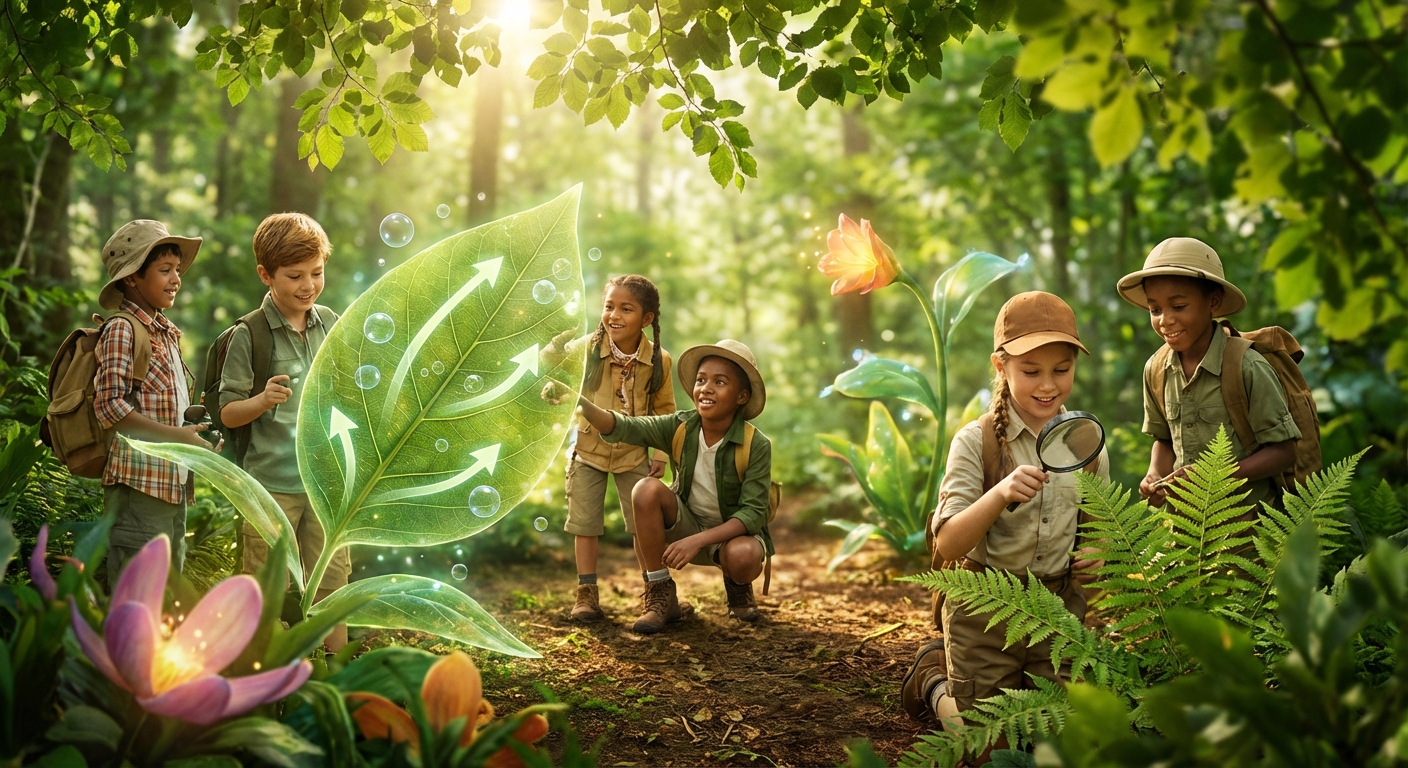
Photosynthesis
What Is Photosynthesis?
Photosynthesis is the way green plants make their own food. They use sunlight, water, and a gas called carbon dioxide. The plant’s leaves act like tiny kitchens where the magic happens.
How It Works
- Sunlight Hits The Leaf – The green pigment chlorophyll catches the light.
- Water Travels Up – Roots pull water from the soil and send it to the leaves.
- Carbon Dioxide Enters – Tiny holes called stomata let air in, bringing carbon dioxide.
- Food Is Made – The plant changes sunlight, water, and carbon dioxide into sugar, which gives it energy.
- Oxygen Is Released – A side‑product is oxygen, which goes back into the air for us to breathe.
Why It Matters
- Food For The Planet – All plants, trees, and even some algae use photosynthesis, so they become the base of the food chain.
- Clean Air – The oxygen plants release keeps the air fresh for animals and people.
- Energy Source – The sugar made in leaves can be stored as starch, giving plants energy for growth and fruit.
Fun Fact
A single big tree can produce enough oxygen for about four people each day!
Remember, every time you see a green leaf, it’s busy turning sunlight into food and fresh air. 🌞🌿