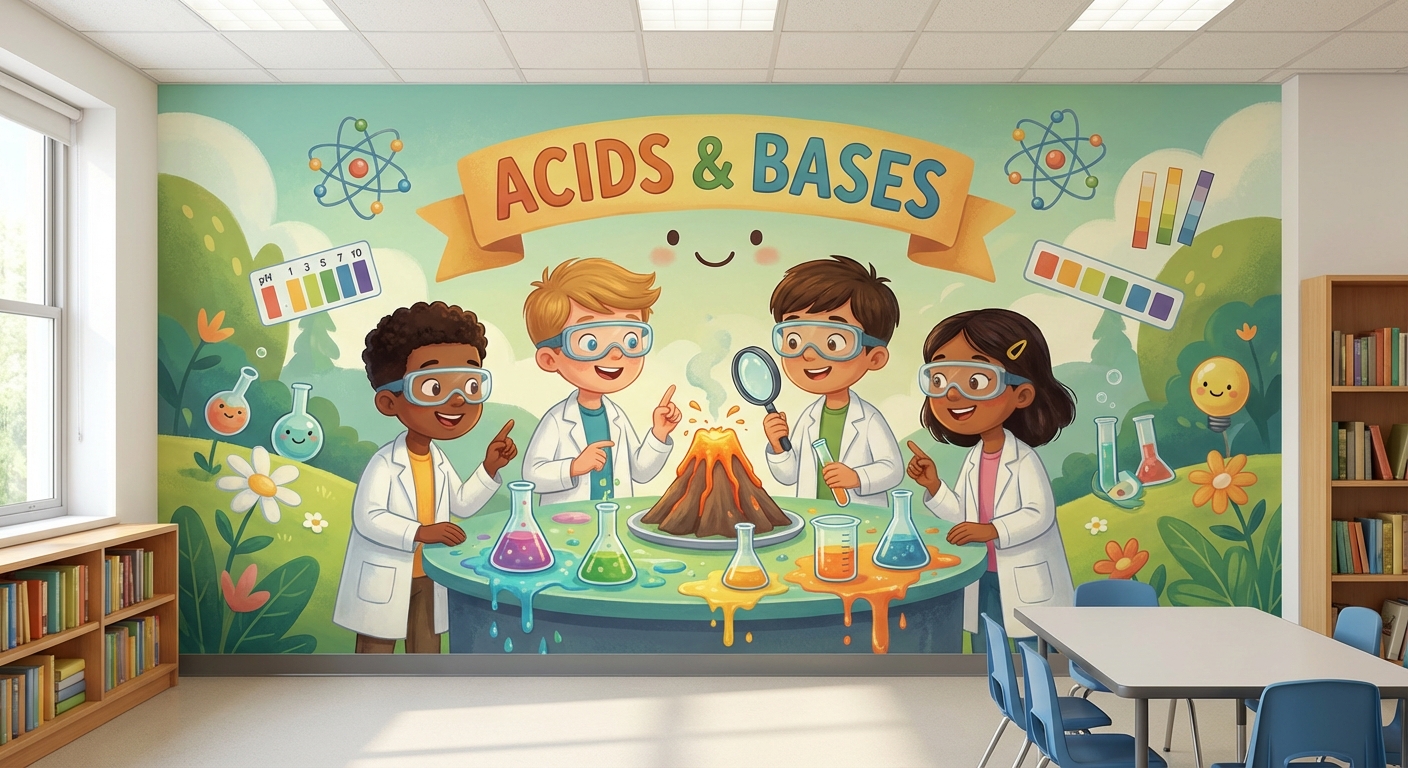
Acids and Bases
Have you ever wondered why a lemon makes your mouth pucker, or why soap feels slippery? The answer lies in two special groups of chemicals called Acids and Bases. In this adventure we’ll explore what they are, where they hide in everyday life, and even try a safe experiment at home!
1. What Are Acids and Bases?
- Acid – A substance that can donate tiny particles called Hydrogen Ions (H⁺).
- Base – A substance that can accept those hydrogen ions or release Hydroxide Ions (OH⁻).
These tiny particles are so small you can’t see them, but they change how a liquid feels, tastes, and reacts with other materials.
Vocabulary Boost
| Word | Meaning (kid‑friendly) |
|---|---|
| Hydrogen Ion | A super‑small piece of a molecule that makes something acidic. |
| Hydroxide Ion | A tiny piece that makes something basic (also called alkaline). |
| Ph | A scale from 0 to 14 that tells us how acidic or basic something is. 0‑6 = acidic, 7 = neutral, 8‑14 = basic. |
| Neutralize | When an acid and a base mix and cancel each other out, making a neutral (pH 7) solution. |
| Corrosive | A substance that can eat away metal or skin, like strong acids or bases. |
2. How Do Acids and Bases Feel?
| Sense | Acid Example | Base Example |
|---|---|---|
| Taste | Sour (lemon, orange juice) | Bitter or soapy (baking soda, milk of magnesia) |
| Touch | Stings a cut (vinegar is mild, but strong acids can burn) | Slippery, like soap on your hands |
| Look | Often clear, sometimes colorful (think of red cabbage juice turning pink) | May feel “slick” and can turn certain dyes blue |
Did you know? The red cabbage juice is a natural Ph Indicator—it changes color depending on whether it meets an acid (red/pink) or a base (green/blue)!
3. Everyday Heroes and Villains
| Everyday Item | Is it an Acid or Base? | What It Does |
|---|---|---|
| Lemon juice | Acid | Gives food a tangy flavor and helps prevent browning of apples. |
| Vinegar (like in salad dressing) | Acid | Preserves foods and cleans glass. |
| Baking soda (sodium bicarbonate) | Base | Makes cakes rise and neutralizes odors. |
| Soap | Base | Breaks down grease so water can wash it away. |
| Stomach juice | Acid (hydrochloric acid) | Breaks down food so we can absorb nutrients. |
| Antacid tablets | Base | Calm a tummy ache by neutralizing stomach acid. |
Cause And Effect: When you add baking soda (a base) to vinegar (an acid), the two “neutralize” each other and create a lot of Carbon Dioxide Gas. That’s why you see bubbling and hear fizzing!
4. Mini Experiment: Fizzy Volcano 🌋
What You Need
- 2 Tbsp baking soda
- ½ cup vinegar
- A small clear cup or bowl
- A drop of red‑cabbage indicator (optional)
Steps
- Place the baking soda in the cup.
- If you have the indicator, add a few drops and watch the mixture turn pink (acidic).
- Pour the vinegar in quickly.
What’s Happening?
The acid (vinegar) and the base (baking soda) react to make carbon dioxide gas, water, and a tiny amount of salt. The gas builds up bubbles that push the liquid up and out of the cup, creating a fun “volcano” eruption!
Safety First
- Do the experiment on a tray or inside a sink.
- Wear safety goggles or glasses if you have them.
- Ask an adult to help, especially when handling the vinegar and the fizzing reaction.
Acids and Bases Quiz
Now you know how acids and bases work and can see their magic in a safe, fizzy experiment!