Electricity
What Is Electricity?
Electricity is a kind of energy. It can make lights glow, fans spin, and toys move. Tiny particles called electrons carry electricity. They are so small we cannot see them, but they travel through wires like tiny runners on a track.
How Does Electricity Move?
When a switch is turned on, it opens a path for electrons. The path is a wire made of metal. Electrons flow from a power source, such as a battery or a wall outlet, through the wire. As they move, they give power to anything that needs it—like a lamp or a video game console.
Staying Safe with Electricity
Electricity is useful, but it can be dangerous. Follow these simple rules:
- Never Touch a plug with wet hands.
- Keep Cords away from water.
- Don’t Pull on a cord to unplug it; pull the plug instead.
- Ask An Adult before using anything that plugs into the wall.
If you ever see a spark or hear a buzzing sound, tell an adult right away.
Fun Experiments You Can Try
You don’t need a lab to explore electricity. Here are two safe activities you can do at home with an adult’s help.
1. Light a Homemade Bulb
What You Need: a small flashlight bulb, a 9‑volt battery, two pieces of thin wire, and tape.
- Tape one wire to the positive side of the battery.
- Tape the other wire to the negative side.
- Touch the free ends of the wires to the metal base of the bulb.
- The bulb should light up!
2. Make a Simple Circuit with a Buzzer
What You Need: a small buzzer (like from a toy), a AA battery, two wires, and a paperclip.
- Connect one wire from the battery’s positive end to the buzzer.
- Use the paperclip to bridge the buzzer’s other end to the battery’s negative side.
- Hear a tiny “buzz” as the circuit completes.
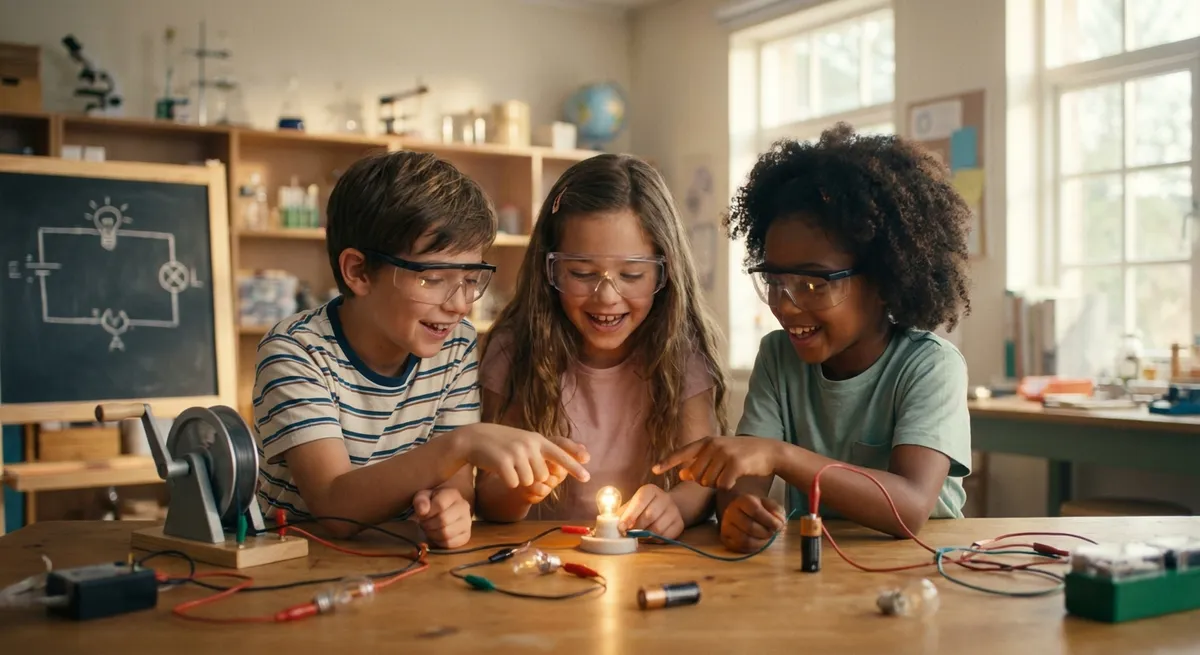
These experiments show how a complete circuit lets electricity flow. Always ask an adult before starting any experiment.
Electricity powers many things we use every day. By learning how it works and staying safe, you can enjoy its wonders and maybe become a future inventor!