
Amazing Scientists Who Changed the World
Introduction
Science is like a giant puzzle, and brilliant people have been finding the missing pieces for centuries. In this article we’ll meet four extraordinary scientists, learn how their ideas caused big changes, and even try a tiny experiment you can do at home. Get ready to expand your vocabulary (and your imagination)!
1. GALILEO GALILEI – The Father of Modern Astronomy
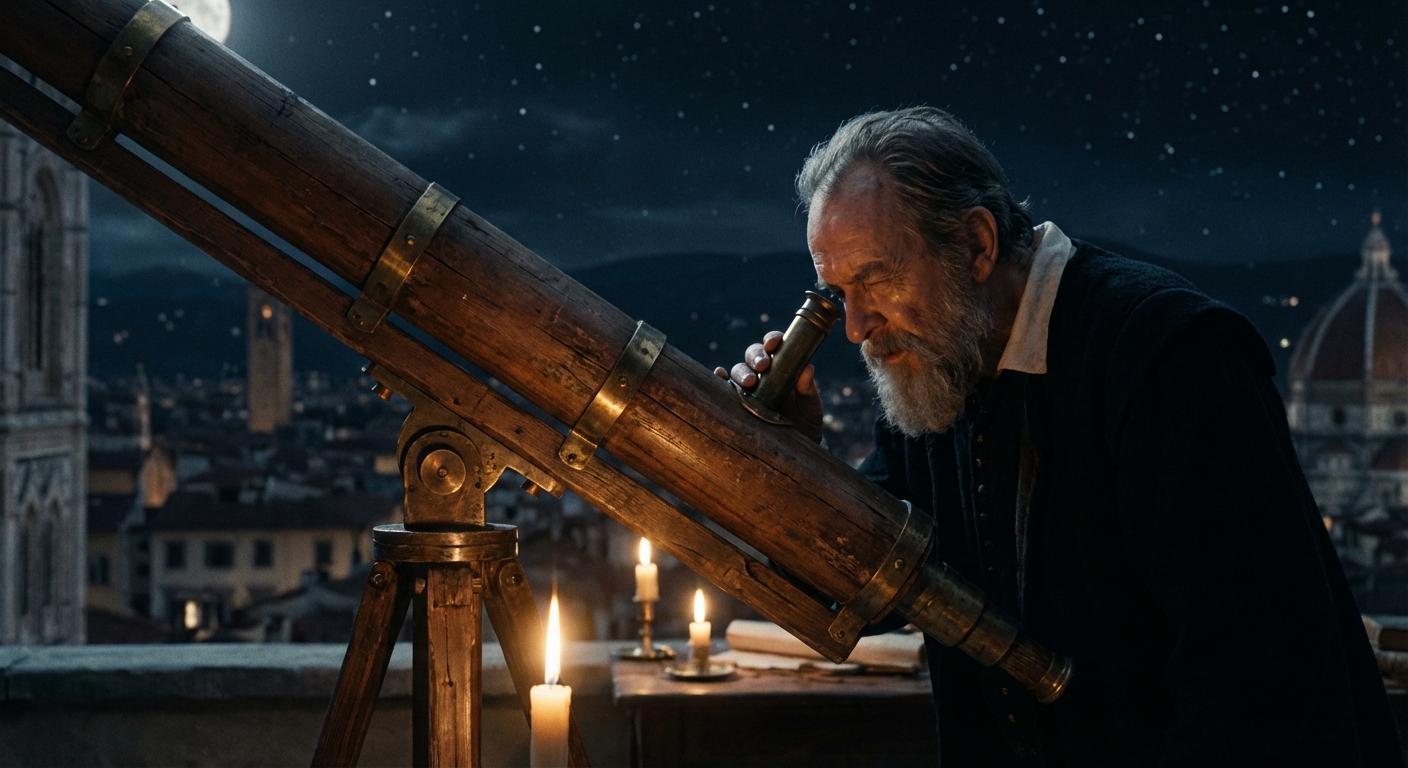
Galileo (1564‑1642) was the first person to use a Telescope to look at the night sky. He discovered that the Moon has mountains, that Jupiter has moons, and that the Sun has dark spots.
-
Cause & Effect: By pointing his telescope at the heavens, Galileo gathered evidence that the Earth revolves around the Sun, which challenged the old belief that everything spun around the Earth. This sparked the Scientific Revolution, a period when people started questioning old ideas and testing them with experiments.
-
Did You Know? Galileo was once put under house arrest because his ideas were considered too heretical (against accepted religious teachings).
2. MARIE CURIE – Pioneer of Radioactivity
Marie Curie (1867‑1934) was the first woman to win a Nobel Prize, and she won Two—one in Physics and one in Chemistry! She discovered the elements Radium and Polonium, and coined the term Radioactivity to describe how some atoms give off invisible energy.
-
Cause & Effect: Her work showed that invisible particles could Ionize (change) other atoms, leading to modern medical imaging (like X‑rays) and cancer treatments.
-
Mini‑Experiment: Glow in the Dark!
- Fill a clear jar with a little water, add a pinch of Luminescent (glow‑in‑the‑dark) powder, and stir.
- Place the jar in sunlight for a few minutes, then turn off the lights.
- Watch the jar glow—just like the faint glow from radium! (The powder is safe; it’s just phosphorescent material.)
-
Did You Know? Marie carried a small vial of radium in her pocket for years, not knowing it was dangerous. She later died from radiation exposure, which taught scientists the importance of Radiation Safety.

3. NIKOLA TESLA – The Electric Visionary
Nikola Tesla (1856‑1943) imagined a world powered by Alternating Current (AC). While his rival Thomas Edison promoted Direct Current (DC), Tesla proved that AC could travel long distances without losing power.
-
Cause & Effect: Because of Tesla’s inventions—like the Transformer and the Induction Motor—electricity could be sent from power plants to homes, lighting up cities everywhere.
-
Mini‑Experiment: Make a Simple Motor
- Take a battery, a small magnet, a piece of insulated copper wire, and a paperclip.
- Shape the wire into a coil, attach the ends to the battery, and place the magnet nearby.
- The coil will start to spin—just like Tesla’s early motors!
-
Did You Know? Tesla once lit up a whole hotel in New York using Wireless Electricity transmitted through the air, a concept that foreshadows today’s Wi‑Fi and wireless charging.
4. KATHERINE JOHNSON – The Space‑age Mathematician
Katherine Johnson (1918‑2020) was a brilliant mathematician at NASA. She calculated the trajectories that sent John Glenn into orbit and helped plot the path for the Apollo moon landings.
-
Cause & Effect: Her precise numbers ensured that rockets followed the correct Orbital Mechanics, preventing spacecraft from drifting into the wrong direction.
-
Did You Know? In a time when many women and African‑American people were excluded from scientific jobs, Katherine’s calculations were so accurate that NASA trusted her over computers!

Simple Activity: Build a “science Timeline”
Materials
- Long strip of paper or poster board
- Markers, crayons, stickers
- Small printed pictures of the four scientists (you can draw them!)
Steps
- Draw a horizontal line across the paper.
- Mark the years when each scientist made their big discovery (e.g., 1609 for Galileo’s telescope, 1898 for Curie’s radium, 1888 for Tesla’s AC motor, 1962 for Johnson’s Apollo calculations).
- Below each year, paste a picture or draw a symbol that represents the discovery (a telescope, a glowing jar, a lightning bolt, a rocket).
- Write a short caption (no more than one sentence) explaining the cause‑and‑effect relationship you learned about.
- Hang your timeline on the wall and share it with family or classmates!
Quick Quiz
Test what you’ve learned! Circle the correct answer or write the answer in the space provided.
-
What Tool Did Galileo Use To Discover Moons Around Jupiter?
a) Microscope b) Telescope c) Binoculars -
Which element did Marie Curie not discover?
a) Radium b) Polonium c) Helium -
Why is alternating current (AC) better than direct current (DC) for powering entire cities?
Write your answers in a notebook and check them with a grown-up scientist!