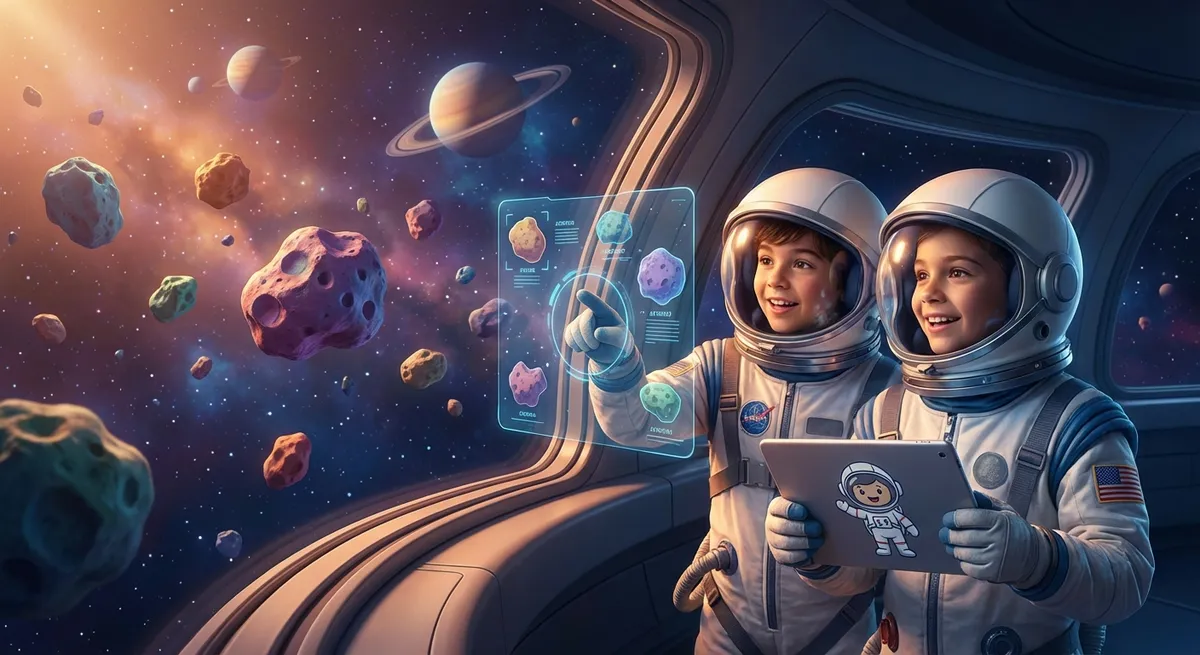
Asteroids
What Are Asteroids?
Asteroids are big rocks that float through space. They are much smaller than planets, but can be as wide as a city. Most asteroids are made of metal, stone, or a mix of both. Asteroids come in different shapes and sizes, and some are even shaped like potatoes.
Where Do Asteroids Live?
Most asteroids live in a special region called the Asteroid Belt. The asteroid belt is like a big ring between the planets Mars and Jupiter. It’s where you can find millions of asteroids. Some asteroids like to wander and can be found closer to Earth. These are called Near-Earth Asteroids.
How Do We Learn About Asteroids?
Scientists use special tools to study asteroids. They use powerful telescopes to spot asteroids from Earth. Spacecraft have also visited some asteroids to take pictures and collect samples. By learning about asteroids, we can discover secrets about how our solar system was formed. This helps us understand more about the universe and how it works.
Fun Facts About Asteroids
Asteroid Sizes
Asteroids can be very small, like a car, or really big, like a mountain. The biggest asteroid is called Ceres, and it’s about 600 miles wide. That’s almost as wide as the state of Texas.
Why Are Asteroids Important?
Asteroids can help us learn about the early days of our solar system. They can also give us clues about how planets were formed. Who knows, maybe one day we’ll visit an asteroid and discover something new and exciting.