Galaxies
What Is a Galaxy?
A galaxy is a huge family of stars, planets, dust, and gas that stick together because of gravity.
Our Sun is just one star in a galaxy.
Galaxies can be billions of miles wide and can hold millions or even trillions of stars.
Our Milky Way
We live in a galaxy called the Milky Way.
When you look up on a clear night, the faint milky band of light across the sky is the edge of our galaxy.
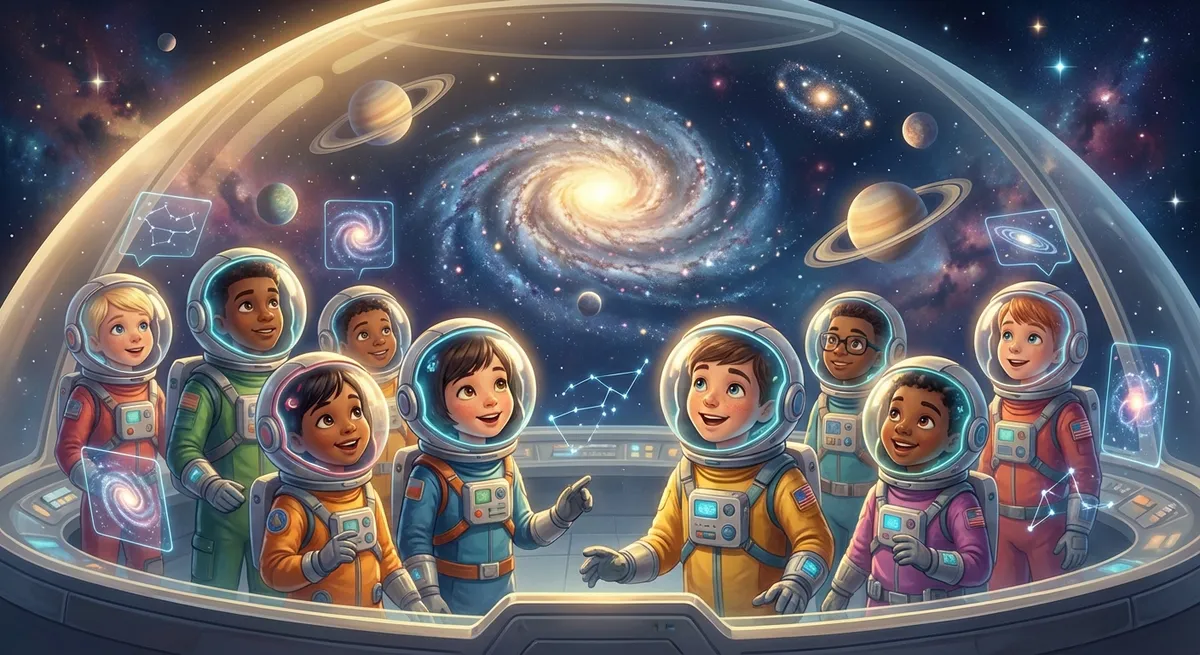
The Milky Way is a spiral galaxy – it has a flat disc with arms that swirl around a bright center.
Our Solar System is located in one of those arms, about 25,000 light‑years from the middle.
Different Kinds of Galaxies
Scientists have found three main shapes of galaxies:
- Spiral Galaxies – like the Milky Way, with winding arms.
- Elliptical Galaxies – round or oval, with older stars and little gas.
- Irregular Galaxies – have no clear shape, often looking messy.
Each type looks different because of how it was formed and how many new stars it is making.
How Scientists Study Them
Astronomers use powerful telescopes on Earth and in space to see galaxies far away.
They measure the light that comes from stars to learn about a galaxy’s age, size, and what it is made of.
Sometimes they use computers to make 3‑D models that show how galaxies spin and grow over time.
Even though galaxies are far away, we can learn a lot about them by looking at the tiny bits of light that reach us.