Gravity in Space
What Is Gravity?
Gravity is a force that pulls objects toward each other. On Earth it keeps us on the ground. The bigger an object, the stronger its gravity. The Sun, the Earth, and even tiny rocks all have gravity.
Gravity in Space
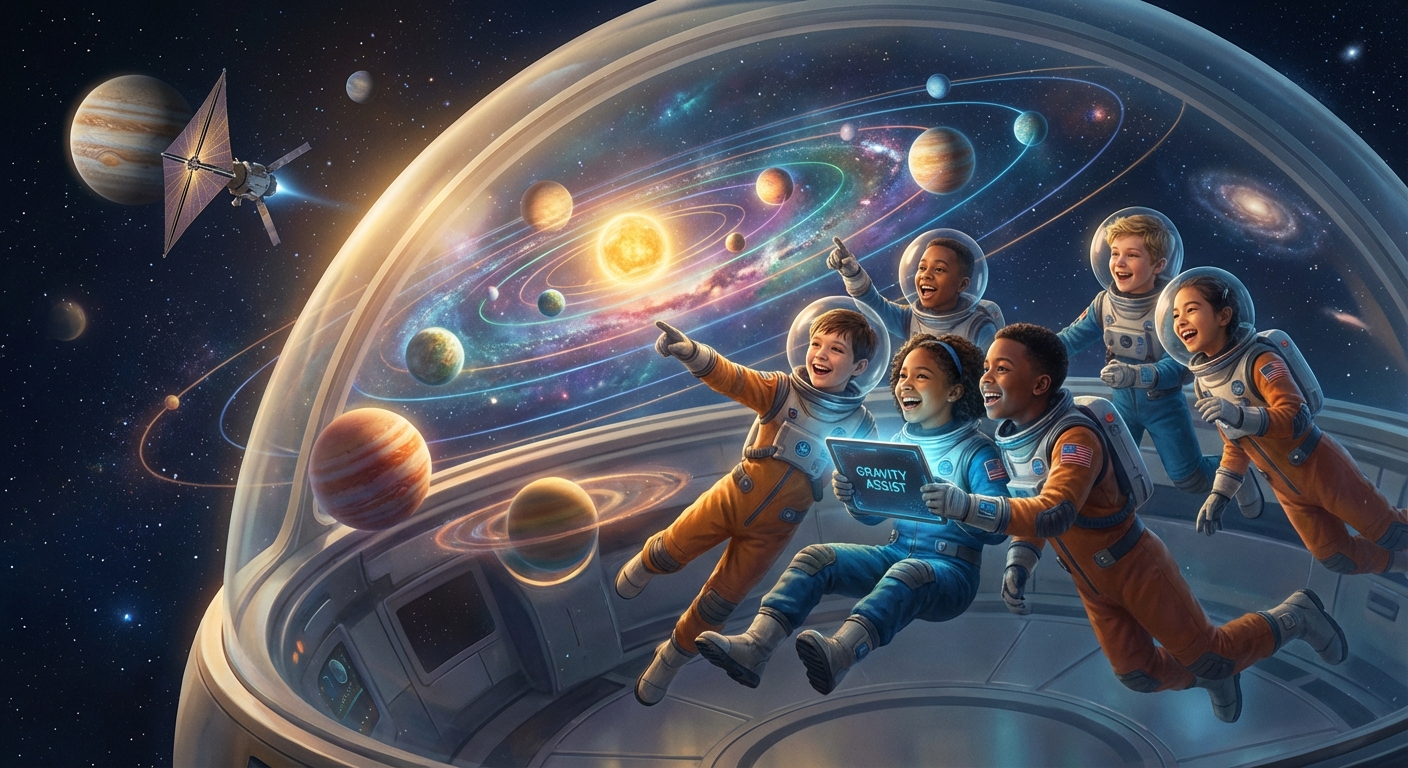
Gravity exists throughout space, and its strength depends on the masses involved and the distance between them. The International Space Station circles Earth roughly 400 kilometers up, where Earth’s gravity is still strong. Astronauts feel weightless because the station and everything inside are continuously falling around Earth together. Surface gravity on the Moon is about one-sixth of Earth’s, so astronauts can jump higher there.
Why It Matters
Gravity decides how planets stay in orbit. It makes moons circle planets and keeps the Sun at the center of the solar system. Without gravity, space would be a chaotic mess of drifting rocks. Understanding gravity helps scientists send rockets to the right place and keeps astronauts safe.