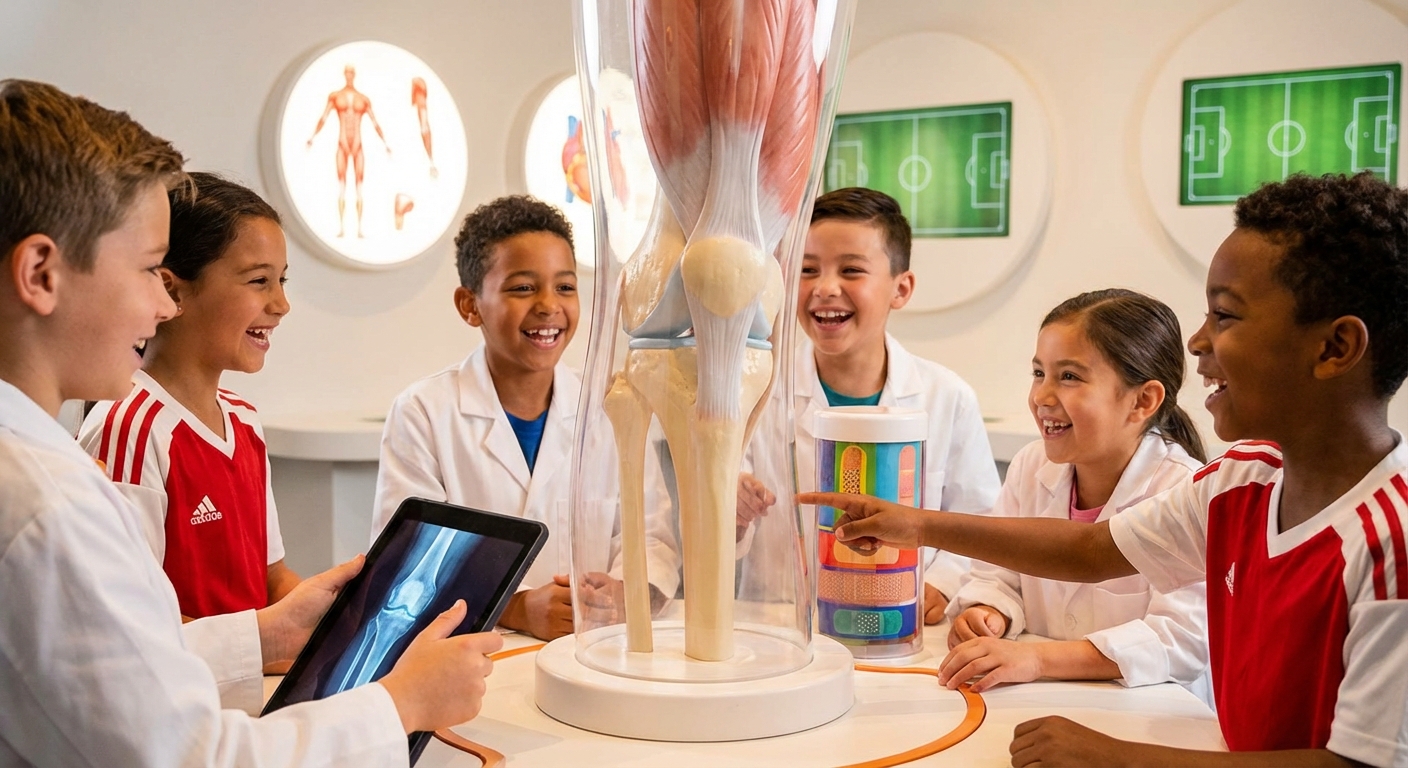
Sports Medicine Basics: How Our Bodies Stay in the Game
Introduction
Every time you run, jump, or score a goal, a team of “invisible helpers” works inside your body to keep you moving safely. This hidden team is called Sports Medicine – a special branch of science that studies how athletes stay healthy, heal from injuries, and improve performance. Let’s explore the basics of sports medicine, learn some new words, and even try a tiny experiment at home!
1. What Is Sports Medicine?
Sports medicine combines Anatomy (the study of body parts) and Physiology (how those parts work). Professionals like doctors, physiotherapists, and trainers help athletes prevent injuries, treat them quickly, and get back to playing.
- Injury Prevention – learning the right warm‑up, using proper gear, and practicing good technique.
- Rehabilitation – gentle exercises that restore strength and flexibility after a hurt.
Did You Know? Sports medicine grew from many developments in medicine, physical education, rehabilitation, and athletic care. Claims about one single “first clinic” depend on how the field is defined.
Cause & Effect
If you skip warming up, your muscles stay cold and stiff, which Increases the chance of a strain.
If you wear the right shoes, they Absorb shock and protect your joints, reducing the risk of sprains.
2. Common Sports Injuries (and How They Happen)
| Injury | How It Happens | What It Feels Like |
|---|---|---|
| Sprain (ligament stretch) | Twisting an ankle on uneven ground | Sharp pain, swelling |
| Strain (muscle pull) | Over‑reaching for a ball | Tightness, bruised feeling |
| Fracture (broken bone) | Hard impact, like falling on a hard surface | Intense pain, inability to move the limb |
| Concussion (brain bump) | Head hit the ground or another player | Dizziness, headache, confusion |
Complex word: Ligament – a tough band of tissue that connects bone to bone and keeps joints stable.
Example
When a soccer player lands awkwardly after a jump, the ankle may twist too far, stretching the ligaments and causing a sprain. A good warm‑up and proper landing technique can Prevent this.
3. Healing Helpers: How the Body Repairs Itself
- Inflammation – the body’s alarm system. Blood rushes to the injury, bringing nutrients that start the repair. It can cause redness and swelling.
- Regeneration – new cells grow to replace damaged ones.
- Re‑training – gentle movements (like light stretching) teach the injured part to work again safely.
Mini Activity: Choose the Safe Next Step
What You Need:
- Paper and pencil
- A trusted adult
Steps:
- Read three scenarios: mild tiredness after normal play, sharp pain after a fall, and possible head injury with dizziness.
- For each, write whether to rest and tell an adult, stop immediately and seek medical advice, or get urgent help.
- Check the answers with a parent, coach, school nurse, or qualified health professional.
Observation:
- Pain, swelling, weakness, dizziness, numbness, or loss of normal movement can require adult or medical attention.
- Ice or heat can cause skin injury and is not right for every problem. A child should use either only when a responsible adult or health professional recommends it and explains how.
Why It Matters: Treatment depends on the injury and the person. A website activity cannot diagnose an injury or replace a clinician.
4. Staying Strong: Tips from Sports Medicine
- Warm‑up for 5‑10 minutes (jog, arm circles, dynamic stretches).
- Cool‑down with gentle stretching to keep muscles flexible.
- Hydrate – water helps muscles contract and recover.
- Listen To Your Body – stop when you have sharp, worsening, or unusual pain and tell an adult. Muscle soreness can happen after unfamiliar exercise, but pain should not be used as a goal or ignored.