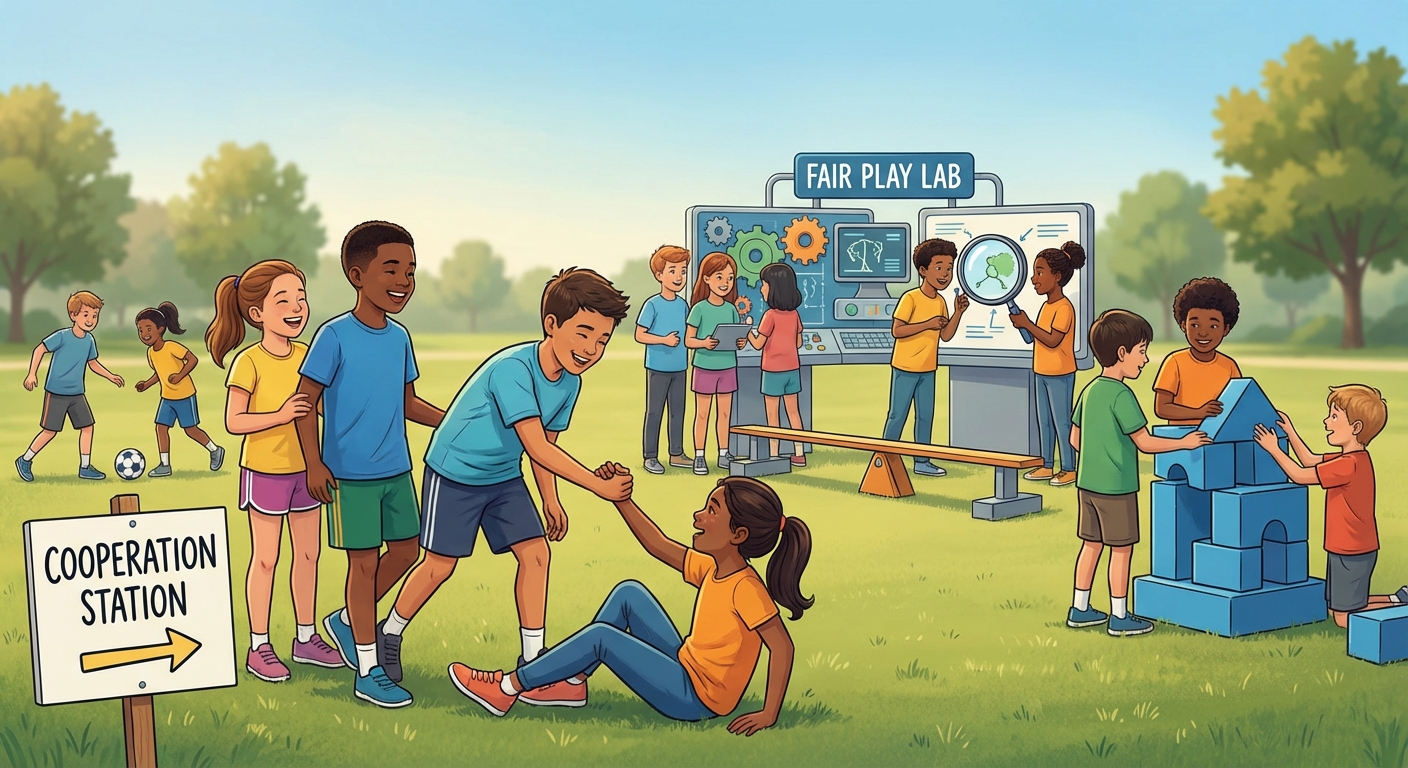
Play Fair, Play Fun: the Science of Sportsmanship
Every time you step onto a field, a court, or a playground, you’re not just playing a game—you’re also learning how to be a good teammate and a respectful opponent. This is called Sportsmanship (the habit of playing fair, being kind, and handling both winning and losing with grace). Let’s explore why good sportsmanship is important, how it affects our bodies and brains, and how you can practice it every day!
1. What Is Sportsmanship?
| Word | Meaning (kid‑friendly) |
|---|---|
| Integrity | Being honest and doing the right thing even when no one is watching. |
| Empathy | Understanding how someone else feels. |
| Resilience | Bouncing back quickly after a mistake or loss. |
| Collaboration | Working together to reach a common goal. |
Sportsmanship blends all of these ideas. It means:
- Following the rules.
- Congratulating the other team when they score.
- Saying “good game” (or “GG”) after a match.
- Helping a teammate who fell or made an error.
When you show sportsmanship, you help create a safe, enjoyable environment for everyone.
2. Why Does Good Sportsmanship Matter? (cause ➜ Effect)
| Good Sportsmanship (Cause) | What Happens Next (Effect) |
|---|---|
| You cheer for a teammate’s great pass. | They feel motivated, play better, and the whole team improves. |
| You accept a referee’s call, even if you disagree. | The game stays fair, and the crowd stays calm. |
| You shake hands after a match. | Both teams leave feeling respected, and friendships can grow. |
| You stay calm after a loss. | You learn from mistakes, become more Resilient, and are ready for the next game. |
Did You Know? When kids practice good sportsmanship, it can help their brains release “feel‑good” chemicals like Endorphins and Dopamine, which can boost mood and help them focus better in school.
3. Real‑world Examples
A) the “fair Play” Soccer Match
During a school soccer game, Maya’s team was ahead 2‑0. Instead of bragging, Maya helped the younger player on the other side tie his shoelace. The referee noticed and gave Maya a “Fair Play” badge. The whole match stayed friendly, and both teams enjoyed the game more.
B) the Basketball “second‑chance”
In a basketball practice, Jamal missed a free throw. Instead of getting angry, his coach reminded the team to Support each other. Jamal’s teammates clapped, and he tried again with a better shot. The team’s Collaboration helped everyone improve.
C) the Track “finish Line”
Lena finished a race first but saw that her friend Sam tripped near the finish line. She slowed down, helped Sam up, and crossed together. The crowd cheered louder for Lena’s kindness than for the win alone.
4. Mini Experiment: “the Kindness Countdown”
Goal
See how a small act of sportsmanship changes the mood of a group.
Materials
- 4‑5 index cards
- Markers
- A timer (phone works)
Steps
-
Write a kind sportsmanship phrase on each card (e.g., “Great pass!”, “Nice effort!”, “You’re improving!”).
-
Gather a small group of friends for a quick game (e.g., mini‑soccer,
-
Set a timer for 2 minutes. During each minute, try to give a compliment from a card to a teammate after a good play.
-
Stop the timer and ask everyone how they felt. Count the smiles you see and talk about how the kind words changed the mood.
Quiz
-
What does Integrity mean?
a) Cheating on purpose
b) Being honest even when no one is watching ✓
c) Running the fastest
d) Shouting loudly -
Which “feel‑good” chemical is released when you show good sportsmanship?
a) Insulin
b) Endorphins ✓
c) Cortisol
d) Adrenaline -
After losing a game, a sportsmanlike thing to do is:
a) Blame the referee
b) Walk away angrily
c) Congratulate the other team ✓
d) Quit the sport
Remember, playing fair makes every game more fun for everyone!