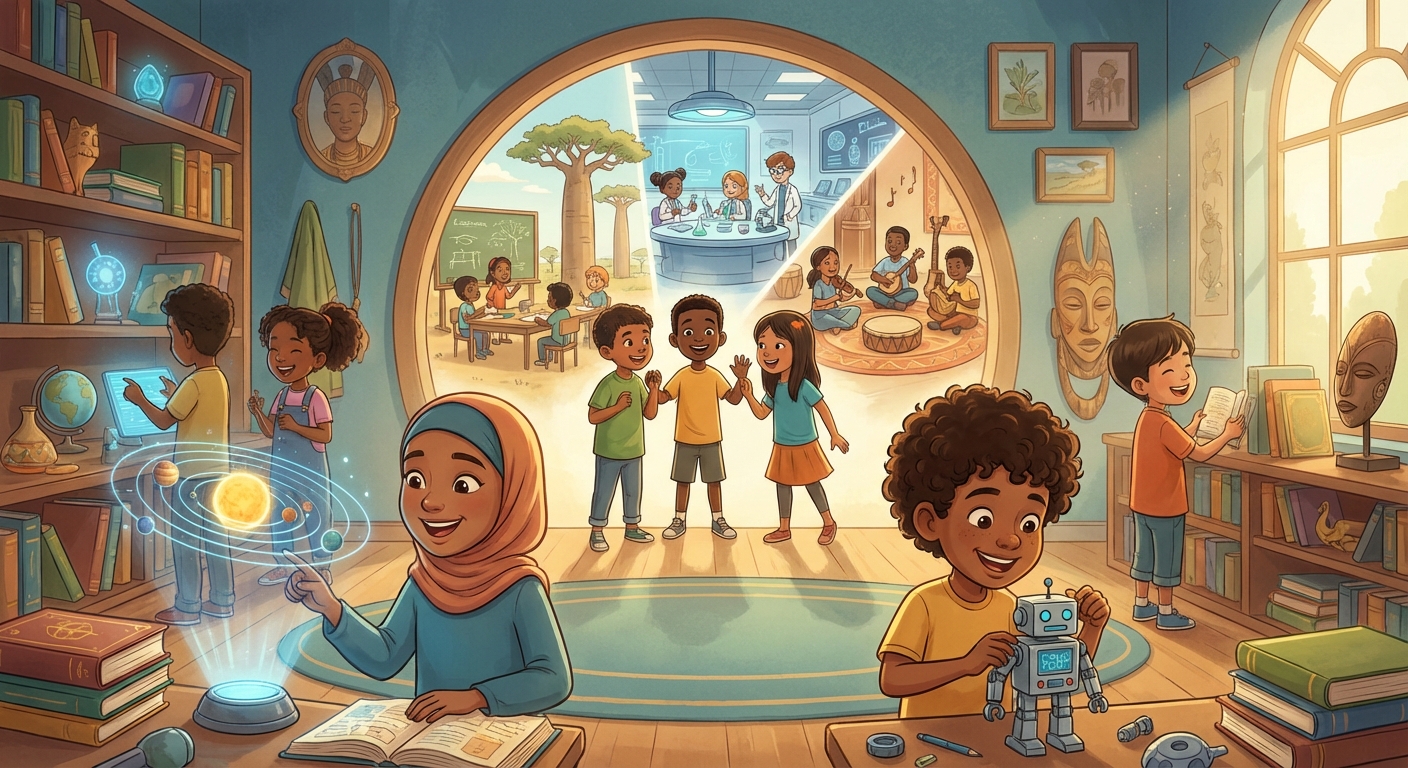
How the World Learns: Exploring Education Systems
Every child’s day begins with a lesson—whether it’s counting in the kitchen, reading a story, or learning how to tie shoes. Those tiny lessons are part of a Larger Network called an Education System. Around the globe, schools look different, teach different things, and even have different schedules, but they all share one big goal: helping people grow their minds and skills. Let’s travel the world without leaving our seat and discover how learning happens in other cultures!
1. What Is an Education System?
An Education System is the collection of schools, teachers, rules, and learning materials that a country uses to teach its children and adults.
| Word | Meaning (kid‑friendly) |
|---|---|
| Curriculum | The list of subjects and topics that students study. |
| Pedagogy | The methods teachers use to help students understand things. |
| Literacy | The ability to read and write well. |
| Assessment | A test or activity that shows what you have learned. |
Cause And Effect: When a country decides to add Science to its curriculum (cause), students later become better at solving real‑world problems like building bridges or cleaning the environment (effect).
2. Three Fascinating School Styles
A. Finland – The Land of Long Summers
- School Day: Only about 4–5 hours, with plenty of playtime.
- Key Feature: No homework for younger kids!
- Why It Works: Teachers have a lot of freedom to choose fun ways to teach, so students stay curious and motivated.
B. Japan – The Rhythm of Respect
- School Day: Starts early, often around 8 am, and includes a Clean‑up Time where everyone tidies the classroom together.
- Key Feature: Uniforms and group activities teach Discipline and teamwork.
- Why It Works: Working together builds a sense of Community, so students feel responsible for each other’s learning.
C. Kenya – Learning in the Open Air
- School Day: In some parts of Kenya, especially in rural areas, classes may be held outdoors or in simple Open‑air Classrooms to adapt to the environment or local resources.
- Key Feature: Community Involvement—parents and elders help teach local languages and traditions.
- Why It Works: Connecting school lessons to daily life makes learning feel useful and relevant.
Did You Know? In Finland, teachers must earn a master’s degree before they start teaching! 🎓
3. How Schools Shape Societies
- Economic Growth – Countries with high Literacy Rates often have stronger economies because people can work in many different jobs.
- Health & Safety – Education teaches kids about nutrition, hygiene, and how to stay safe, which leads to healthier communities.
- Cultural Preservation – When schools teach local stories, songs, and languages, they help keep a culture alive for future generations.
Example Of Cause → Effect:
Cause: A nation invests in free primary education for all children.
Effect: More children can read, which leads to more doctors, engineers, and artists, which in turn improves the country’s quality of life.
4. Mini Experiment: Build Your Own “world Classroom” Chart
What You Need
- A sheet of paper or a poster board
- Colored pencils or markers
- Sticky notes (optional)
Steps
-
Draw A Table with three columns: Country, School Feature, Why It Helps.
-
Pick Three Countries (you can use the ones above or choose new ones).
-
Fill In The Rows with a short description of each country’s school feature and why it helps.
-
Share Your Chart – Show it to a friend or family member and explain what you learned.
Quiz: Test Your Knowledge
-
Which country’s schools often have no homework for younger children?
a) Japan
b) Kenya
c) Finland ✓
d) Brazil -
What is a common activity in Japanese schools that helps teach teamwork?
a) Lunch breaks
b) Clean‑up Time ✓
c) Sports day
d) Music class -
How might learning outdoors in some Kenyan communities help students?
a) It makes school cheaper.
b) It connects lessons to daily life and community ✓
c) It reduces the need for teachers.
d) It focuses only on sports.
Now you’re ready to explore education around the world and maybe even create your own classroom adventure!