Folk Music Around the World
Folk music is the sound‑track of everyday life in many different cultures. It is created by ordinary people—farmers, sailors, children, and grandparents—and passed down from generation to generation. By listening to folk songs, we can hear the stories, celebrations, and even the worries of people who lived long ago.
1. What Makes a Song “folk”?
- Tradition – A custom that is handed down through many years. Folk songs are part of a community’s tradition.
- Simple Melody – The tune is often easy to remember, so anyone can sing it after hearing it a few times.
- Everyday Words – The lyrics talk about daily life: work in the fields, festivals, love, or the weather.
Complex word: Melody – a sequence of musical notes that sound good together, like the “shape” of a song.
Cause And Effect: Because folk songs are simple, many people can learn them quickly. When many people know the same song, it spreads far and wide, helping the community stay connected.
2. Instruments That Tell a Story
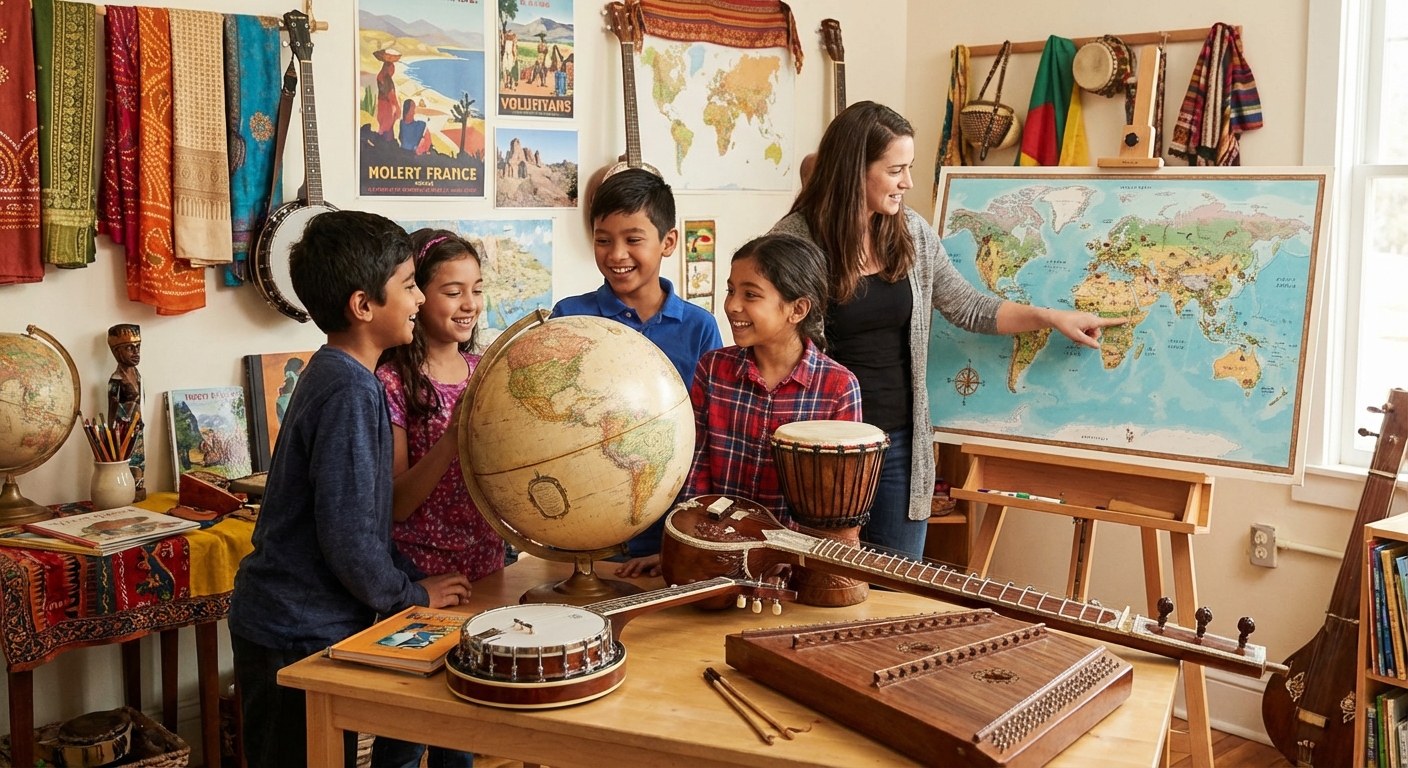
Every culture has its own special instruments that give folk music its unique flavor.
| Region | Instrument | How It Sounds | What It Represents |
|---|---|---|---|
| Ireland | Tin Whistle (a small metal flute) | Bright and airy | The rolling hills and misty mornings |
| West Africa | Djembe (hand drum) | Deep, resonant beats | The heartbeat of the village |
| Japan | Shamisen (three‑stringed lute) | Sharp, plucked tones | The elegance of a tea ceremony |
| Andes (South America) | Charango (tiny guitar) | Light, rapid strumming | The high mountains and bright sun |
Complex word: Resonant – a sound that continues to vibrate and fill the space, like an echo.
Did You Know? The djembe was originally made from a single piece of hardwood and a goat skin stretched over the top.
3. Folk Music’s Ripple Effect
- Preserving History – Songs often mention important events (e.g., a harvest festival) so future generations can learn what life was like.
- Inspiring New Music – Modern pop and rock musicians borrow folk melodies and rhythms, creating “fusion” music.
- Building Community – When people gather to sing or dance, they feel a sense of belonging, which strengthens friendships and cooperation.
Cause And Effect Example:
Cause: A family sings a lullaby every night.
Effect: The baby learns the language’s rhythm and later feels comforted when hearing the same tune at a community festival.
4. Mini Experiment: Make Your Own Rhythm Box
Materials
- An empty oatmeal container (or any small cardboard box)
- A handful of dried beans or rice
- Tape and markers
Steps
- Fill the box halfway with beans.
- Seal the lid with tape so the beans don’t spill.
- Decorate the box with symbols from a culture you like (e.g., a Celtic knot, a tribal pattern).
- Shake the box to create a rhythm. Try slow beats, then faster ones.
What To Observe
- How does the sound change when you shake gently versus vigorously?
- Can you make a pattern that matches a folk song you’ve heard?
Vocabulary boost: Pattern – a repeated sequence, like a rhythm you hear over and over.
Quick Quiz
- True Or False: Folk music is always played with big, expensive instruments.
- Which instrument comes from the Andes?
- A) Tin whistle
- B) Charango
- C) Shamisen
- What is one way folk music helps a community?
- A) It teaches math
- B) It builds friendships ✓
- C) It makes food
- D) It builds houses
Answers
- False
- B) Charango ✓
- B) It builds friendships ✓
Keep listening, and you’ll hear the world’s stories in every song!