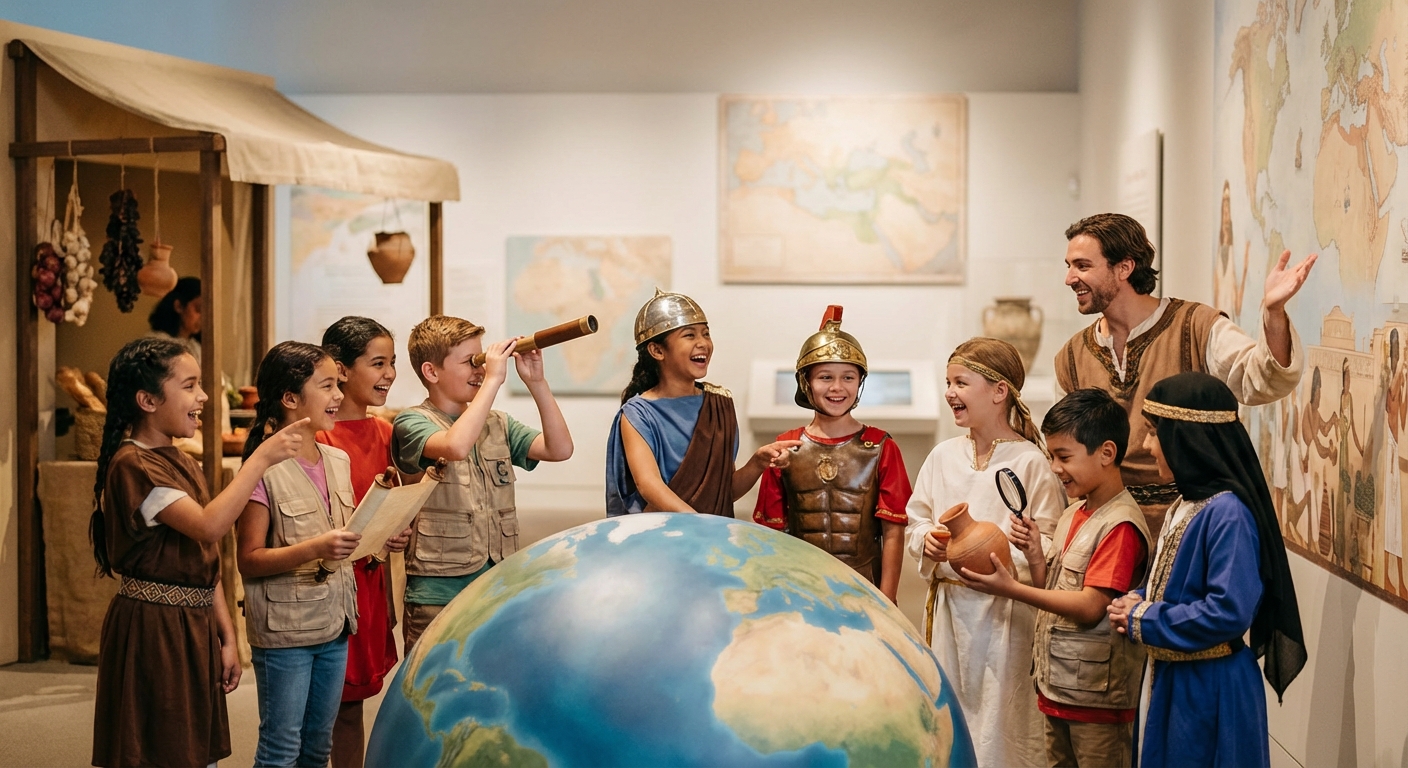
People of the Past: Adventures Across the World
The Inca – Mountain Builders
Who They Were
Inca civilization developed over centuries. Tawantinsuyu, the Inca state, expanded rapidly from about 1438 until the Spanish invasion in the 1530s. Inca peoples and their descendants did not disappear; communities continue today.
What They Did
- They cut flat steps, called terraces, into steep hills so they could grow food.
- They built the famous stone city of Machu Picchu high on a mountain.
- They expanded a road network called the Qhapaq Ñan that connected distant regions.
Why They Did It
High elevations, steep slopes, and varied rainfall created farming challenges. Terraces, irrigation, and knowledge of local environments supported crops such as potatoes, quinoa, and maize.
Roads helped people move armies, goods, and messages. Relay runners called chasquis carried messages, while llamas carried some loads; wheeled carts and horses were not part of the pre-invasion road transport system.
Fun Facts
- No confirmed Inca writing system like an alphabet is known. Specialists used knotted cords called khipu or quipu to record numbers and administrative information, and researchers continue studying what else they may encode.
- Some important Inca buildings use finely fitted stonework with very narrow joints. Inca construction also included many other styles and materials.
Quick Quiz
-
Which name refers to the Inca state?
- A) Tawantinsuyu ✓
- B) Rome
- C) Songhai
-
How did terraces help farming?
- A) They created flatter growing areas on slopes ✓
- B) They made mountains disappear
- C) They replaced the need for water
-
Who carried messages along the road network?
- A) Steam-train drivers
- B) Chasqui relay runners ✓
- C) Airplane pilots
Exploring amazing peoples like the Inca shows how curiosity and clever ideas can change the world.