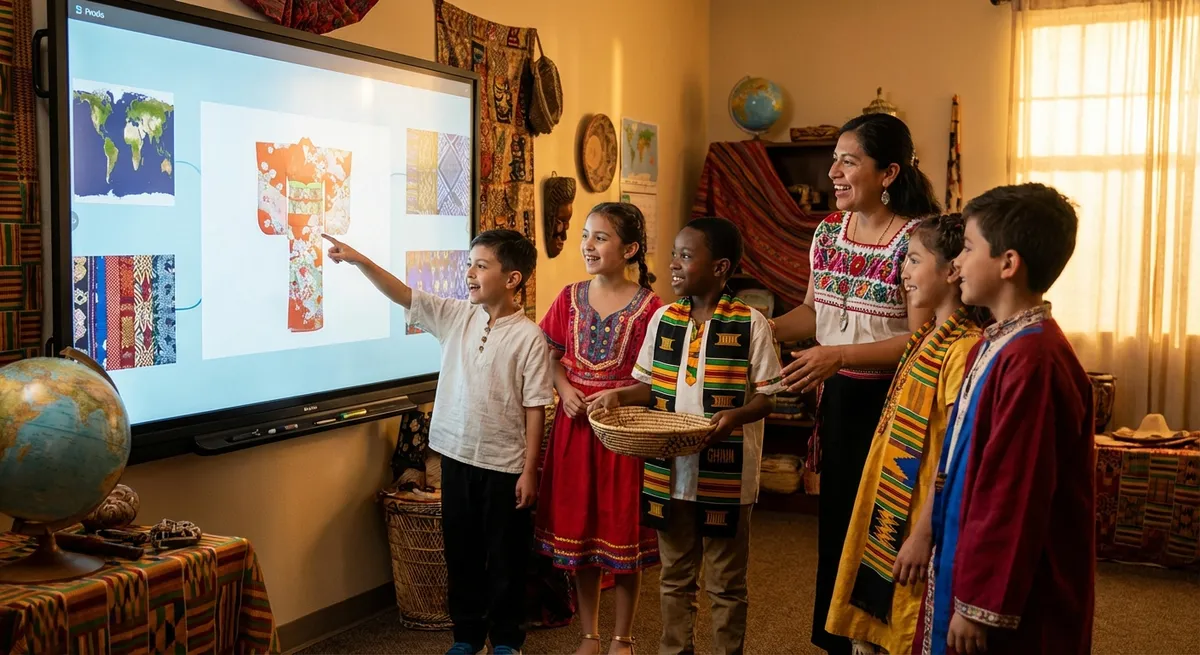
Traditional Clothing Around the World
Every country has its own special way of dressing, and those outfits tell stories about history, climate, and culture. By learning about traditional clothing, we can expand our vocabulary, discover new words, and understand why people wear what they wear. Let’s travel the globe without leaving our classroom!
1. Why Climate Shapes Clothes
Cause: The weather in a region (hot, cold, rainy, or windy).
Effect: People create garments that keep them comfortable and safe.
- Sahara Desert (North Africa): The djellaba is a loose, long robe made of light cotton. Its wide sleeves and hood protect the wearer from scorching sun and sandstorms.
- Arctic (Inuit Communities): The parka is a thick coat stuffed with seal or goose down, which traps heat and stops the freezing wind from reaching the skin.
Did You Know? The word “parka” comes from the Russian word parka meaning “burda” – a coat for hunters!
2. Symbols and Stories in Fabric
Traditional clothing often carries Symbols (pictures or patterns) that represent myths, families, or important events.
- Japan – Kimono: Each kimono has a motif (design) such as cherry blossoms for spring or cranes for long life. The colors and patterns can indicate the wearer’s age, marital status, or the season of a celebration.
- Mexico – Huipil: This embroidered blouse features bright geometric shapes that tell stories about the community’s history and the wearer’s hometown.
Word Spotlight: Motif – a recurring decorative design or pattern.
3. Celebration Attire
During festivals, people wear their most beautiful garments to show pride and respect.
| Country | Traditional Outfit | When It’s Worn |
|---|---|---|
| India | Sari (women) / Kurta (men) | Weddings, Diwali, and other festivals |
| Scotland | Kilt (men) | Highland games, weddings |
| Ghana | Kente Cloth (both) | Naming ceremonies, national holidays |
Cause & Effect: Wearing these special clothes helps preserve cultural identity, and the bright colors make celebrations feel more joyful and united.
Did You Know? The Scottish kilt was originally made from a single piece of wool called a tartan, and each pattern (or “sett”) identifies a specific clan or family!
4. Mini Experiment: Design Your Own “climate Suit”
Goal: Understand how climate influences clothing design.
Materials
- Two large sheets of paper (one blue, one brown)
- Crayons, markers, or colored pencils
- Scissors (with adult help)
- Glue or tape
Steps
- Pick A Climate: Choose a hot desert, a rainy rainforest, or a snowy mountain.
- Research: Look up one traditional outfit from that region (use a book or a safe website).
- Sketch: On the blue sheet, draw the outfit you think would keep someone comfortable in that climate. Add details like sleeves, hoods, or layers.
- Create A Sample: Cut out the shapes and glue them onto a paper doll (you can draw a simple stick‑figure body).
- Test It (Imagination!): Pretend you’re stepping outside. Explain how each part of your design protects you from the weather.
Reflection Questions
- Which part of the outfit helps most with temperature?
- How would the design change if the climate switched from hot to cold?
Traditional clothing is more than just fabric—it’s a living history lesson that shows how people adapt to their environment, celebrate their heritage, and tell stories without words. Keep exploring! Look at the clothes in your family’s photo albums, ask relatives about the meanings behind them, or try making a miniature costume of your own. The world’s wardrobes are waiting for curious minds like yours. 🌟