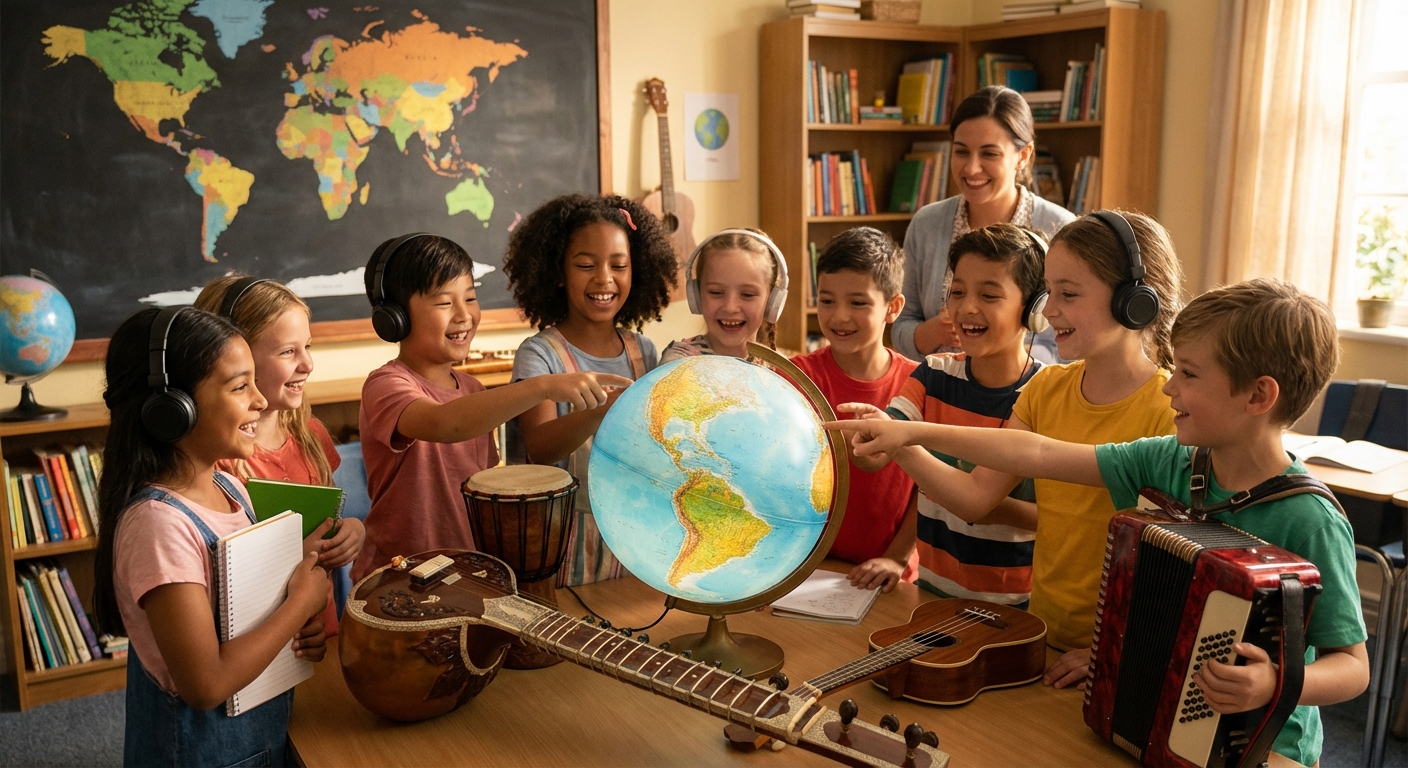
Around the World in Music
Introduction
Music is a universal language that lets people share feelings, stories, and traditions without using words. From the thundering drums of Africa to the gentle bamboo flutes of Japan, every region has its own musical style that tells a story about its land, climate, and history. In this adventure we’ll explore four exciting world‑music styles, learn new vocabulary, and even try a quick experiment!
1. African Rhythms – The Beat of the Savannah
What You’ll Hear:
- Djembe drums that sound deep and powerful.
- Call‑and‑response singing, where one voice leads and the group answers.
Why The Music Sounds That Way (Cause & Effect):
The hot, open savannahs made it easy for sound to travel far, so drums were used to send messages across villages. The Percussion (instruments that are struck) creates strong Rhythms, helping people coordinate dances and work together.
Did You Know?
The djembe can be tuned to three different pitches simply by tightening or loosening the rope that holds the drumhead.
New Words:
- Percussion – instruments you hit or shake (e.g., drums, tambourines).
- Call‑and‑response – a musical conversation where one part leads and another answers.
2. Indian Classical – Melodies of Many Colors
What You’ll Hear:
- The sitar’s shimmering strings.
- Complex Ragas (melodic patterns) that evoke sunrise, rain, or even a quiet night.
Why The Music Sounds That Way:
India’s huge variety of climates—from snowy mountains to tropical coasts—has inspired a wide range of moods in music. In the past, musicians played at temples, and the Modal (scale‑based) structure of ragas helped listeners feel the time of day or season.
Did You Know?
The sitar has 19 strings: 6 for playing notes, 13 “sympathetic” strings that vibrate automatically, adding a magical echo.
New Words:
- Raga – a set of notes that creates a particular mood.
- Modal – music built from a specific scale, like a musical “color palette.”
3. Brazilian Samba – The Carnival Pulse
What You’ll Hear:
- Fast, syncopated drums called Surdos and Pandeiros.
- Bright brass instruments like trumpets and trombones.
Why The Music Sounds That Way:
Brazil’s tropical climate encourages outdoor festivals. The heavy rain and lively street life inspired Syncopation—placing beats where you don’t expect them—to make people want to dance. The mix of African drummers, Portuguese guitars, and Indigenous flutes created the vibrant samba we hear today.
Did You Know?
During Rio’s Carnival, the samba schools (big dance groups) practice for months, building elaborate floats and costumes that match the music’s energy.
New Words:
- Syncopation – shifting the normal beat to create surprise and excitement.
- Carnival – a huge public celebration with music, dance, and costumes.
4. Inuit Throat Singing – Echoes of the Arctic
What You’ll Hear:
- Two singers producing low, guttural sounds that sound like wind over ice.