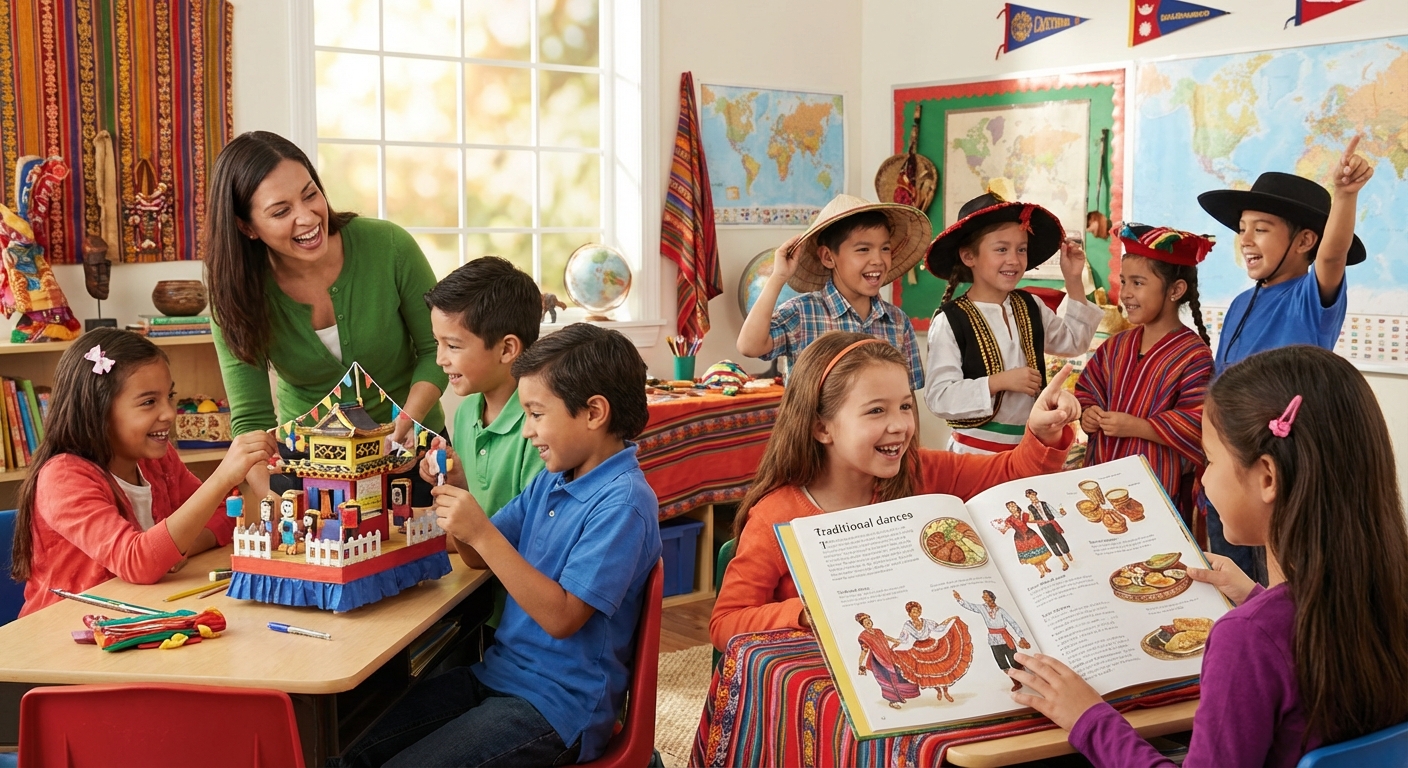
Amazing World Traditions
Every country, town, and even a small village has its own Traditions—special ways of doing things that have been passed down from grandparents to parents to kids like you. These customs help people remember their Heritage (the stories, ideas, and objects that belong to a group) and bring families and friends together. Let’s travel the globe and discover a few wonderful traditions, learn new words, and even try a tiny experiment!
1. Festivals of Light
What It Is
Many communities use light in festivals, but the festivals happen for different religious, historical, and seasonal reasons.
| Communities | Festival | Examples of Activities |
|---|---|---|
| Hindu, Jain, Sikh, and other communities in India and worldwide | Diwali | Traditions vary and may include lamps, sweets, prayers, art, and gatherings. |
| Chinese communities worldwide | Lantern Festival | Displaying or carrying lanterns, solving riddles, and gathering with family. |
| Communities in Ireland and elsewhere | St. Brigid’s Day | Making Brigid’s crosses, visiting wells, attending services, or welcoming spring. |
Cause and Effect
Lights can represent different ideas in different traditions, including welcome, knowledge, remembrance, renewal, or a religious story. Do not assign every festival the same meaning or assume it happens in winter everywhere.
Did You Know?
The word diya (the small oil lamp used at Diwali) comes from the Sanskrit word for “light.”
2. Food Traditions
What It Is
Food is a tasty way to show love and share stories. Different places have special dishes that are only prepared at certain times.
- Japan – Mochi (sticky rice cakes) are pounded together during New Year to bring good luck.
- Mexico – Pan de Muerto (bread of the dead) is baked for Día De Los Muertos to honor ancestors.
- Ethiopia – Injera (spongy flatbread) is eaten with hands, showing community and togetherness.
Cause and Effect
Cooking a special dish often Marks (signifies) a season or a memory. When families eat the same food every year, they create a Shared Identity—a feeling of belonging to the same group.
Mini Experiment: Taste‑test Adventure
- Ask an adult to help you gather three small, safe foods from different cultures (e.g., a piece of sushi, a tortilla, a tiny piece of naan).
- Taste each one and write down three words that describe the flavor (sweet, salty, spicy, etc.).
- Share your notes with a friend or family member and guess where each food comes from!
3. Greeting Customs
What It Is
How we say “hello” can be very different!
- In some French settings, people who know one another may greet with la bise; the number of cheek touches varies, and many people prefer another greeting.
- Kenya has many languages and greeting traditions. Jambo is a Swahili greeting, but it is not the everyday choice for every Kenyan speaker or situation.
- Bows are used in some South Korean settings. Their formality and meaning depend on age, relationship, and occasion.
Observe, ask politely, and never assume someone wants physical contact.
Cause and Effect
Greeting styles develop from Social Norms (unwritten rules about behavior). They help people feel Respected (valued) and Connected.
Did You Know?
The hongi is a Māori greeting in Aotearoa New Zealand, not a general custom of all Pacific peoples. It is used in particular cultural settings.
4. Stories & Folklore
What It Is
Every culture has Folklore—traditional stories that teach lessons or explain natural events.
- Some Indigenous peoples of North America – Stories and teachings about the Three Sisters—corn, beans, and squash—vary by nation and community. They often connect planting knowledge with relationships and responsibility.
- Greek Myths – Stories about heroes like Hercules show that being strong is good, but being smart and kind is even better.
Cause and Effect
Folklore is more than just entertainment.
- Cause: Elders tell stories around a fire or at bedtime.
- Effect: Kids learn important lessons about bravery, kindness, and nature without feeling like they are in a boring class!
5. Why Traditions Matter
Traditions connect us to our past and help us make new memories for the future. Whether it’s lighting a candle, dancing a special dance, or cooking a yummy meal, these customs remind us that we are all part of a big, beautiful world family.
So, next time you see a new holiday or taste a new food, remember: you are peeking into someone else’s wonderful tradition!