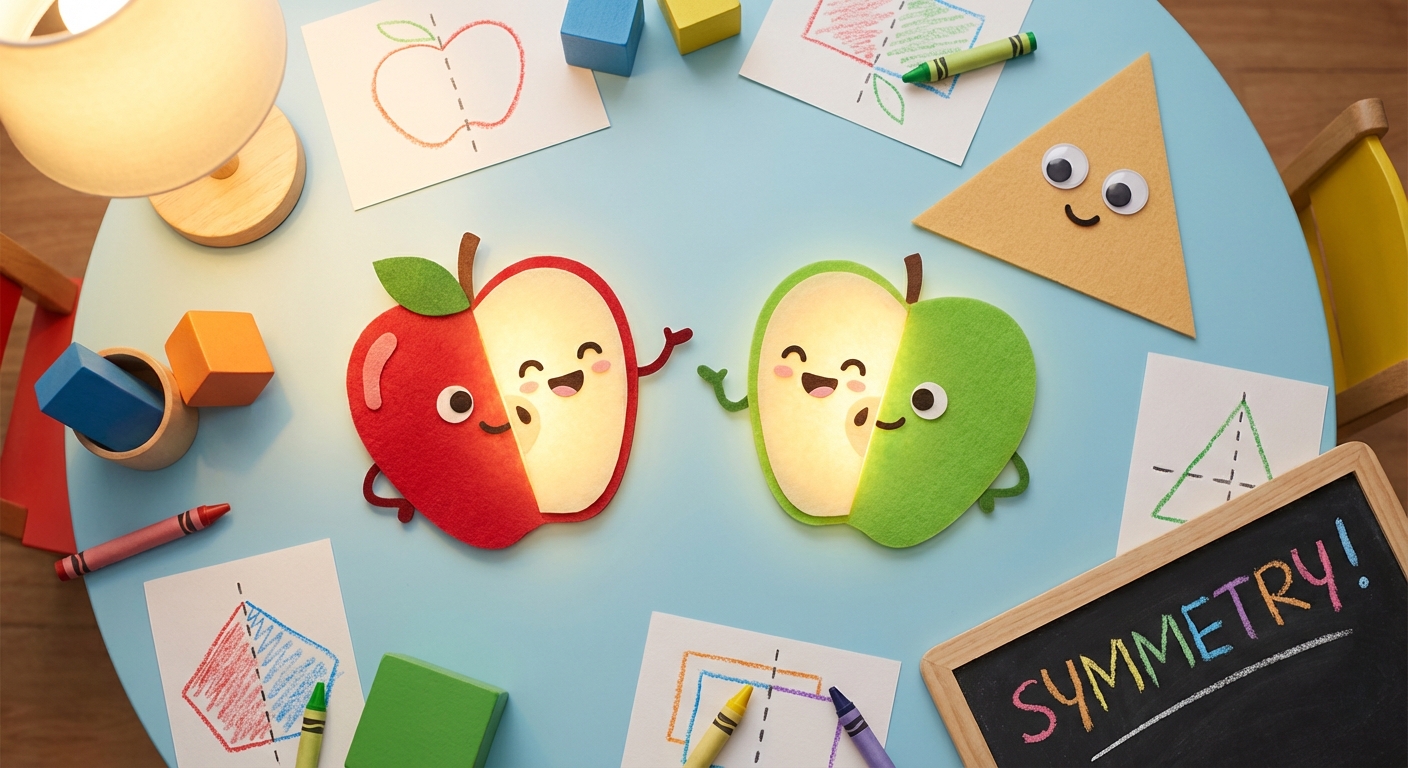
🌟 Symmetry: the Magic of Matching Halves 🌟
Symmetry is when one side of a shape looks just like the other side. It’s like a perfect mirror that copies everything on the other side. Let’s discover where symmetry hides and how you can create it yourself!
1. What Is Symmetry?
Imagine folding a piece of paper in half. If the drawing on the paper lines up exactly when you open it, the picture is Symmetrical. The two halves match like twins. Many things in nature—like butterflies, leaves, and snowflakes—are symmetrical.
2. Where Do We See Symmetry?
- Animals: A butterfly’s overall wing shapes are often close to mirror images, although their patterns may differ a little.
- Objects: A plain heart-shaped card or a simple snowflake drawing may have a line of symmetry.
- Your Body: The left and right sides of a body are similar, but no living body is perfectly symmetrical.
Look around your room. Can you spot three things that are symmetrical?
3. Make Your Own Symmetry
Grab a piece of paper and a crayon. Draw a line down the middle. On one side, draw a simple shape—maybe a star or a smiley face. Then try to copy the same shape on the other side, matching it exactly. You just made a Line Of Symmetry!
Fold a paper shape along its middle line. If the two sides match, the fold is a line of symmetry. Ask a grown-up to help if the activity involves scissors.
Did You Know?
🦋 A butterfly’s left and right wings have similar shapes. This is called bilateral symmetry, although the tiny details may not match perfectly.