Uncovering Cave Paintings: A Blast from the Past
Cave paintings are old pictures found inside caves. They were made by people a long time ago.
What Are Cave Paintings?
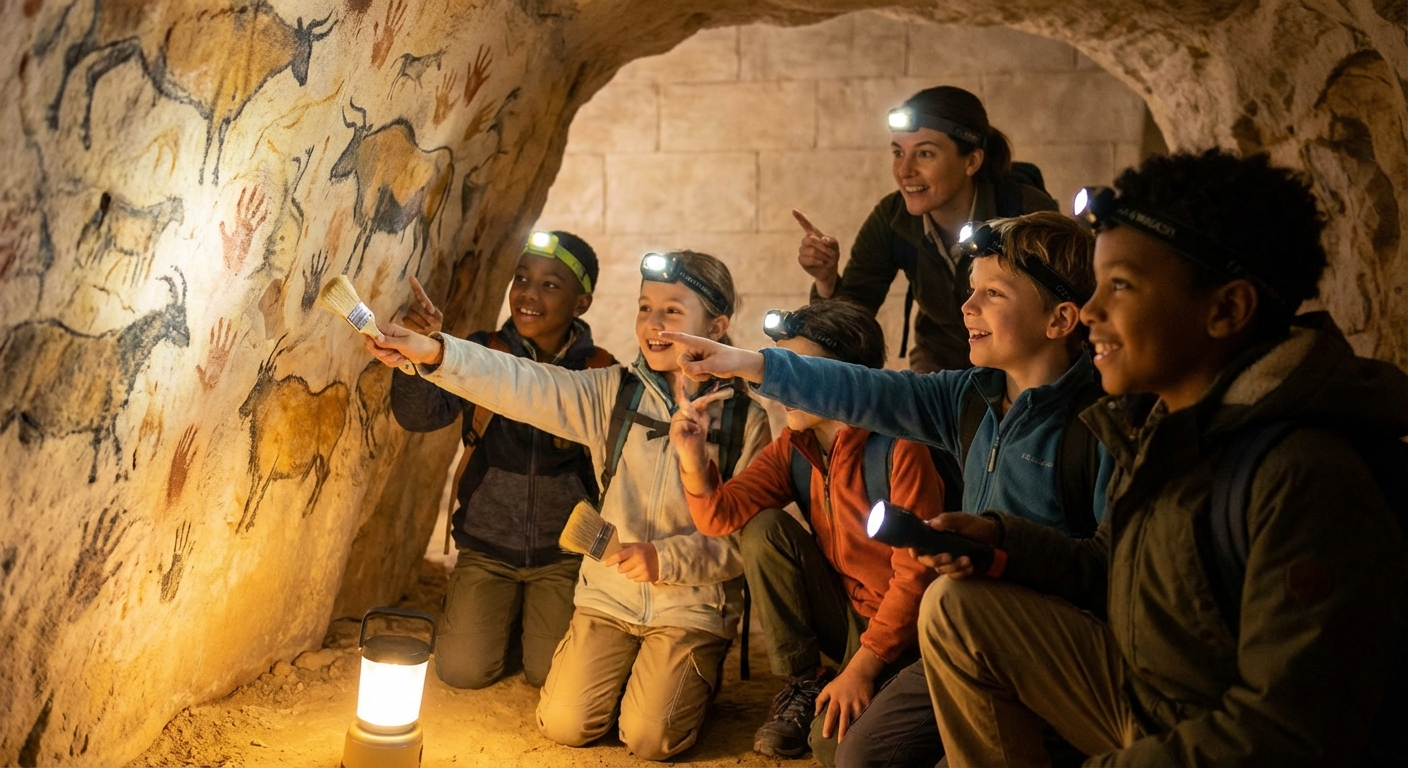
Cave paintings are pictures made on cave walls. They show animals, people, and daily life. These paintings are very old, made over 10,000 years ago. The most famous cave paintings are in France and Spain.
How Were Cave Paintings Made?
People used special tools to make cave paintings. They mixed colors from rocks and plants. Red, yellow, and brown colors were used to paint animals like horses and deer. The paintings were made in dark caves, so they used torches for light.
Fun Facts and Deeper Meaning
Cave paintings are not just pretty pictures. They tell us about the people who made them. We can learn what they ate, how they lived, and what they believed in. Some paintings show hunts, which means they likely hunted for food. Others show animals with spiritual symbols, which could mean they believed in magic or spirits.
Try It Out: Cave Painting Experiment
Let’s make our own cave painting! 🎨
- Mix colors from food dye or paint.
- Use a brush or a sponge to paint on paper.
- Draw an animal or a scene from daily life.
- Ask a friend or family member to guess what your painting means.
Conclusion and Next Steps
Cave paintings are amazing works of art that teach us about the past. By making our own paintings, we can imagine how people lived long ago. Keep exploring and learning about art history. Who knows, maybe you’ll become an artist or historian one day! 🎉