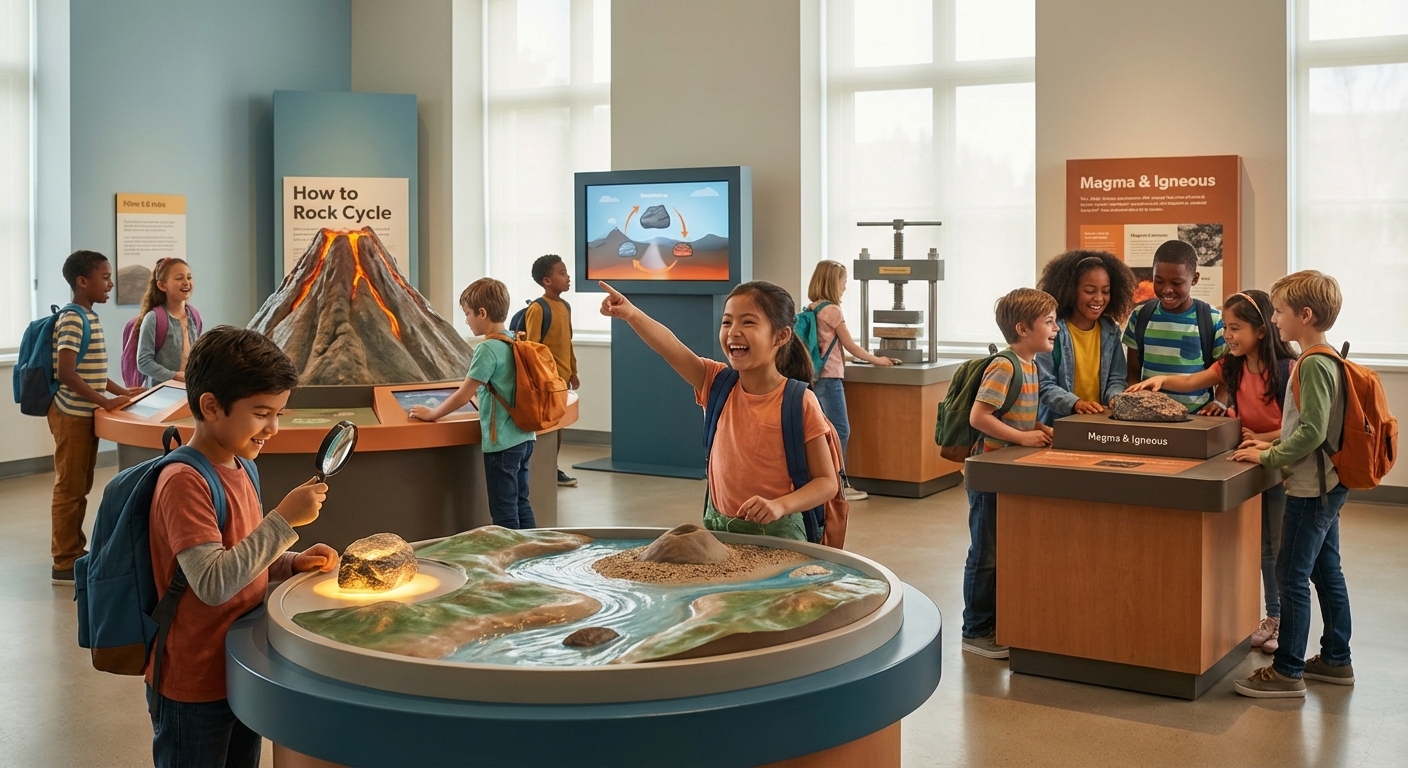
The Amazing Rock Cycle
The Earth’s surface is made up of different types of rocks. But have you ever wondered how these rocks are formed and changed over time? Let’s explore the rock cycle and find out.
What Is the Rock Cycle?
The rock cycle describes how rocks form, break down, and change from one type to another. There are three main types: igneous, sedimentary, and metamorphic. Igneous rock forms when magma or lava cools. Sedimentary rock forms when sediments are deposited, compacted, and cemented. Metamorphic rock forms when existing rock changes under heat and pressure without melting.
Fun Facts and Experiments
You can make a model of sedimentary layers with damp sand and soil. Press thin layers into a clear cup and let them dry, then observe the bands. The result is not real sedimentary rock because natural compaction and cementation take far longer. Never heat rocks at home: trapped moisture can make them crack or burst.
Deeper Explanation
The rock cycle is an ongoing process that happens over thousands and millions of years. It’s driven by forces like weathering, erosion, and plate tectonics. Weathering breaks down rocks into smaller particles, erosion carries these particles away, and plate tectonics pushes and pulls the Earth’s crust to create mountains and volcanoes. As rocks are formed and changed, they can become part of different landscapes like mountains, valleys, and oceans.
Mini Quiz Time
Test your knowledge of the rock cycle with these questions:
- What are the three main types of rocks?
- What is the process called when rocks are formed from molten lava?
- What processes turn loose sediment into sedimentary rock?
Take some time to think about your answers, then check to see how you did. Keep exploring and learning about the amazing rock cycle! 🌟
Answers:
- Igneous, sedimentary, and metamorphic.
- Cooling and solidification. Lava that cools at the surface forms extrusive igneous rock.
- Compaction and cementation turn deposited sediment into sedimentary rock.