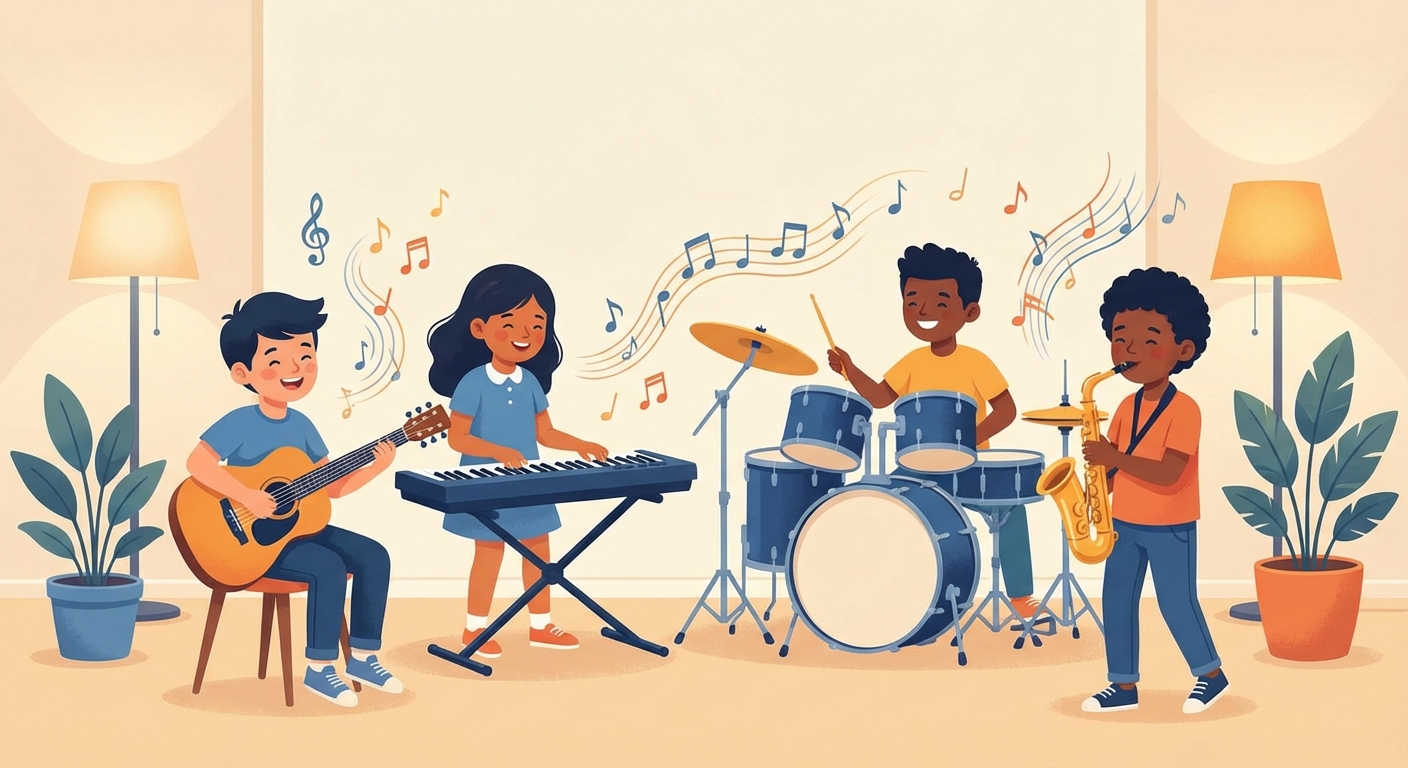
Mastering Music Performance Skills
Playing an instrument or singing on stage is more than just making sound. Great performers use Performance Skills—the tools that help them share music clearly, confidently, and with feeling. In this guide you’ll learn new music words, see real‑world examples, discover cause‑and‑effect relationships, and even try a tiny experiment yourself!
1. Listening & Observation
What It Means – Before you step on stage, you must listen closely to the music and to the other players.
- Dynamics (how loud or soft the music is) and Tempo (the speed of the beat) are clues you watch for.
- Example: In Beethoven’s “Für Elise,” the familiar melody is often played softly while the other hand provides a flowing accompaniment. Contrasting sections explore different moods and dynamics.
Cause & Effect:
- If you pay attention to dynamics, then you can match the volume of the orchestra and avoid sounding too loud or too quiet.
Mini‑observation Tip:
Watch a video of a band and pause every 10 seconds. Write down the dynamics (loud = Forte, soft = Piano) you hear.
2. Body Language & Stage Presence
What It Means – Your body tells the audience how confident you feel.
- Posture (standing straight) helps you breathe better, which improves your sound.
- Facial Expression can show the mood of the piece—smiling for a happy tune, serious for a sad one.
Cause & Effect:
- If you slump or hide behind the instrument, the audience may think you’re nervous, so the music’s impact lessens.
Example:
When violinist Midori performs, she makes eye contact with the crowd and moves gently with the music, making listeners feel the story she’s telling.
Practice Idea:
Before playing, silently imagine the opening tempo, mood, and first notes. Musicians call this mental practice, and it can support—not replace—careful physical practice.
3. Practice & Timing
What It Means – Practicing builds Muscle Memory (the brain’s ability to remember movements).
- Intonation is playing the right pitch; it improves when you practice slowly at first.
- Articulation is how you start and stop each note (staccato = short, legato = smooth).
Cause & Effect:
- If you practice a tricky rhythm at a slow tempo, then you’ll be able to play it fast without mistakes.
Mini Experiment – Beat‑clap Test:
- Find a metronome app and set it to 60 BPM (beats per minute).
- Clap your hands on each click for 30 seconds.
- Speed the metronome up to 80 BPM and try again.
- Notice how your body adjusts to keep the beat. This shows how Tempo influences coordination.
4. Communicating Emotion
What It Means – Music is a language of feelings.
- Use Phrasing (grouping notes like sentences) to tell a story.
- Change dynamics to show surprise, excitement, or calm.
Example:
Example:
Try singing one familiar line first softly and then loudly. Notice how dynamics change your interpretation; there is no required volume pattern for “Happy Birthday.”
Quick Quiz
-
Which word describes playing notes smoothly?
a) Staccato
b) Legato ✓
c) Forte
d) Piano -
If a conductor’s hand movements become much larger, what might they be asking for?
a) Stop playing
b) Play softer
c) Play louder or with more energy ✓
d) Automatically play faster -
What does good posture help a singer do?
a) Look taller
b) Breathe better ✓
c) Play louder
d) Wear fancy clothes
Keep practicing, and watch your performance shine!