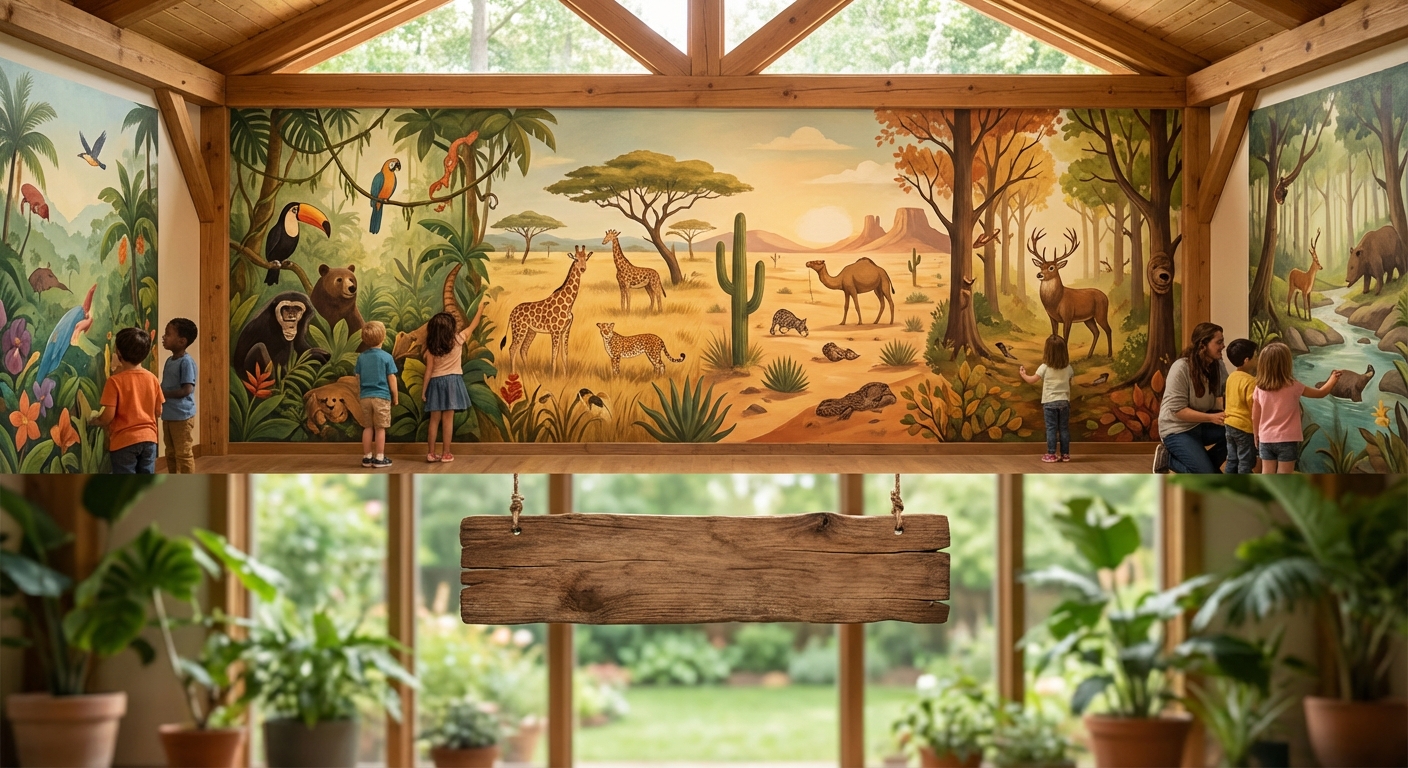
Discovering Biomes: Nature’s Big Neighborhoods
Ever wondered why a cactus thrives in a scorching desert while a pine tree flourishes in a snowy forest? The answer lies in Biomes—large areas of Earth where the climate, plants, and animals all work together like a team. In this guide you’ll learn new words, explore cool examples, see cause‑and‑effect in action, and even try a simple experiment at home!
1. What Is a Biome?
A Biome (pronounced bye‑‑OH‑me) is a huge natural community defined mainly by its Climate (the long‑term weather patterns) and the kinds of Vegetation (plants) that grow there.
- Ecosystem – the network of living things (plants, animals, microbes) plus their non‑living environment (soil, water, air).
- Adaptation – a special trait that helps a plant or animal survive in its biome.
Did You Know? The word “biome” is related to the Greek bios, meaning “life.” Organisms in one biome can be very different, but many have adaptations suited to similar climate conditions.
2. Meet Some Famous Biomes
| Biome | Climate | Typical Plants | Example Animals | Why It Exists (Cause → Effect) |
|---|---|---|---|---|
| Tropical Rainforest | Warm, rain all year | Tall trees, vines, ferns | Jaguars, toucans, tree frogs | Cause: Constant heat + lots of rain → Effect: Plants grow tall to reach sunlight, animals develop bright colors to communicate. |
| Desert | Hot days, cold nights, very little rain | Cacti, sagebrush | Meerkats, side‑winder snakes | Cause: Very dry → Effect: Plants store water; animals are nocturnal to avoid the scorching sun. |
| Tundra | Freezing, short summers | Mosses, lichens, dwarf shrubs | Arctic fox, caribou | Cause: Permafrost (permanently frozen ground) → Effect: Only low‑lying plants can survive; animals grow thick fur. |
| Grassland | Warm summers, cold winters, moderate rain | Grasses, wildflowers | Bison, prairie dogs | Cause: Enough rain for grasses but not trees → Effect: Large herds of grazing animals roam, shaping the land. |
Did You Know? The Amazon Rainforest alone holds about 10% of all the species on Earth!
3. How Animals Adapt to Their Biome
- Camouflage – a desert lizard’s sandy skin helps it disappear on the dunes.
- Hibernation And Denning – some bear species greatly reduce activity during cold months; polar bears do not all hibernate, although pregnant females den.
- Energy Storage – a camel’s humps store fat for energy. Other adaptations help camels conserve water and tolerate dehydration.
These adaptations are Responses to the challenges of each biome (cause) and help the animal survive (effect).
4. Why Biomes Matter
Biomes give us fresh air, clean water, food, and medicines. When humans cut down forests or pollute rivers, we Disrupt the delicate balance, causing species to disappear and climate to change. Protecting biomes means protecting the whole planet!
Did You Know? A single rainforest tree can provide many tiny habitats for insects, fungi, plants, and other organisms. The exact number of species varies greatly.