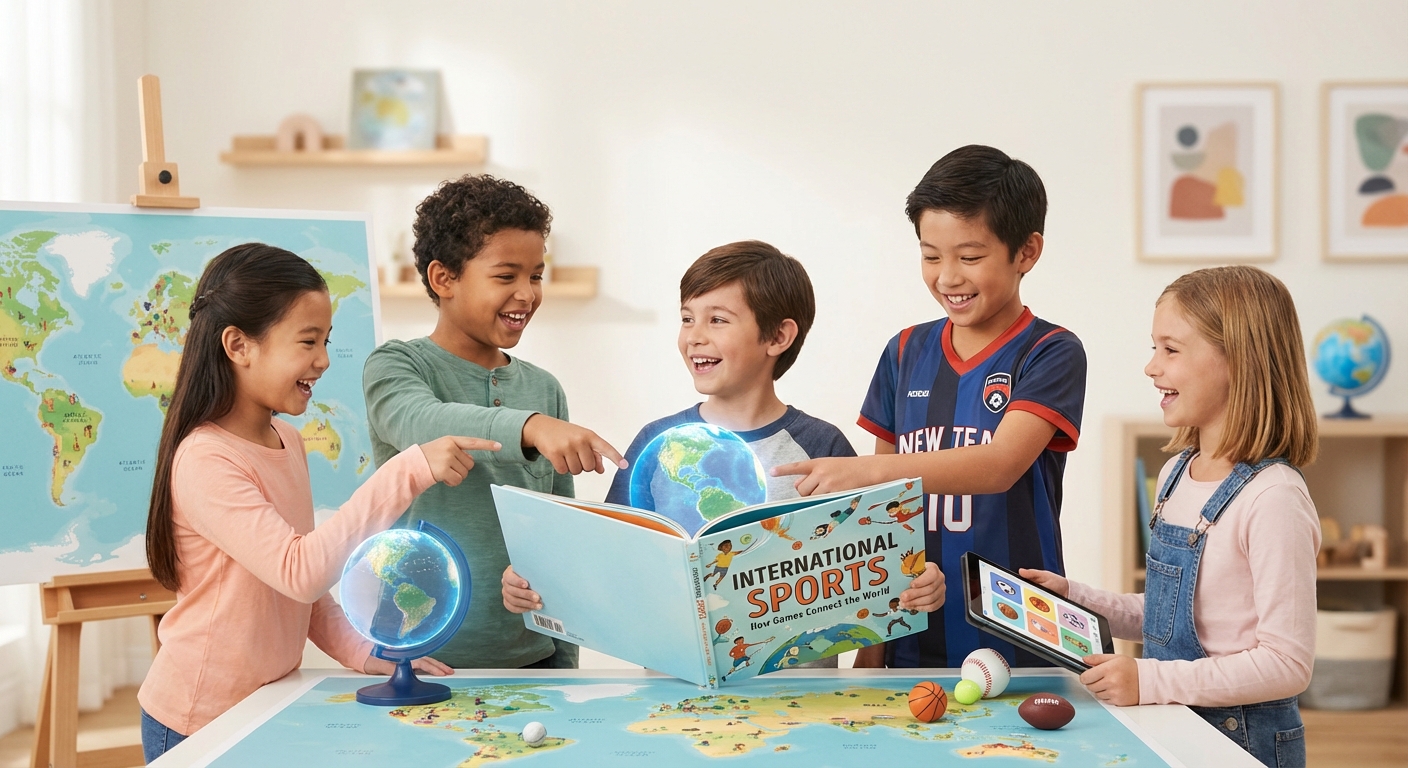
International Sports: How Games Connect the World
Sports aren’t just about scoring points—they’re a special language that people everywhere understand. From the bustling streets of Rio to the quiet villages of Japan, games travel across borders, teaching us new words, traditions, and teamwork. Let’s explore how international sports shape world‑cultures and why they matter to you!
1. What Makes a Sport “international”?
International means “involving many countries.” A sport becomes international when players from different nations compete in the same Tournament (a series of matches that decide a champion).
- Olympic Games – The Summer and Winter Games each happen every four years, on staggered schedules, with athletes representing many countries and territories.
- FIFA World Cup – An international soccer tournament followed by fans around the world.
Complex word: Tournament – a group of games that leads to a final winner.
Why It Matters: When countries meet for sport, they share ideas, foods, music, and even clothing styles. This cultural exchange helps people see the world as a bigger, friendlier place.
2. Famous International Sports and Their Origins
| Sport | Country of Origin | Cool Fact |
|---|---|---|
| Soccer (Football) | England (19th century) | The word “soccer” comes from “association football.” |
| Basketball | United States (1891) | Invented by a teacher who wanted an indoor game for winter. |
| Cricket | England (documented by the 1500s) | Played with a bat and ball; a bowler delivers the ball using cricket’s special bowling action. |
| Table Tennis (Ping‑pong) | England (late 1800s) | Developed as an indoor game inspired by lawn tennis. |
| Taekwondo | Korea (1940s) | Means “the way of the foot and fist.” |
Complex word: Parlor – a room in a house where people sit and chat.
Cause And Effect: Because soccer was easy to play with just a ball and two goals, it spread quickly to schools and streets worldwide. More players → more fans → larger tournaments → even more countries join in.
3. How Sports Build Bridges Between Cultures
- Shared Celebrations – When a team wins, fans from many nations cheer together, creating a feeling of Unity (being together as one).
- Cultural Traditions – Olympic opening ceremonies combine traditions of the host country with a parade of participating teams.
- Friendship Through Competition – Young athletes meet teammates from distant lands, learn new languages, and sometimes become lifelong friends.
Complex word: Unity – the state of being joined together as a whole.
Did You Know? The Olympic torch travels by airplane, ship, and even by runners on foot! The flame is lit in Greece, the birthplace of the ancient Games, and then journeys across continents to light the stadium’s cauldron.
4. Mini Experiment: “paper Relay Race” – Feel the Power of Teamwork
What You Need:
- 4 sheets of A4 paper
- 2 markers
- A stopwatch (or a phone timer)
Steps:
- Divide the paper into two teams (Team A & Team B).
- Each team draws a simple “baton” (a small circle) on their first sheet.
- Sit in two lines. When the timer starts, each person copies the baton onto the next sheet and passes it to the next teammate.
- Stop when the last teammate holds the paper. Compare speed and drawing accuracy.
- Repeat after each team agrees on a clearer passing and drawing strategy.
This seated paper relay models communication and teamwork without running indoors.