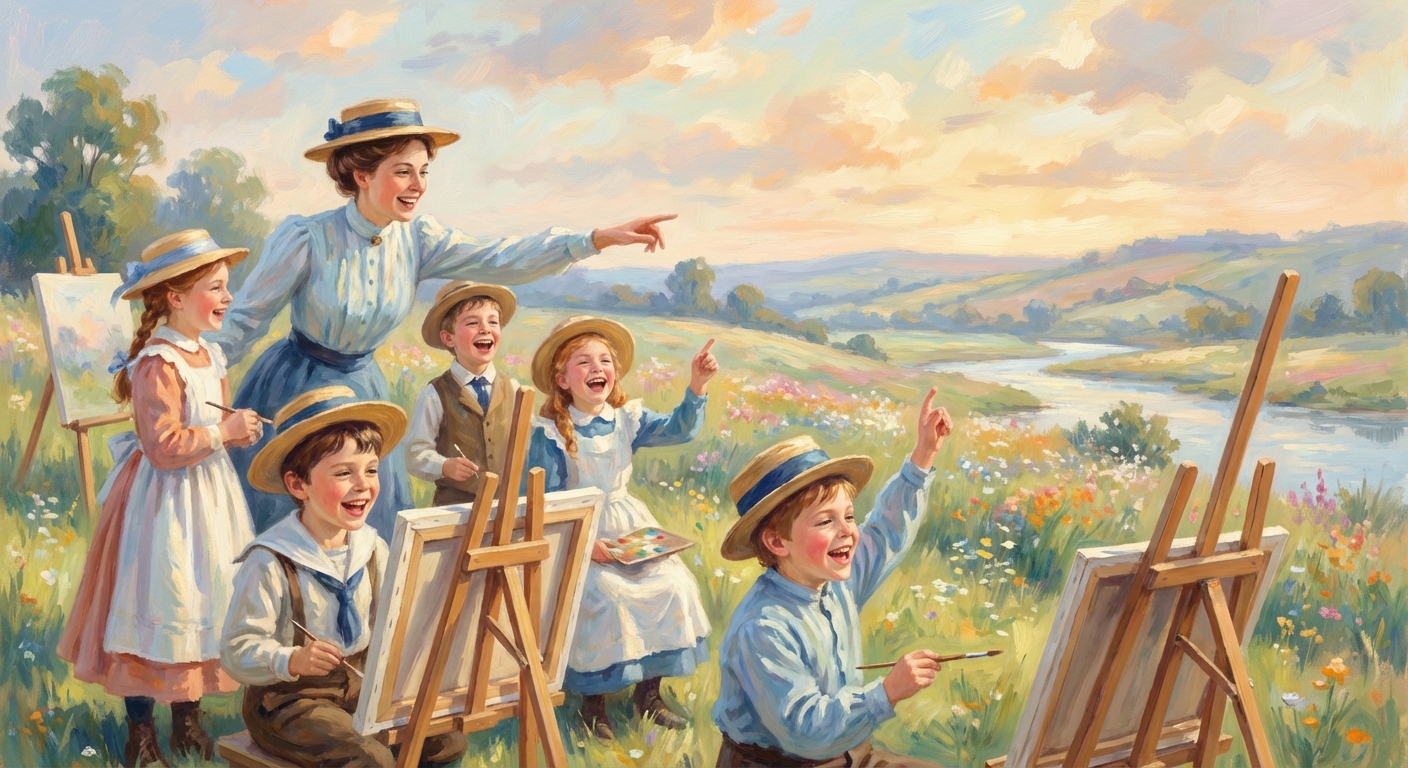
Impressionism: Painting The World In Light And Color
Imagine stepping outside on a sunny day and trying to capture the way the light dances on a pond, the way a breeze flutters a dress, or how a bustling market smells and sounds. In the late 1800s, a group of artists decided to paint exactly those fleeting moments. Their new style is called Impressionism—a word that comes from the French word impression, meaning “a feeling or picture of something that you see quickly.”
1. What Is Impressionism?
Impressionism is a way of painting that focuses on Light, Color, and the Instantaneous Feeling of a scene rather than every tiny detail.
- Brushstroke – a single line or dab of paint made with a brush.
- Palette – the range of colors an artist uses.
Instead of smoothing everything together, Impressionists used Short, Visible Brushstrokes so the viewer’s eye could blend the colors, just like mixing crayons in your mind. This technique makes the picture look alive and often changes depending on the time of day or the weather.
Example
Claude Monet’s famous painting “Impression, Sunrise” shows a sunrise over a harbor. Notice how the orange sun and the blue water are made of quick, separate strokes. If you stand far enough away, the colors melt together, and you see a glowing sunrise.
2. Meet the Masters
| Artist | Famous Work | What They Loved to Paint |
|---|---|---|
| Claude Monet | Impression, Sunrise | Water, gardens, and light |
| Pierre-Auguste Renoir | Dance at Le Moulin de la Galette | Happy people dancing outdoors |
| Edgar Degas | Ballet Rehearsal | Dancers, horses, and everyday life |
| Camille Pissarro | The Harvest | Countryside and farmers |
These artists often painted En Plein Air (a French phrase meaning “outdoors”) so they could feel the wind, hear the birds, and see the true colors of nature.
3. Cause and Effect: How Impressionism Changed Art
Cause: In the mid‑1800s, many artists were taught to paint in a very realistic, detailed style called Academic Art, which required long, careful work in studios.
Effect: A few daring painters grew tired of the strict rules. They wanted to show how Light and Atmosphere could change a scene in an instant. By breaking the old rules, they created a fresh, lively style that inspired later movements like Post‑impressionism, Cubism, and even modern Digital Art.
Result: Today, you can see Impressionist ideas in cartoons, video games, and even in the way we take photos—capturing a quick “impression” of a moment.
4. Did You Know? 🤔
- The word “Impressionism” was first used as a Criticism. A newspaper reviewer called Monet’s “Impression, Sunrise” an “impression” rather than a finished painting, and the name stuck!
- Monet created about 250 works in his Water Lilies series, repeatedly studying the pond and changing light in his garden at Giverny.
- Some Impressionists used palette knives—flat painting tools—to apply thick, textured areas of paint.
Mini Experiment: “paint Like an Impressionist”
What You Need
- A piece of thick paper or canvas
- Watercolor or acrylic paints in several bright colors
- A medium‑size paintbrush (or a toothbrush for fun!)
Steps
- Choose a simple subject, such as a plant, window view, or bowl of fruit.
- Look for the main patches of light and color instead of drawing every outline.
- Dab small strokes of two or three colors next to one another. Let the viewer’s eyes blend them from a distance.
- Paint for ten minutes, then move the picture a few steps away and notice which colors stand out.
- Let the artwork dry. Wash brushes and hands, and never put paint in your mouth.
What to Notice: Impressionists used many different methods, but visible brushstrokes and careful observation of light were important to many of them. This activity borrows those ideas; it does not reproduce one artist’s exact process.