Coral Reefs
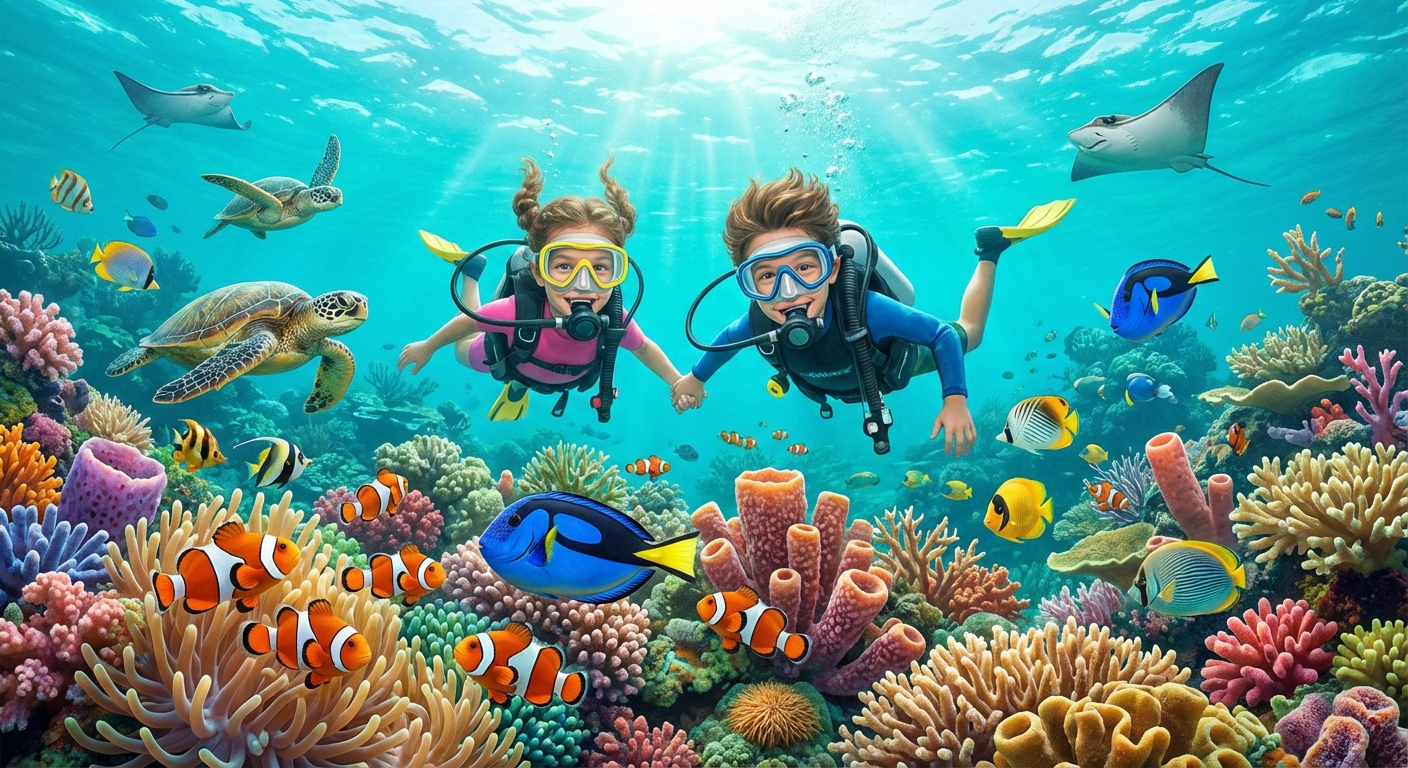
Imagine a bustling underwater city made of living rock, where colorful fish zip around, turtles glide by, and tiny sea animals work together like teammates. That’s a Coral Reef! In this guide you’ll learn new words, discover why reefs matter, see how they can be harmed, and even try a simple experiment at home.
1. What Is a Coral Reef?
- Coral isn’t a plant—it’s a colony of tiny animals called Polyps.
- Each polyp builds a tiny, hard skeleton made of Calcium Carbonate (the same stuff that makes seashells).
- When millions of polyps grow side‑by‑side, their skeletons pile up and form the massive structures we call reefs.
Did You Know?
A single reef can be Larger Than A City—the Great Barrier Reef stretches over 2,300 kilometers (about 1,400 miles)!
Vocabulary Boost
| Word | Meaning (kid‑friendly) |
|---|---|
| Polyps | Tiny, soft‑bodied animals that live in tubes and make the coral “building blocks.” |
| Calcium Carbonate | A chalky material that helps coral create a hard shell. |
| Ecosystem | A community of living things (plants, animals, microbes) that interact with each other and their environment. |
| Symbiosis | A close partnership where both sides help each other survive. |
2. Why Are Coral Reefs Important?
- Home Sweet Home – Reefs are the Nursery for over 4,000 fish species, sea turtles, and even sharks.
- Food Factory – Many people worldwide depend on reef fish for protein.
- Coastal Protection – The reef’s rough surface acts like a natural breakwater, reducing wave energy and protecting shorelines from erosion.
- Medicine Treasure Chest – Compounds from reef organisms are being studied for new antibiotics and cancer treatments.
Cause & Effect Example:
When reefs are healthy, fish populations thrive → local fishermen catch more fish → families have enough to eat. If reefs die, the opposite happens.
3. Threats: What Can Harm a Reef?
- Climate Change → Warmer ocean water stresses corals, causing Bleaching (they lose their colorful algae partners).
- Pollution → Runoff with fertilizers adds extra nutrients, leading to Algal Blooms that smother corals.
- Overfishing → Removes key species that keep the reef balanced, allowing harmful algae to overgrow.
Cause & Effect Chain
Rising temperature → Coral polyps expel algae → Coral turns white (bleaches) → If heat continues, coral may die.
Did You Know?
A single degree Celsius rise in sea temperature can trigger massive bleaching events!
4. How You Can Help (even from Home)
- Reduce Plastic – Less plastic means fewer pieces that can break and hurt reef creatures.
- Save Energy – Reducing wasted energy can lower emissions when that energy comes from fossil fuels.
- Follow Local Reef Rules – With an adult, use shade, protective clothing, and sunscreen that meets local health and reef guidance. Never touch or stand on coral.
Mini Model: Coral And Its Algae Partners
What You Need
- White paper coral shapes
- Small colored paper dots representing algae
- Reusable adhesive or removable tape
- A pencil
Steps
- Attach colored dots to one coral shape. The dots model microscopic algae living inside coral tissue.
- Leave the second coral white to model bleaching, when stressed corals lose many algae partners and their transparent tissue reveals the pale skeleton beneath.
- Draw arrows showing that the algae provide much of the coral’s food through photosynthesis.
- Write what could happen next: if conditions improve, some corals can regain algae; if stress is severe or lasts too long, corals may starve, become diseased, or die.
This paper activity is a model. Coral bleaching is a stress response, not chalk dissolving or food coloring disappearing.
Quick Check
- Is bleached coral always already dead? No, but it is stressed and may die if conditions do not improve.
- What is the main global cause of widespread marine heatwaves and bleaching risk? Human-caused climate change.