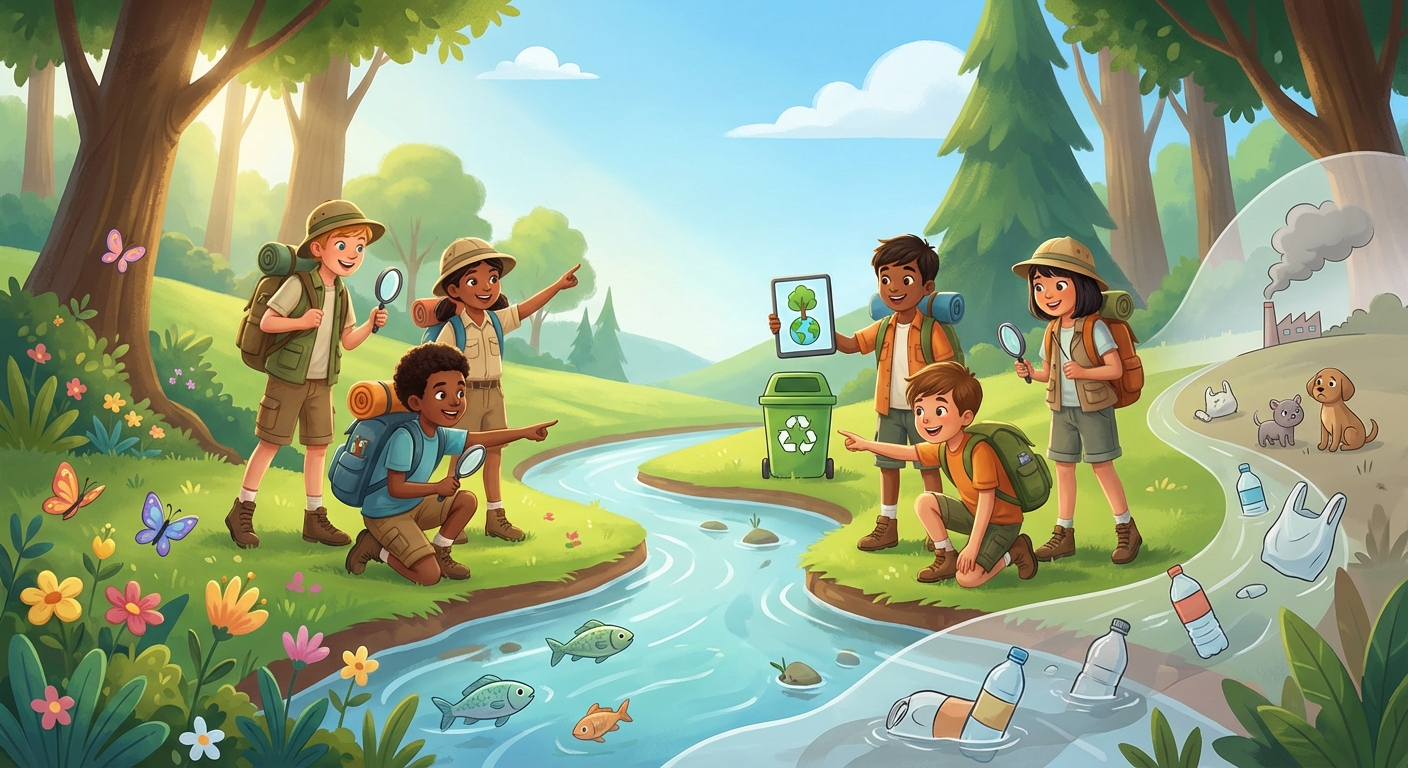
Pollution: How It Affects Our Natural World
Every day we enjoy clean air, sparkling water, and green forests. But when Pollution—the unwanted mess we put into the environment—grows, it can hurt plants, animals, and even us! Let’s explore what pollution is, why it happens, and what we can do to keep nature healthy.
1. What Is Pollution?
| Type of Pollution | Where It Happens | Simple Example |
|---|---|---|
| Air Pollution | Sky, atmosphere | Smoke from cars and factories |
| Water Pollution | Rivers, lakes, oceans | Plastic bottles floating in a pond |
| Soil (Land) Pollution | Ground, farms | Pesticides that kill good insects |
| Noise Pollution | Cities, highways | Loud music blasting at night |
Key Vocabulary
- Contamination – the act of making something dirty or unsafe.
- Ecosystem – a community of living things (plants, animals, microbes) that interact with each other and their surroundings.
- Biodegradable – materials that break down naturally over time, like a banana peel.
2. Cause and Effect: How Pollution Changes Nature
- Air Pollution → Effect: Smog makes it hard for trees to breathe, and animals can get sick.
- Water Pollution → Effect: Fish can’t survive if the water is full of oil or chemicals, which also means we have fewer fish to eat.
- Soil Pollution → Effect: Harmful chemicals can stop seeds from sprouting, leading to fewer crops and hungry animals.
Did You Know?
A single plastic bottle can take Up To 450 Years to decompose! While it’s breaking down, it releases tiny particles that tiny fish mistake for food.
3. Everyday Heroes: Simple Ways to Reduce Pollution
- Plant A Tree – Trees absorb carbon dioxide (a greenhouse gas) and give us fresh oxygen.
- Recycle & Reuse – Turn old paper into new notebooks, or use a reusable water bottle instead of a disposable one.
- Walk Or Bike – Cutting down on car rides reduces exhaust fumes.
- Clean‑up Missions – Gather litter at your local park and see how much cleaner it looks instantly!
4. Mini Experiment: Build a Tiny Water Filter 🌊
What You Need
- A clear plastic bottle (cut the top off)
- Clean sand
- Small stones or gravel
- Activated charcoal (found in pet stores)
- A coffee filter or piece of cloth
- Dirty water (mix tap water with a pinch of soil and a few drops of food coloring)
Steps
- Place the coffee filter at the bottle’s neck to keep the materials inside.
- Add a layer of Gravel (about 2 cm).
- Add a layer of Sand (about 3 cm).
- Add a thin layer of Charcoal (1 cm).
- Slowly pour the dirty water into the top and watch it drip through.
Observation
The water that comes out should be clearer than the water you put in. Explain that in nature, rivers and wetlands act like giant filters, but too much trash can clog them, making the “filter” stop working.
Pollution Quiz
Congratulations! You’ve learned how pollution affects nature and how you can be a hero for the Earth. Keep making green choices every day!