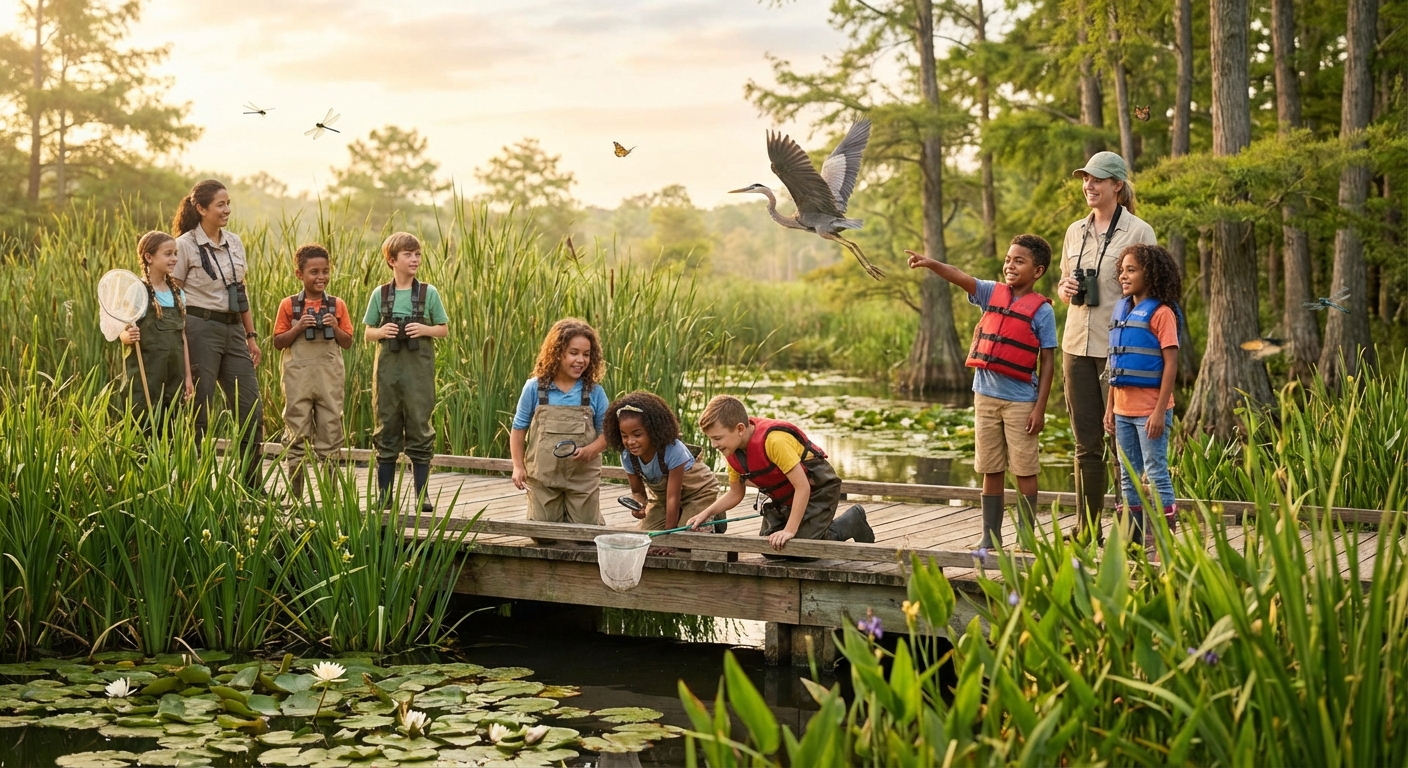
Wetlands: Nature’s Water‑loving Superheroes
Wetlands are special places where land and water meet and live together. They can look like swamps, marshes, bogs, or shallow lakes. Even though they might seem “soggy,” wetlands are full of life and help keep our planet healthy. Let’s dive in and discover why they’re so important!
1. What Exactly Is a Wetland?
A Wetland is an area of land that is Saturated (so full of water that the soil stays wet) for at least part of the year.
- Examples:
- The Everglades in Florida – a huge marsh that is home to alligators.
- A small Pond Edge in your local park – where cattails grow tall.
Because the ground stays wet, special plants called Hydrophytes (water‑loving plants) can grow there, and many animals love to visit.
2. Why Wetlands Matter – Cause and Effect
| Cause (What Happens) | Effect (What It Means) |
|---|---|
| Water Filtration – plants and tiny organisms trap pollutants. | Cleaner water flows into rivers and lakes, protecting fish and people. |
| Flood Control – wetlands act like sponges, soaking up excess rain. | Less flooding downstream, so homes and farms stay safe. |
| Carbon Storage – wet soils keep carbon locked away. | Helps slow down climate change because less carbon goes into the air. |
| Habitat Creation – many species need wetlands to live and breed. | Biodiversity (the variety of life) stays high, keeping ecosystems balanced. |
3. Amazing Creatures That Call Wetlands Home
- Amphibians – Frogs 🐸 and salamanders start life as tiny water‑bound tadpoles before growing legs.
- Birds – Herons, ducks, and the colorful Great Blue Heron hunt for fish in shallow water.
- Mammals – Beavers build dams that actually create more wetland area.
- Insects – Dragonflies zip over the surface, and mosquito larvae (yes, they’re part of the food web) help feed fish.
These animals rely on the wetland’s Biodiversity to find food, shelter, and places to raise their young.
4. Did You Know?
- Peatlands cover only a small share of Earth’s land but store an enormous amount of carbon accumulated from partly decayed plants.
- Some wetlands are Salt‑water (called Tidal Marshes) and are found right next to the ocean.
Mini Model: Map a Wetland’s Work
What You Need
- Paper
- Blue and green pencils
- Small paper squares labeled rain, sediment, nutrients, fish, and homes
Steps
- Draw a river, a low wetland beside it, and several homes farther downstream.
- Place the rain squares upstream and draw arrows showing water spreading into the wetland.
- Move sediment and nutrient squares into the wetland to model some material settling or being transformed. Wetlands do not remove every pollutant.
- Add fish and plant drawings to show habitat.
- Compare this map with one where the wetland is paved. Predict how fast water might reach the homes.
This model shows several wetland services without collecting wild plants or creating standing water where mosquitoes could breed.