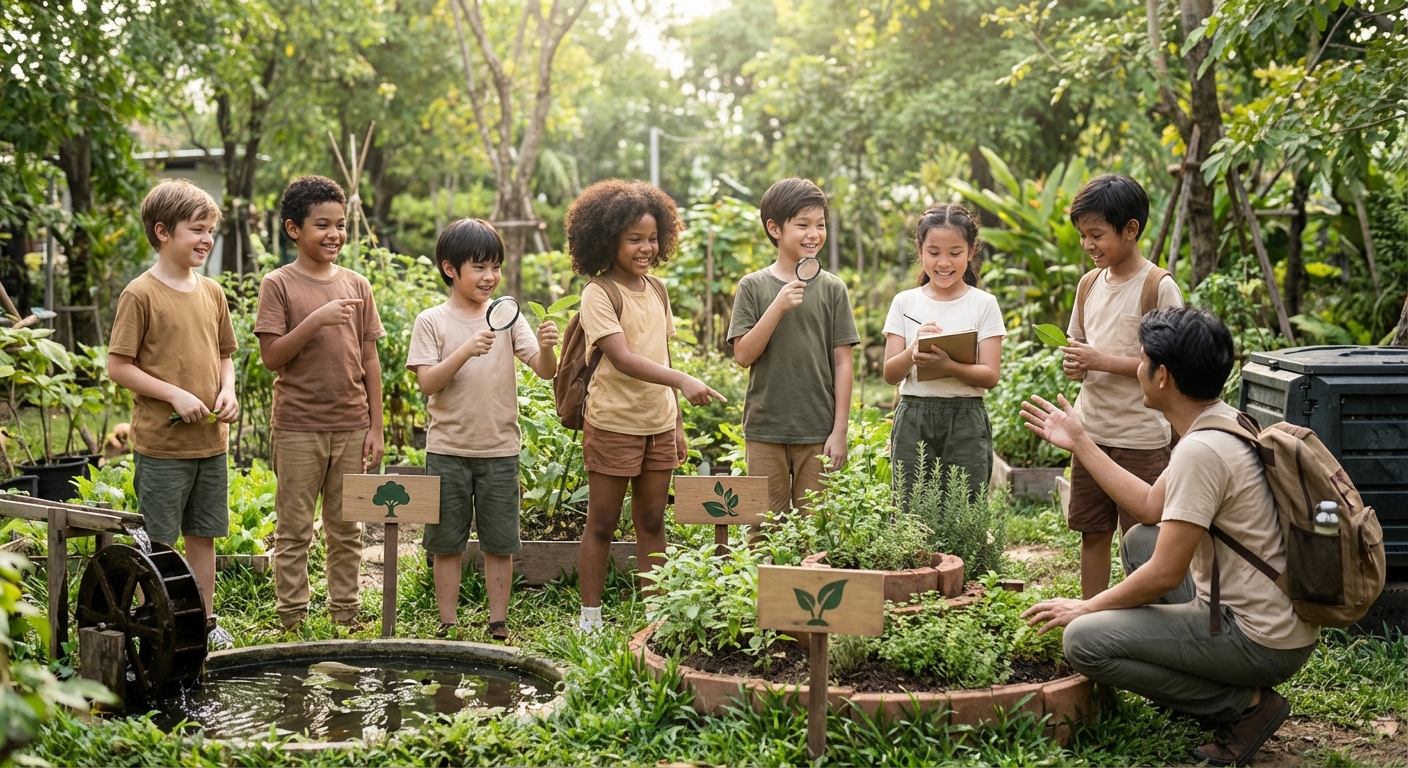
Discovering Permaculture: Nature’s Smart Design
Imagine a garden that Feeds the people who live near it, Protects the soil, and Saves water—all without using lots of chemicals or machines. That’s what permaculture is all about! It’s a way of planning farms, yards, and even whole neighborhoods so that everything works together like a well‑tuned orchestra of plants, animals, and people.
1. What Is Permaculture?
- Definition – Permaculture (short for Permanent Agriculture) is a set of design principles that help us create sustainable, self‑supporting ecosystems.
- Key Idea – Instead of forcing nature to fit our needs, we Observe how nature already solves problems and then Mimic those solutions.
Complex word: Mimic – to copy or imitate something.
Example
A farmer notices that a row of trees on a sunny hillside provides shade for the soil below, keeping it cool and moist. By planting more trees in the right spots, the farmer creates a natural “cool blanket” that reduces the need for watering.
2. The Three Core Principles
| Principle | What It Means | Real‑World Example |
|---|---|---|
| Care For The Earth | Protect soils, water, and wildlife. | Planting cover crops (like clover) that hold the soil together and give insects a home. |
| Care For People | Grow food, medicine, and shelter for communities. | Community gardens where neighbors share fresh vegetables. |
| Fair Share (also called Return Of Surplus) | Use only what you need; share the extra. | Collecting rainwater in barrels and giving the surplus to a neighbor who needs it. |
Cause and Effect: When we Care For The Earth, the soil stays healthy, which means plants grow better, which then Cares For People by providing more food.
3. Designing a Mini Permaculture Garden
- Observe The Sun – Track where sunlight hits your yard at different times of day.
- Place The “Big Helpers” First – Plant tall, leafy trees on the sunny side to give shade later.
- Layer The Garden – Different plant heights can help a garden use vertical space. The separate idea of one element doing several useful jobs is called Stacking Functions.
Did you know? A single tree can provide Three benefits at once: food (fruit), shelter (shade), and habitat for birds that eat insects.
4. Mini Activity: Plan a Helpful Plant Group
What You Need
- Paper
- Pencil and colored pencils
- Information about three plants suited to your local climate, checked with an adult
Steps
- Draw a small garden bed and mark where sunlight comes from.
- Choose three locally suitable plants with different heights or roles.
- Place them on your plan so none blocks all the light from another.
- Label possible benefits, such as food, flowers for local pollinators, shade, or ground cover.
Observation – One plant can offer several benefits, but plants also compete for light, water, and space. A real garden plan must fit local conditions and avoid invasive species.
Mini Quiz 🌟
-
What Does “Mimic” Mean?
a) To destroy
b) To copy
c) To ignore -
Which Principle Tells Us To Share Extra Resources?
a) Care for the Earth
b) Fair Share
c) Care for People -
In A Permaculture Garden, Why Do We Plant Tall Trees On The Sunny Side?
a) To plan useful shade without blocking every smaller plant
b) Because all plants need complete darkness
c) Because location never matters